


Hey there! As a forging parts supplier, I've seen firsthand the importance of controlling the dimensional accuracy of forging parts. It's not just about making parts that fit; it's about ensuring that those parts perform consistently and safely in their intended applications. In this blog post, I'm gonna share some tips and tricks on how to keep those dimensions in check.
Understanding the Basics of Dimensional Accuracy in Forging
Before we dive into the nitty - gritty of control methods, let's quickly review what dimensional accuracy in forging means. It refers to how closely a forged part's actual dimensions match the specified dimensions in the design. Even a small deviation can lead to big problems, like parts not fitting together properly in an assembly, or reducing the overall performance and lifespan of the final product.
The forging process itself, whether it's open - die forging, closed - die forging, or some other method, introduces various factors that can affect dimensional accuracy. Thermal expansion and contraction during heating and cooling, the flow of metal under pressure, and the wear and tear of the forging dies are just a few of these variables.
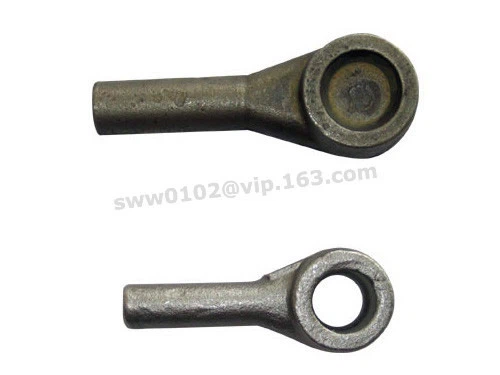

Precise Die Design and Manufacturing
One of the most crucial steps in controlling dimensional accuracy is having a well - designed and accurately manufactured forging die. The die is like the mold that shapes the forged part, so any imperfections or inaccuracies in the die will be transferred to the part.
When designing the die, it's important to take into account factors such as the shrinkage rate of the metal during cooling. Different metals have different shrinkage rates, for example, steel and aluminum. You can't just assume a one - size - fits - all approach. The design should also consider the metal flow patterns during forging. We need to make sure that the metal is evenly distributed in the die cavity to prevent uneven thickening or thinning of the part.
Once the design is finalized, the manufacturing of the die needs to be of the highest quality. Precision machining techniques should be used to achieve the tight tolerances required. This might involve using CNC (Computer Numerical Control) machines that can cut and shape the die with extreme accuracy. If you want to learn more about the professional metal forging process, check out Professional Metal Forging Process.
Temperature Control
Temperature plays a huge role in the forging process and, consequently, in dimensional accuracy. When the metal is heated to the appropriate forging temperature, it becomes more malleable and easier to shape. However, if the temperature is too high, the metal can become over - softened, leading to excessive deformation and making it difficult to control the dimensions. On the other hand, if the temperature is too low, the metal may not flow properly, resulting in incomplete filling of the die cavity.
To control the temperature effectively, we use heating equipment like induction furnaces. These furnaces can heat the metal quickly and accurately to the desired temperature. Additionally, we monitor the temperature throughout the forging process using thermocouples and infrared pyrometers. During cooling, we also need to be careful. Rapid cooling can cause uneven shrinkage, so in some cases, we use controlled cooling methods like annealing to ensure that the part cools down uniformly and the dimensions remain stable.
Forging Equipment and Process Optimization
The forging equipment itself can have a significant impact on dimensional accuracy. Presses and hammers need to have consistent force and energy output. If the force is not consistent from one forging operation to the next, the part dimensions can vary. Regular maintenance and calibration of the forging equipment are essential to keep it in good working condition.
We also need to optimize the forging process parameters. This includes things like the number of blows in hammer forging or the number of strokes in press forging, the speed of the forging operation, and the amount of pressure applied. By fine - tuning these parameters, we can achieve better control over the metal flow and, thus, the dimensional accuracy of the part.
Material Selection and Quality
The quality and type of material used in forging can't be overlooked. Different metals have different properties, such as ductility, hardness, and thermal conductivity, which can affect how they behave during forging. For example, OEM Carbon Steel Q235 St37 - 2 C45 1010 Forged Steel has its own set of characteristics that need to be considered when aiming for dimensional accuracy.
We always ensure that the materials we use meet the required standards. We conduct material testing, such as chemical analysis and mechanical property testing, to verify the quality of the raw materials. Using high - quality materials reduces the likelihood of defects and inconsistencies that could impact the final dimensions of the forged part.
Inspection and Quality Control
Inspection is a key part of controlling dimensional accuracy. We use a variety of inspection tools and techniques, such as calipers, micrometers, and coordinate measuring machines (CMMs). Calipers and micrometers are great for quick, on - the - spot measurements, while CMMs can provide highly accurate 3D measurements of the part.
We perform inspections at different stages of the forging process. Before forging, we check the raw materials to make sure they are of the right size and quality. During forging, we may take intermediate measurements to ensure that the part is being formed correctly. After forging, a final inspection is done to confirm that the part meets the specified dimensions. Any parts that don't meet the requirements are either re - worked or scrapped.
Supplier - Customer Collaboration
As a forging parts supplier, we believe that close collaboration with our customers is essential for achieving dimensional accuracy. We work closely with our customers from the very beginning of the project, understanding their specific requirements and design specifications. By having open communication, we can address any potential issues early on and make sure that we are on the same page regarding the dimensional tolerances.
If you're in the market for high - quality forging parts with excellent dimensional accuracy, we'd love to hear from you. Whether you need Professional 6061 - T6 Aluminum Forging Suppliers or other types of forging parts, we're here to help. Reach out to us to start a conversation about your procurement needs.
References
- Smith, J. (2018). Forging Technology Handbook. McGraw - Hill.
- Jones, A. (2020). Metal Forming: Principles and Applications. Wiley.
- Brown, C. (2019). Dimensional Accuracy in Manufacturing Processes. Elsevier.


