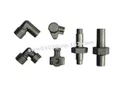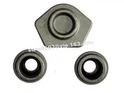

Hey there! As a forging parts supplier, I know how crucial it is to control the precision of forging parts. In this blog, I'll share some tips and tricks on how to achieve that.
First off, let's talk about why precision matters. When it comes to forging parts, precision can make or break a project. Whether it's for automotive, aerospace, or any other industry, accurate parts ensure proper fit and function. A tiny deviation can lead to performance issues, safety concerns, and even costly recalls. So, getting that precision right is super important.
Material Selection
The choice of material is the first step in controlling precision. Different materials have different properties, and these properties can affect the forging process and the final precision of the parts. For example, some materials are more malleable, which means they can be forged into complex shapes more easily. Others are harder and require more force during forging.
We offer a wide range of materials, including OEM Aisi1045 Steel Precise Press Forging. AISI 1045 steel is a medium-carbon steel that offers good strength and toughness. It's also relatively easy to machine, which helps in achieving high precision during the post-forging processes. Another option is our Custom 7year Experience Aluminum And Stainless Steel Forging Company. Aluminum is lightweight and has excellent corrosion resistance, making it a popular choice for many applications. Stainless steel, on the other hand, offers high strength and durability.
When selecting a material, we consider factors such as the application requirements, the forging process, and the cost. We work closely with our customers to understand their needs and recommend the best material for their projects.
Forging Process Control
The forging process itself plays a significant role in determining the precision of the parts. There are several key factors to consider during the forging process.
Temperature Control
Temperature is critical in forging. If the temperature is too low, the material may not deform properly, leading to cracks and other defects. On the other hand, if the temperature is too high, the material may become too soft and lose its shape. We use advanced temperature control systems to ensure that the forging temperature is within the optimal range for the specific material.
Die Design
The die is the tool used to shape the forging parts. A well-designed die is essential for achieving high precision. The die should be designed to match the shape and dimensions of the final part as closely as possible. We have a team of experienced die designers who use the latest CAD/CAM technology to create precise dies. They also take into account factors such as material flow, draft angles, and ejection requirements.
Press Force
The press force applied during forging also affects the precision of the parts. Too much force can cause the material to flow out of the die, while too little force may result in incomplete filling of the die. We use hydraulic presses with precise force control to ensure that the right amount of force is applied at the right time.
Post-Forging Processes
After the forging process, there are several post-forging processes that can be used to improve the precision of the parts.
Machining
Machining is a common post-forging process used to remove excess material and achieve the final dimensions. We have a variety of machining equipment, including CNC mills, lathes, and grinders. Our skilled machinists use these machines to perform operations such as turning, milling, drilling, and grinding with high precision.
Heat Treatment
Heat treatment can be used to improve the mechanical properties of the forging parts. It can also help in relieving internal stresses and improving dimensional stability. We offer a range of heat treatment processes, such as annealing, quenching, and tempering. The heat treatment process is carefully controlled to ensure that the desired properties are achieved without affecting the precision of the parts.
Inspection and Quality Control
Inspection and quality control are essential steps in ensuring the precision of the forging parts. We have a comprehensive quality control system in place that includes in-process inspection and final inspection. We use advanced inspection equipment, such as coordinate measuring machines (CMMs), to measure the dimensions of the parts with high accuracy. Any parts that do not meet the specified requirements are rejected or reworked.
Quality Assurance and Certification
We are committed to providing high-quality forging parts with excellent precision. To ensure this, we have obtained several quality certifications, such as ISO 9001. These certifications demonstrate our commitment to quality and continuous improvement.
Our quality assurance team conducts regular audits and inspections to ensure that our processes and products meet the highest standards. We also keep detailed records of all production processes and inspections, which allows us to track and trace the parts throughout their lifecycle.


Customer Collaboration
We believe that collaboration with our customers is key to achieving the best results. We work closely with our customers from the initial design stage to the final delivery of the parts. We listen to their requirements, provide technical advice, and offer customized solutions.
By involving our customers in the process, we can ensure that the forging parts meet their exact specifications and expectations. We also offer samples and prototypes for our customers to test and evaluate before mass production.
Conclusion
Controlling the precision of forging parts is a complex process that requires careful consideration of many factors, from material selection to post-forging processes. As a forging parts supplier, we have the expertise, experience, and equipment to produce high-precision forging parts.
If you're in the market for high-quality forging parts with excellent precision, we'd love to hear from you. Whether you need OEM Aisi1045 Steel Precise Press Forging, Custom 7year Experience Aluminum And Stainless Steel Forging Company, or Professional 6061-T6 Aluminum Forging Suppliers, we can provide you with the right solution. Contact us today to start a conversation about your forging needs and let's work together to create the perfect parts for your project.
References
- Metal Forming Handbook, ASM International
- Forging Technology and Applications, CRC Press
- Precision Forging: Principles and Applications, Springer