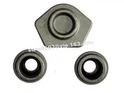

As a forging parts supplier, I understand the critical importance of enhancing the fire - resistance of forging parts. In various industrial applications, especially those in high - temperature environments such as aerospace, automotive engines, and power generation, the fire - resistance of forging parts can significantly affect the safety and performance of the entire system. In this blog, I will share some effective ways to enhance the fire - resistance of forging parts based on my years of experience in the industry.
Material Selection
The first and most fundamental step in enhancing the fire - resistance of forging parts is the proper selection of materials. Different materials have different inherent fire - resistant properties.
Heat - Resistant Alloys
Heat - resistant alloys are often the top choice for applications requiring high fire - resistance. For example, nickel - based alloys are known for their excellent high - temperature strength and oxidation resistance. These alloys can maintain their mechanical properties at extremely high temperatures, making them suitable for use in gas turbine blades and other components exposed to high - temperature combustion gases. Another option is stainless steel, which contains chromium and other elements that form a protective oxide layer on the surface. This oxide layer helps prevent further oxidation and corrosion at high temperatures, enhancing the fire - resistance of the forging parts.
Ceramics and Composite Materials
Ceramics have outstanding fire - resistant properties, with some types capable of withstanding temperatures up to several thousand degrees Celsius. They are often used in applications where extreme heat resistance is required, such as in the lining of furnaces. However, ceramics are brittle and have relatively poor toughness. To overcome this limitation, composite materials that combine ceramics with metals or polymers are being developed. These composite materials can take advantage of the high fire - resistance of ceramics while also improving the toughness and workability of the forging parts.
When choosing materials, it is also important to consider other factors such as cost, machinability, and availability. For example, if cost is a major concern, some less expensive heat - resistant steels may be a more practical choice.
Surface Treatment
Surface treatment is another effective way to enhance the fire - resistance of forging parts. By applying a protective coating on the surface of the parts, we can improve their resistance to high - temperature oxidation and corrosion.
Thermal Barrier Coatings (TBCs)
TBCs are widely used in high - temperature applications to reduce the temperature of the underlying substrate. These coatings are typically made of ceramic materials such as zirconia, which have low thermal conductivity. By applying a TBC on the surface of forging parts, we can insulate the parts from the high - temperature environment, reducing the heat transfer to the substrate and thus enhancing the fire - resistance. TBCs also help protect the parts from oxidation and hot corrosion, extending their service life in high - temperature environments.
Chromizing and Aluminizing
Chromizing and aluminizing are surface treatment processes that involve diffusing chromium or aluminum into the surface of the forging parts. These elements form a protective oxide layer on the surface, which can significantly improve the oxidation and corrosion resistance of the parts at high temperatures. Chromizing is particularly effective in enhancing the fire - resistance of steel parts, as the chromium oxide layer formed on the surface is very stable and can prevent further oxidation. Aluminizing, on the other hand, is often used for parts that need to resist both high - temperature oxidation and sulfidation.
Design Optimization
The design of forging parts can also have a significant impact on their fire - resistance. By optimizing the design, we can improve the heat dissipation and stress distribution of the parts, reducing the risk of thermal damage.
Shape and Geometry
The shape and geometry of forging parts can affect their heat transfer characteristics. For example, parts with a larger surface area to volume ratio can dissipate heat more effectively, reducing the temperature rise in high - temperature environments. Additionally, the design of the part should avoid sharp corners and edges, as these areas are more likely to experience stress concentration and thermal fatigue. A smooth and rounded design can help distribute stress more evenly and improve the overall fire - resistance of the part.


Cooling Channels
In some applications, such as in automotive engines and aerospace components, incorporating cooling channels into the design of forging parts can be an effective way to enhance their fire - resistance. These cooling channels allow a coolant, such as water or oil, to flow through the part, removing heat and keeping the temperature within a safe range. By carefully designing the layout and size of the cooling channels, we can ensure efficient heat transfer and improve the performance of the forging parts in high - temperature environments.
Quality Control and Testing
To ensure that the forging parts have the desired fire - resistance, strict quality control and testing procedures are essential.
Non - Destructive Testing (NDT)
NDT techniques such as ultrasonic testing, magnetic particle testing, and radiographic testing can be used to detect internal defects in the forging parts. These defects, such as cracks or porosity, can weaken the parts and reduce their fire - resistance. By detecting and eliminating these defects early in the manufacturing process, we can ensure the quality and reliability of the forging parts.
High - Temperature Testing
High - temperature testing is also crucial to evaluate the fire - resistance of forging parts. This involves subjecting the parts to high - temperature environments for a certain period of time and monitoring their performance. Parameters such as dimensional stability, mechanical properties, and oxidation resistance are measured to determine the suitability of the parts for high - temperature applications. Based on the test results, adjustments can be made to the material selection, surface treatment, or design of the parts to improve their fire - resistance.
Our Product Offerings
As a forging parts supplier, we offer a wide range of high - quality forging parts with enhanced fire - resistance. Our products include Customize China CuZn39Pb3 Brass Forging, OEM Aisi1045 Steel Precise Press Forging, and Professional 6061 - T6 Aluminum Forging Suppliers. We use advanced manufacturing techniques and strict quality control procedures to ensure that our products meet the highest standards of fire - resistance and performance.
If you are looking for high - quality forging parts with enhanced fire - resistance, we invite you to contact us for procurement and negotiation. We are committed to providing you with the best products and services to meet your specific needs.
References
-ASM Handbook Volume 1: Properties and Selection: Irons, Steels, and High - Performance Alloys
-Lawrence, F. (2015). High - Temperature Materials and Coatings. Springer.
-Schütze, M. (2001). Oxidation of Metals. Springer.