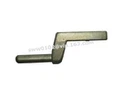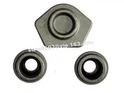

Hey there! I'm a supplier of forging parts, and I know how crucial it is to ensure the uniformity of these parts. In this blog, I'll share some tips and tricks on how to achieve that, based on my years of experience in the industry.
Understanding the Basics of Forging
Before we dive into the ways to ensure uniformity, let's quickly go over what forging is. Forging is a manufacturing process where metal is heated and then shaped by applying compressive forces. This process can improve the mechanical properties of the metal, such as strength and durability.
There are different types of forging, including open-die forging, closed-die forging, and impression-die forging. Each type has its own advantages and is suitable for different applications. But no matter which type you choose, uniformity is key to producing high-quality forging parts.
Material Selection
The first step in ensuring the uniformity of forging parts is selecting the right material. The material should have consistent properties throughout, such as chemical composition, grain structure, and hardness. Any variations in these properties can lead to uneven forging and affect the final quality of the parts.
For example, if you're using aluminum, make sure to choose a high-quality alloy like 6061-T6. This alloy is known for its excellent strength-to-weight ratio and good corrosion resistance. As a Professional 6061-T6 Aluminum Forging Suppliers, I've seen firsthand how the right material can make a big difference in the uniformity of the forging process.
Pre-Processing of the Material
Once you've selected the material, it's important to pre-process it properly. This may include cleaning, annealing, and normalizing. Cleaning the material removes any dirt, oil, or other contaminants that could affect the forging process. Annealing and normalizing help to relieve internal stresses and improve the grain structure of the material, making it more uniform.
For instance, if you're working with stainless steel 304, pre-processing can help to ensure that the material has a consistent hardness and grain size. This is especially important when producing OEM Stainless Steel 304 Precise Custom Forgings, where precision and uniformity are crucial.


Forging Equipment and Tooling
The quality of your forging equipment and tooling also plays a significant role in ensuring uniformity. The equipment should be well-maintained and calibrated regularly to ensure accurate and consistent operation. The tooling, such as dies and punches, should be designed and manufactured to precise specifications.
For example, if the dies are not properly aligned or have uneven surfaces, it can result in uneven forging and cause variations in the shape and dimensions of the parts. As a supplier, I always make sure to invest in high-quality equipment and tooling to ensure the uniformity of our forging parts.
Process Control
During the forging process, it's essential to have strict process control measures in place. This includes monitoring and controlling factors such as temperature, pressure, and deformation rate. Any deviations from the specified parameters can lead to uneven forging and affect the quality of the parts.
For instance, if the forging temperature is too high or too low, it can cause the material to become brittle or difficult to shape, respectively. Similarly, if the pressure is not applied evenly, it can result in uneven deformation and lead to variations in the thickness and density of the parts.
Post-Processing and Inspection
After the forging process is complete, post-processing steps such as heat treatment, machining, and surface finishing are often required. These steps can further improve the uniformity and quality of the parts.
Heat treatment can help to relieve internal stresses, improve the mechanical properties of the material, and make the parts more uniform. Machining can be used to achieve the desired dimensions and surface finish, while surface finishing can enhance the appearance and corrosion resistance of the parts.
Inspection is also a crucial part of the process. It's important to inspect the parts thoroughly to ensure that they meet the specified requirements. This may include visual inspection, dimensional measurement, and non-destructive testing. Any parts that do not meet the standards should be rejected or reworked.
Quality Management System
Implementing a quality management system is essential for ensuring the uniformity of forging parts. A quality management system provides a framework for controlling and improving the quality of the manufacturing process. It includes procedures for material selection, process control, inspection, and corrective action.
By following a quality management system, you can ensure that all aspects of the forging process are consistent and that the final parts meet the highest quality standards. This not only helps to improve customer satisfaction but also reduces the risk of defects and recalls.
Training and Skill Development
Finally, the skills and knowledge of your workforce are crucial for ensuring the uniformity of forging parts. It's important to provide regular training and development opportunities for your employees to keep them updated on the latest forging techniques and quality control methods.
A well-trained workforce is more likely to follow the proper procedures and make fewer mistakes, which can lead to more consistent and high-quality forging parts. As a supplier, I always invest in the training and development of my employees to ensure that we can provide the best possible products to our customers.
Conclusion
Ensuring the uniformity of forging parts is a complex process that requires careful attention to detail at every stage. From material selection to post-processing and inspection, every step plays a crucial role in producing high-quality parts.
As a forging parts supplier, I'm committed to providing our customers with the best possible products. Whether you're looking for Professional 6061-T6 Aluminum Forging Suppliers or OEM 6061-T6 Forged Aluminum With CNC Machining, we have the expertise and experience to meet your needs.
If you're interested in learning more about our forging parts or have any questions, please don't hesitate to contact us. We're always happy to discuss your requirements and provide you with a customized solution.
References
- "Forging Handbook: Die Design, Tooling, and Presses" by George E. Dieter
- "Metal Forming: Mechanics and Metallurgy" by Dieter, George E.
- "Manufacturing Engineering and Technology" by Serope Kalpakjian and Steven R. Schmid