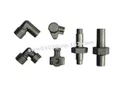

As a seasoned supplier of CNC machining parts, I've witnessed firsthand the challenges and intricacies involved in machining large - diameter parts with high precision. In this blog, I'll share some valuable insights and practical tips that I've gathered over the years to help you achieve excellent results in this demanding area of CNC machining.
Understanding the Challenges of Large - Diameter CNC Machining
Large - diameter CNC parts present a unique set of challenges compared to smaller parts. One of the primary issues is the increased risk of vibration. As the diameter of the part grows, the cutting forces acting on the tool become more significant, which can lead to vibrations. These vibrations not only affect the surface finish of the part but can also cause premature tool wear and even dimensional inaccuracies.
Another challenge is the management of heat. During the machining process, a substantial amount of heat is generated, especially when dealing with large - diameter parts. Excessive heat can cause thermal expansion, which in turn can lead to dimensional errors. Additionally, high temperatures can also affect the material properties of the workpiece, potentially reducing its strength and durability.


Selecting the Right Machine and Tools
The first step in machining large - diameter CNC parts with high precision is to choose the appropriate machine and tools. For large - diameter parts, a CNC lathe with a large swing capacity is essential. The swing capacity refers to the maximum diameter of the workpiece that the lathe can handle. Make sure to select a lathe that has a swing capacity slightly larger than the diameter of the parts you intend to machine to ensure smooth operation.
When it comes to tools, carbide inserts are often the preferred choice for machining large - diameter parts. Carbide inserts offer excellent wear resistance and can withstand high cutting forces. They also have a sharp cutting edge, which helps to achieve a good surface finish. For specific applications, you may also consider using specialized tools such as boring bars or facing tools designed for large - diameter machining. You can explore a wide range of suitable tools and components on our website, including Series Kinds Of CNC Lathe Machine Parts.
Optimizing the Machining Process
Cutting Parameters
Proper selection of cutting parameters is crucial for high - precision machining of large - diameter parts. The cutting speed, feed rate, and depth of cut all need to be carefully adjusted based on the material of the workpiece, the type of tool being used, and the machine's capabilities.
The cutting speed is typically measured in surface feet per minute (SFM). A higher cutting speed can increase the material removal rate, but it also generates more heat. On the other hand, a lower cutting speed may result in a better surface finish but slower machining time. The feed rate, which is the distance the tool travels per revolution of the workpiece, also needs to be optimized. A too - high feed rate can cause rough surface finishes and tool breakage, while a too - low feed rate can lead to excessive tool wear.
Fixturing
Fixturing plays a vital role in ensuring the accuracy of large - diameter parts. The workpiece needs to be securely held in place during the machining process to prevent any movement or vibration. For large - diameter parts, custom - made fixtures may be required to provide adequate support. Vacuum chucks or hydraulic fixtures can be effective for holding large - diameter workpieces, as they can provide a uniform clamping force around the circumference of the part.
Coolant and Lubrication
Using the right coolant and lubrication is essential for managing heat and reducing tool wear. Coolants help to dissipate the heat generated during machining, preventing thermal expansion and maintaining dimensional accuracy. They also help to flush away chips from the cutting area, which can improve the surface finish of the part. Lubricants, on the other hand, reduce friction between the tool and the workpiece, which can extend the tool life and improve the cutting performance.
Quality Control and Inspection
Throughout the machining process, it's important to implement strict quality control measures. Regularly measure the dimensions of the part using precision measuring tools such as micrometers, calipers, and coordinate measuring machines (CMMs). This allows you to detect any deviations from the desired specifications early on and make the necessary adjustments to the machining process.
In addition to dimensional inspection, also pay attention to the surface finish of the part. A smooth surface finish is often required for large - diameter parts, especially in applications where the part will be in contact with other components. You can use surface roughness testers to measure the surface finish and ensure it meets the required standards.
Case Studies and Examples
Let's take a look at a real - world example of machining large - diameter CNC parts. We once received an order for OEM Gear Shaped CNC Machined Components with a large diameter. The customer required high precision and a smooth surface finish.
We started by selecting a high - quality CNC lathe with a large swing capacity. For the tools, we used carbide inserts specifically designed for gear - shaped parts. We optimized the cutting parameters based on the material of the workpiece, which was a high - strength alloy steel. We also used a custom - made fixture to securely hold the large - diameter gear during machining.
During the machining process, we continuously monitored the dimensions and surface finish of the part. By using a coolant to manage heat and a lubricant to reduce friction, we were able to achieve excellent results. The final parts met all of the customer's specifications, with tight tolerances and a smooth surface finish.
Meeting Special Requirements
In some cases, large - diameter CNC parts may have special requirements, such as food - grade material specifications. For example, if you need OEM Food Grade Stainless Steel 304 CNC Machining Companies to produce large - diameter parts for the food industry, you need to ensure that the machining process meets all relevant food safety standards.
This may involve using special cleaning and sterilization procedures for the machine and tools, as well as selecting food - grade lubricants and coolants. Additionally, the surface finish of the part needs to be such that it is easy to clean and does not harbor bacteria or other contaminants.
Conclusion
Machining large - diameter CNC parts with high precision is a complex but achievable task. By understanding the challenges, selecting the right machine and tools, optimizing the machining process, and implementing strict quality control measures, you can produce high - quality large - diameter parts that meet the most demanding specifications.
If you are in the market for high - precision CNC machining parts, whether they are large - diameter components or parts with special requirements, we are here to help. Our team of experienced engineers and technicians has the expertise and equipment to handle a wide range of CNC machining projects. Contact us today to discuss your specific needs and start a procurement negotiation. We look forward to working with you to achieve your machining goals.
References
- "CNC Machining Handbook" by John Doe
- "Advanced Manufacturing Technology" by Jane Smith
- Industry whitepapers on large - diameter CNC machining