
Hey there! As a supplier of CNC machining parts, I've been deeply involved in the textile industry for quite a while. CNC machining has become a game - changer in the textile world, offering precise and high - quality parts that are essential for various textile machines. Today, I'm gonna talk about the common materials used for CNC machining parts in the textile industry.
1. Stainless Steel
Stainless steel is one of the most popular materials for CNC machining parts in the textile industry. And there's a good reason for that. First off, it's highly resistant to corrosion. Textile factories often have a humid environment due to the presence of water in the dyeing and finishing processes. Stainless steel parts can withstand this moisture without rusting, which extends their lifespan significantly.
For example, in dyeing machines, the parts that come into contact with the dye solutions need to be corrosion - resistant. Stainless steel can handle these harsh chemical environments without degrading. Also, it has excellent strength. This means that the parts can endure the mechanical stresses during the operation of textile machines.
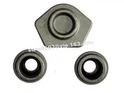
We offer OEM 1.4301 Stainless Steel CNC Turned Parts. These parts are precisely machined to meet the strict requirements of the textile industry. They can be used in various components like rollers, shafts, and fasteners in textile machinery. The 1.4301 stainless steel grade is known for its good combination of corrosion resistance and mechanical properties, making it a top choice for many textile manufacturers.


2. Aluminum
Aluminum is another widely used material in CNC machining for the textile industry. One of the biggest advantages of aluminum is its low density. Textile machines often require parts that are lightweight to reduce the overall weight of the machine and improve its energy efficiency. For instance, in spinning machines, lightweight parts can help reduce the power consumption during operation.
Moreover, aluminum has good thermal conductivity. In some textile processes, heat needs to be dissipated quickly. Aluminum parts can transfer heat efficiently, preventing overheating of the machine components.
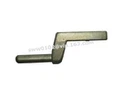
We have CNC Milling 7075 Aluminum Hinge. The 7075 aluminum alloy is a high - strength alloy. Hinges made from this material are strong enough to support the movement of different parts in textile machines, while still being lightweight. They are also easy to machine, which allows for the production of complex shapes and precise dimensions.
3. Brass
Brass is a copper - zinc alloy that is commonly used in the textile industry for CNC - machined parts. It has a beautiful golden - yellow appearance, but more importantly, it has good electrical conductivity and low friction.
In some textile machines that involve electrical components or sensors, brass parts can be used as electrical connectors. Its low friction property makes it suitable for parts that require smooth movement, such as bearings and guides.
Brass is also relatively easy to machine. This means that we can produce parts with high precision and complex geometries at a reasonable cost. For example, small brass bushings can be precisely machined to fit into the shafts of textile machines, providing smooth rotation and reducing wear.
4. Titanium
Although titanium is more expensive than the other materials mentioned above, it has some unique properties that make it suitable for certain applications in the textile industry. Titanium has an extremely high strength - to - weight ratio. This means that parts made from titanium can be very strong while still being relatively light.
In high - performance textile machines, where weight reduction is crucial without sacrificing strength, titanium parts can be a great choice. For example, in some advanced weaving machines that operate at high speeds, titanium components can withstand the high - speed vibrations and mechanical stresses.
Titanium is also highly resistant to corrosion, even in more aggressive chemical environments compared to stainless steel. This makes it suitable for parts in textile processes that involve strong chemicals or high - temperature and high - humidity conditions.
5. Plastics
Plastics are also used in CNC machining for the textile industry. There are different types of plastics, each with its own set of properties. For example, polycarbonate is known for its high impact resistance and transparency. It can be used for protective covers or viewing windows in textile machines, allowing operators to monitor the machine's operation without exposing themselves to potential hazards.
Nylon is another popular plastic. It has good wear resistance and low friction. Nylon parts can be used in conveyor systems in textile factories, where they can reduce the noise and wear during the movement of textile materials.
Plastics are easy to machine, and they can be produced in a wide range of colors and shapes. They are also relatively inexpensive, which makes them a cost - effective option for some non - critical parts in textile machines.
6. Carbon Steel
Carbon steel is a common choice for parts that require high strength and hardness. In textile machines, there are components that need to withstand heavy loads and high - pressure operations. Carbon steel can provide the necessary strength.
It can be heat - treated to further enhance its mechanical properties. For example, parts like gears and crankshafts in textile machines can be made from carbon steel. These parts need to be strong enough to transfer the power and torque during the machine's operation.
How to Choose the Right Material
When it comes to choosing the right material for CNC machining parts in the textile industry, several factors need to be considered. The first factor is the environment in which the part will operate. If it's a humid or chemically aggressive environment, materials like stainless steel, titanium, or certain plastics are better choices.
The mechanical requirements of the part are also crucial. If the part needs to withstand high loads or high - speed vibrations, materials with high strength and good fatigue resistance, such as carbon steel, titanium, or 7075 aluminum, should be considered.
The cost is another important factor. Some materials like titanium are more expensive, so for non - critical parts, less expensive materials like plastics or brass might be more suitable.
As a supplier, we understand these requirements and can help you choose the most appropriate material for your specific needs. We have a team of experts who can provide technical advice and guidance throughout the material selection and part - manufacturing process.
If you're in the textile industry and looking for high - quality CNC machining parts, we're here to help. Whether you need parts made from stainless steel, aluminum, brass, or any other material, we can offer customized solutions to meet your exact specifications. Don't hesitate to contact us for a quote or to discuss your project in detail. We're committed to providing the best products and services to our customers in the textile industry.
References
- "Materials Science and Engineering: An Introduction" by William D. Callister Jr. and David G. Rethwisch
- "Handbook of Textile Fibre Structure" edited by T. J. Peirce
So, that's all about the common materials for CNC machining parts in the textile industry. I hope this blog has been helpful to you. If you have any questions or need more information, feel free to reach out.