
Hey there! As a supplier of CNC machining parts, I've seen firsthand how crucial dimensional stability is in this industry. Dimensional stability refers to the ability of a part to maintain its shape, size, and form under various conditions. In this blog, I'll share some of the key factors that can affect the dimensional stability of CNC machining parts.
Material Selection
The choice of material is one of the most fundamental factors influencing dimensional stability. Different materials have different properties, such as thermal expansion coefficients, elasticity, and hardness, which can all impact how a part behaves during and after machining.
For example, metals like aluminum and steel have different thermal expansion rates. Aluminum has a relatively high thermal expansion coefficient, which means it expands and contracts more significantly with temperature changes compared to steel. If you're machining a part that will be exposed to varying temperatures in its application, choosing the right material is essential. Using a material with a low thermal expansion coefficient can help minimize dimensional changes due to temperature fluctuations.
Another aspect to consider is the material's internal stress. Some materials, especially those that have undergone extensive processing like casting or forging, may have internal stresses locked within them. During machining, these internal stresses can be released, causing the part to warp or distort. To mitigate this, it's important to choose materials that have been properly heat-treated or stress-relieved.
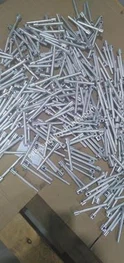
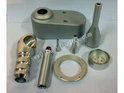
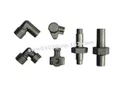
As a supplier, we offer a wide range of materials for CNC machining parts. Check out our China Competitive Price CNC Lathe Components and OEM Casted SS304 CNC Machine Components, which are made from high-quality materials carefully selected for their dimensional stability.
Machining Processes
The machining processes themselves can have a significant impact on the dimensional stability of parts. The cutting forces, heat generation, and tool wear during machining can all introduce stresses and changes in the part's dimensions.
Let's start with cutting forces. When a cutting tool removes material from the workpiece, it exerts forces on the part. These forces can cause the part to deflect or deform, especially if the part is thin or has a complex shape. To minimize the effects of cutting forces, it's important to use the right cutting parameters, such as cutting speed, feed rate, and depth of cut. Optimizing these parameters can help reduce the cutting forces and ensure a more stable machining process.
Heat generation is another critical factor. During machining, a significant amount of heat is generated due to the friction between the cutting tool and the workpiece. This heat can cause the part to expand, and if not properly managed, it can lead to dimensional inaccuracies. Cooling systems, such as coolant or lubricant, are often used to dissipate the heat and keep the part at a stable temperature. Additionally, using cutting tools with good heat resistance can also help reduce the heat generated during machining.
Tool wear is also a concern. As the cutting tool wears, its geometry changes, which can affect the accuracy of the machining process. Worn tools may produce parts with larger tolerances or surface finish issues. Regularly inspecting and replacing cutting tools is essential to maintain the dimensional stability of the parts.
Post - Machining Treatments
After the machining process is complete, post - machining treatments can play a vital role in ensuring dimensional stability. Heat treatment is one of the most common post - machining processes. It can be used to relieve internal stresses, improve the material's hardness and strength, and enhance its dimensional stability.
For example, annealing is a heat treatment process that involves heating the part to a specific temperature and then slowly cooling it. This process helps to relieve internal stresses and make the material more homogeneous, reducing the likelihood of dimensional changes over time. Quenching and tempering are other heat treatment methods that can be used to achieve specific mechanical properties while maintaining dimensional stability.
Surface finishing is another important post - machining treatment. A smooth surface finish can not only improve the part's appearance but also its dimensional stability. Rough surfaces may have micro - irregularities that can cause stress concentrations, which can lead to dimensional changes. Processes like grinding, polishing, or plating can be used to achieve a smooth and uniform surface finish.
Environmental Factors
The environment in which the part is used or stored can also affect its dimensional stability. Temperature and humidity are two of the most significant environmental factors.
As mentioned earlier, temperature changes can cause materials to expand or contract. If a part is used in an environment with large temperature variations, it's important to design it with these changes in mind. For example, providing expansion joints or using materials with low thermal expansion coefficients can help accommodate the dimensional changes.
Humidity can also have an impact, especially on materials that are hygroscopic, such as some plastics or composites. These materials can absorb moisture from the air, which can cause them to swell or change shape. In environments with high humidity, it may be necessary to use moisture - resistant coatings or store the parts in a controlled environment.
Storage and Handling
Proper storage and handling of CNC machining parts are often overlooked but are crucial for maintaining dimensional stability. Storing parts in a way that prevents them from being subjected to excessive forces or stresses is essential.
For example, if parts are stacked on top of each other without proper support, the weight of the upper parts can cause the lower parts to deform. Using appropriate storage racks or containers that provide adequate support and protection can help prevent this.
During handling, it's important to avoid dropping or hitting the parts, as this can introduce internal stresses or cause physical damage that can affect the part's dimensions. Training employees on proper handling procedures can go a long way in ensuring the dimensional stability of the parts.
Conclusion
In conclusion, the dimensional stability of CNC machining parts is influenced by a variety of factors, including material selection, machining processes, post - machining treatments, environmental factors, and storage and handling. As a supplier of CNC machining parts, we understand the importance of these factors and take every measure to ensure that our parts meet the highest standards of dimensional stability.


If you're in the market for high - quality CNC machining parts, we invite you to explore our Custom Stainless Steel U - shaped Bolt and other products. We're committed to providing you with parts that not only meet your specifications but also maintain their dimensional accuracy over time. If you have any questions or would like to discuss your specific requirements, feel free to reach out and start a procurement negotiation. We're here to help you find the best solutions for your needs.
References
- "Manufacturing Engineering and Technology" by Serope Kalpakjian and Steven R. Schmid
- "CNC Machining Handbook" by Mark Albert