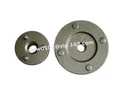

Forging parts play a crucial role in the defense industry, where reliability, strength, and precision are of utmost importance. As a forging parts supplier, I have witnessed firsthand the diverse applications of these components in various defense systems. In this blog, I will explore the different types of forging parts used in the defense industry and their significance.
The Significance of Forging Parts in the Defense Industry
The defense industry demands components that can withstand extreme conditions, including high temperatures, pressures, and mechanical stresses. Forging, a manufacturing process that involves shaping metal using compressive forces, offers several advantages over other methods such as casting or machining. Forged parts are known for their superior strength, toughness, and fatigue resistance, making them ideal for use in critical defense applications.
One of the key benefits of forging is the ability to control the grain structure of the metal. During the forging process, the metal is heated and deformed, which aligns the grain structure in a specific direction. This results in a more uniform and continuous grain flow, enhancing the mechanical properties of the part. As a result, forged parts are less likely to develop cracks or fail under stress, ensuring the reliability and safety of defense systems.


Another advantage of forging is the ability to produce complex shapes with high precision. Modern forging techniques, such as die forging and precision forging, allow for the creation of intricate geometries that are difficult or impossible to achieve using other manufacturing methods. This enables the design and production of highly efficient and optimized defense components, such as turbine blades, gears, and structural parts.
Types of Forging Parts Used in the Defense Industry
Structural Components
Structural components are the backbone of any defense system, providing support and stability to the entire structure. Forged structural parts are commonly used in military vehicles, aircraft, ships, and buildings. These components are designed to withstand heavy loads and extreme environmental conditions, ensuring the integrity and safety of the defense system.
Examples of forged structural components include chassis frames, axles, suspension components, and landing gear. These parts are typically made from high-strength steel alloys, such as AISI 4140 or AISI 4340, which offer excellent strength, toughness, and fatigue resistance. The use of forged structural components in defense systems not only improves the performance and durability of the vehicle or aircraft but also reduces the weight and fuel consumption, increasing the overall efficiency and operational range.
Weapon Systems
Forged parts are also widely used in weapon systems, including firearms, artillery, missiles, and rockets. These components are critical for the performance and accuracy of the weapon, ensuring the effective delivery of firepower.
Examples of forged weapon components include barrels, receivers, bolts, and triggers. These parts are typically made from high-quality steel alloys, such as stainless steel or tool steel, which offer excellent corrosion resistance, hardness, and wear resistance. The use of forged weapon components in defense systems not only improves the reliability and durability of the weapon but also enhances the accuracy and precision of the shot, increasing the effectiveness of the military operation.
Turbine Components
Turbine components are essential for the operation of gas turbines, which are widely used in aircraft engines, power generation plants, and naval vessels. Forged turbine parts are designed to withstand high temperatures, pressures, and rotational speeds, ensuring the efficient and reliable operation of the turbine.
Examples of forged turbine components include turbine blades, discs, shafts, and casings. These parts are typically made from high-temperature alloys, such as nickel-based superalloys or titanium alloys, which offer excellent strength, creep resistance, and oxidation resistance. The use of forged turbine components in defense systems not only improves the performance and efficiency of the turbine but also reduces the maintenance and replacement costs, increasing the overall reliability and availability of the defense system.
Armor and Protection Systems
Armor and protection systems are designed to protect military personnel and equipment from enemy attacks, including bullets, shrapnel, and explosives. Forged armor components are commonly used in military vehicles, aircraft, ships, and buildings, providing a high level of protection against various threats.
Examples of forged armor components include armor plates, helmets, body armor, and vehicle hulls. These parts are typically made from high-strength steel alloys, such as high-hardness armor steel or ultra-high-strength steel, which offer excellent ballistic resistance and energy absorption capabilities. The use of forged armor components in defense systems not only improves the protection and safety of military personnel and equipment but also reduces the weight and size of the armor, increasing the mobility and maneuverability of the defense system.
Our Forging Parts for the Defense Industry
As a forging parts supplier, we offer a wide range of high-quality forging parts for the defense industry. Our products are designed and manufactured to meet the strictest quality standards and specifications, ensuring the reliability and performance of defense systems.
We specialize in the production of structural components, weapon systems, turbine components, and armor and protection systems. Our forging capabilities include die forging, precision forging, open die forging, and cold forging, allowing us to produce a variety of complex shapes and sizes with high precision.
Some of our popular forging parts for the defense industry include:
- OEM A105 Aisi1045 Small Steel Metal Forge: These small steel metal forgings are suitable for a variety of defense applications, including weapon systems and structural components.
- 1045 ,c45,Q235, St37-2, Q345 Carbon Steel Forging: These carbon steel forgings are commonly used in structural components and weapon systems, offering excellent strength and toughness.
- China Big Quantity With Low Price Cold Forging: Our cold forging services are ideal for the production of small to medium-sized parts with high precision and low cost.
Contact Us for Defense Forging Parts
If you are in the defense industry and are looking for high-quality forging parts, we would be happy to assist you. Our team of experienced engineers and technicians can work with you to design and develop custom forging solutions that meet your specific requirements and specifications.
We offer competitive pricing, short lead times, and excellent customer service, ensuring that you receive the best value for your investment. Whether you need a single prototype or a large production run, we have the capabilities and resources to meet your needs.
Contact us today to learn more about our forging parts for the defense industry and to discuss your specific requirements. We look forward to working with you to provide the best forging solutions for your defense applications.
References
- ASM Handbook, Volume 14A: Metalworking: Forging, ASM International, 2013.
- Metals Handbook Desk Edition, Third Edition, ASM International, 2005.
- Forging Technology: Principles and Applications, Second Edition, John Wiley & Sons, 2012.