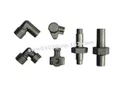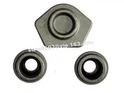

In the dynamic landscape of the construction industry, forging parts play a pivotal role in ensuring the structural integrity, durability, and safety of various building projects. As a forging parts supplier, I understand the critical importance of meeting the stringent requirements that the construction sector demands. This blog post delves into the key requirements for forging parts in the construction industry, highlighting the factors that contribute to their quality and performance.
Material Selection
The choice of material is the foundation of any forging process. In the construction industry, materials must possess specific properties to withstand the harsh environmental conditions, heavy loads, and mechanical stresses encountered in building structures. Common materials used for forging parts in construction include carbon steel, alloy steel, stainless steel, and aluminum.
Carbon steel is a popular choice due to its high strength, affordability, and ease of processing. It is suitable for applications where strength and durability are paramount, such as structural beams, columns, and fasteners. Alloy steel, on the other hand, offers enhanced mechanical properties, including higher strength, toughness, and corrosion resistance. It is often used in critical components that require superior performance, such as bridge joints and heavy machinery parts.
Stainless steel is valued for its excellent corrosion resistance, making it ideal for outdoor applications and structures exposed to moisture and chemicals. It is commonly used in architectural features, handrails, and decorative elements. Aluminum is lightweight, yet strong, and has good corrosion resistance. It is widely used in construction for applications where weight reduction is crucial, such as in high - rise buildings and transportation infrastructure. For more information on the aluminum forging process with heat treatment, you can visit Aluminum Forging Process With Heat Treatment.
Dimensional Accuracy
Precision is of utmost importance in the construction industry. Forging parts must be manufactured to exact specifications to ensure proper fit and function within the overall structure. Dimensional accuracy is achieved through advanced forging techniques, such as die forging and precision machining.
Die forging involves the use of dies to shape the metal into the desired form. This process allows for high levels of precision and repeatability, ensuring that each part meets the required dimensions. After forging, parts may undergo additional machining operations, such as turning, milling, and grinding, to achieve the final dimensions and surface finish. Computer - Numerical Control (CNC) machining is a popular method for achieving high - precision results. Our OEM 6061 - T6 Forged Aluminum With CNC Machining showcases our ability to produce parts with exceptional dimensional accuracy using this advanced technology.
Mechanical Properties
Forging parts in the construction industry must possess specific mechanical properties to withstand the loads and stresses they will encounter during service. These properties include strength, hardness, toughness, and ductility.
Strength is the ability of a material to resist deformation under load. High - strength forging parts are essential for supporting heavy structures and ensuring the safety of the building. Hardness is a measure of a material's resistance to indentation or scratching. It is important for parts that are subject to wear and abrasion, such as gears and bearings.


Toughness is the ability of a material to absorb energy and deform plastically before fracturing. This property is crucial for parts that may experience impact or shock loads, such as structural components in earthquake - prone areas. Ductility is the ability of a material to be stretched or deformed without breaking. It allows for the absorption of energy during deformation and is important for parts that may be subjected to bending or stretching forces.
Surface Finish
The surface finish of forging parts can have a significant impact on their performance and appearance. A smooth surface finish reduces friction, wear, and corrosion, and can improve the aesthetic appeal of the part. Surface finishing processes, such as shot blasting, grinding, and polishing, are commonly used to achieve the desired surface quality.
Shot blasting is a process that uses small metal shots to clean and roughen the surface of the part. This helps to remove any scale, rust, or impurities and improves the adhesion of coatings. Grinding and polishing are used to achieve a smooth and reflective surface finish, which is often required for architectural and decorative applications.
Quality Control
Quality control is an integral part of the forging process. It ensures that all forging parts meet the required standards and specifications. Our company follows a comprehensive quality control system that includes raw material inspection, in - process inspection, and final product inspection.
Raw material inspection involves testing the chemical composition, mechanical properties, and microstructure of the incoming materials to ensure their quality. In - process inspection is carried out at various stages of the forging process to monitor the dimensional accuracy, surface quality, and mechanical properties of the parts. Final product inspection is conducted on the finished parts to verify that they meet all the specified requirements. We adhere to international standards and regulations, such as ISO 9001, to ensure the highest level of quality in our products. For more details on our professional metal forging process, please visit Professional Metal Forging Process.
Compliance with Standards and Regulations
The construction industry is highly regulated, and forging parts must comply with various national and international standards and regulations. These standards cover aspects such as material properties, dimensional accuracy, mechanical performance, and safety requirements.
For example, in the United States, the American Society for Testing and Materials (ASTM) sets standards for the materials and testing methods used in construction. In Europe, the European Committee for Standardization (CEN) develops standards for construction products. Our company is committed to ensuring that all our forging parts comply with the relevant standards and regulations, providing our customers with peace of mind and confidence in our products.
Customization
The construction industry often has unique requirements, and many projects demand customized forging parts. As a forging parts supplier, we have the expertise and capabilities to design and manufacture custom - made parts to meet the specific needs of our customers.
Our engineering team works closely with customers to understand their requirements and develop customized solutions. We use advanced design software and simulation tools to optimize the design of the parts and ensure their performance. Whether it's a one - off prototype or a large - scale production run, we can provide high - quality customized forging parts in a timely manner.
Cost - Effectiveness
In addition to meeting the technical requirements, forging parts in the construction industry must also be cost - effective. Our company understands the importance of providing high - quality products at competitive prices. We achieve cost - effectiveness through efficient production processes, optimized material usage, and strategic sourcing.
By streamlining our production processes, we can reduce manufacturing time and costs. We also work closely with our suppliers to source high - quality materials at the best possible prices. This allows us to offer our customers cost - effective forging solutions without compromising on quality.
Conclusion
As a forging parts supplier, we recognize the diverse and demanding requirements of the construction industry. By focusing on material selection, dimensional accuracy, mechanical properties, surface finish, quality control, compliance with standards, customization, and cost - effectiveness, we are able to provide high - quality forging parts that meet the needs of our customers.
If you are in the construction industry and are looking for a reliable forging parts supplier, we would be delighted to discuss your requirements. Our team of experts is ready to assist you in finding the best forging solutions for your projects. Contact us today to start the procurement discussion and discover how our forging parts can contribute to the success of your construction endeavors.
References
- ASM Handbook Committee. (2008). ASM Handbook Volume 14A: Metalworking: Forging. ASM International.
- Dieter, G. E. (1988). Mechanical Metallurgy. McGraw - Hill.
- Kalpakjian, S., & Schmid, S. R. (2008). Manufacturing Engineering and Technology. Pearson Prentice Hall.