
What are the requirements for forging parts in the telecommunications industry?
Hey there! I'm a supplier of forging parts, and I've been deep in this business for a while. The telecommunications industry is booming, and it has some pretty strict and unique requirements for forging parts. In this blog, I'll share some insights into what these requirements are.
Precision and Tolerance
First off, precision is key in the telecommunications industry. Forging parts used in telecom equipment need to fit together perfectly. Even the slightest deviation can lead to signal interference or equipment malfunction. For example, connectors and brackets in base stations must be fabricated with high precision. We, as forging parts suppliers, have to ensure that the dimensions of our parts are accurate within very tight tolerances. It's not just about making parts that are close to the desired size; we need to hit those exact specifications every time.
The tolerances required can be as small as a few thousandths of an inch. This demands the use of advanced machining and forging techniques. Our team has to be well - trained in operating high - precision machinery. We also conduct multiple quality checks during the manufacturing process to make sure that the parts meet the required precision standards. If you're looking for professional suppliers who can achieve such high precision, Professional 6061 - T6 Aluminum Forging Suppliers are a great option. 6061 - T6 aluminum is a popular material in the telecom industry due to its good strength - to - weight ratio, and these suppliers have the expertise to forge parts with the necessary precision.
Material Properties
The choice of materials for forging parts in the telecommunications industry is crucial. Different parts have different material requirements based on their functions.
Conductivity
Many telecom forging parts need to have good electrical conductivity. This is because the efficient transmission of electrical signals is the core of the telecom business. Metals like copper and aluminum are commonly used. Copper has excellent electrical conductivity, which is why it's often used for components like conductors and grounding parts. Aluminum, on the other hand, is lighter than copper and also has decent conductivity. It's a great choice for parts where weight is a concern, such as in mobile devices or antenna brackets.
Durability and Corrosion Resistance
Telecom equipment is often exposed to various environmental conditions. Whether it's a base station in a humid coastal area or a satellite in space, the forging parts need to be durable and resistant to corrosion. Stainless steel is a go - to material in many cases. It offers good strength and excellent corrosion resistance. High Quality Forging Stainless Steel suppliers can provide parts that can withstand harsh environments without deteriorating over time. Carbon steel can also be used, especially for parts that require high strength. However, it may need additional surface treatments to enhance its corrosion resistance, like galvanizing or powder coating. And Custom Fabrication Carbon Steel Hot Forging Parts can be tailored to meet specific strength and design requirements.
Design and Complexity
The telecommunications industry is constantly evolving, and new technologies require more complex forging part designs. For example, with the development of 5G technology, the design of antenna components has become more intricate. These parts need to be designed to support multiple frequencies and beam - forming capabilities.
As a forging parts supplier, we need to work closely with telecom manufacturers to understand their design requirements. Our engineers use advanced CAD (Computer - Aided Design) software to create detailed 3D models of the parts. We also consider the manufacturability of the design. A complex design may look great on paper, but if it's not feasible to manufacture, it's of no use. We often make suggestions to optimize the design to ensure both functionality and ease of production.
Surface Finish
The surface finish of forging parts in the telecom industry is not just about aesthetics. It has practical implications as well. A smooth surface finish can reduce signal loss in electrical components. It also helps in preventing dust and moisture from accumulating on the parts, which could otherwise lead to short - circuits or other malfunctions.
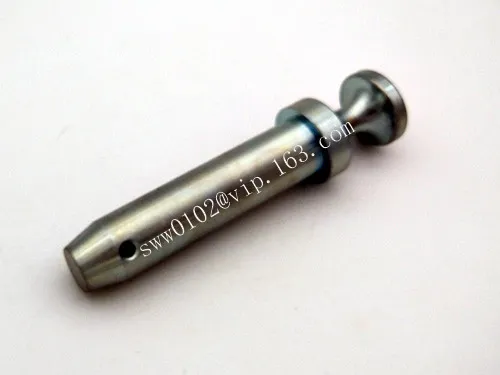

For parts that are visible, a good surface finish can also enhance the overall appearance of the telecom equipment. We use various surface finishing techniques such as polishing, anodizing, and plating. Anodizing, for example, can not only improve the surface finish but also increase the corrosion resistance of aluminum parts.
Quality Control
Quality control is of utmost importance in supplying forging parts to the telecommunications industry. We have a comprehensive quality control system in place. It starts from the raw material inspection. We only source materials from reliable suppliers and conduct tests to verify their properties.
During the forging process, we monitor key parameters like temperature, pressure, and forging speed. This ensures that the parts are formed correctly and have the desired mechanical properties. After the forging is complete, we perform a series of inspections. This includes dimensional checks using coordinate measuring machines (CMMs), non - destructive testing (NDT) methods like ultrasonic testing and X - ray inspection to detect any internal defects, and hardness testing.
Only parts that pass all these quality checks are shipped to our customers. This strict quality control process gives our customers confidence that the parts they receive will perform as expected in their telecom equipment.
Cost - effectiveness
In addition to all the technical requirements, cost - effectiveness is also a major consideration in the telecommunications industry. Telecom companies are always looking for ways to reduce their production costs without sacrificing quality.
As a forging parts supplier, we understand this need. We continuously look for ways to optimize our production processes to reduce costs. This could involve using more efficient forging techniques, reducing waste, and sourcing raw materials at competitive prices. We can then offer our customers high - quality forging parts at a reasonable price.
Conclusion
The requirements for forging parts in the telecommunications industry are diverse and demanding. From high precision and specific material properties to complex designs and strict quality control, every aspect matters. As a forging parts supplier, we're constantly adapting to meet these requirements.
If you're in the telecommunications industry and looking for reliable forging parts suppliers, I'd love to have a chat. We can discuss your specific needs, and I'm confident that we can provide you with the right forging parts that meet all the necessary requirements.
References
- Metal Forging Handbook, Industrial Press
- Telecommunications Equipment Design and Manufacturing Guide, CRC Press