
Machine vibration is a critical factor that can significantly impact the quality and precision of CNC machining parts. As a supplier of CNC machining parts, I have witnessed firsthand the various effects of machine vibration on the manufacturing process and the final products. In this blog post, I will delve into the influence of machine vibration on CNC machining parts, exploring its causes, consequences, and potential solutions.
Causes of Machine Vibration in CNC Machining
There are several factors that can contribute to machine vibration in CNC machining. One of the primary causes is the imbalance of rotating components, such as the spindle or the cutting tool. When these components are not properly balanced, they can create uneven forces that lead to vibration. For example, a worn or damaged cutting tool can cause the spindle to vibrate, which in turn affects the machining process.
Another common cause of machine vibration is the improper alignment of the machine components. If the machine is not correctly aligned, it can result in misalignment of the cutting tool and the workpiece, leading to vibration and poor machining quality. Additionally, loose or worn-out machine parts, such as bearings or belts, can also contribute to vibration.
External factors, such as the environment in which the CNC machine is operating, can also cause vibration. For instance, vibrations from nearby machinery or the movement of people or vehicles in the vicinity can be transmitted to the CNC machine, affecting its performance.
Consequences of Machine Vibration on CNC Machining Parts
The impact of machine vibration on CNC machining parts can be far-reaching. One of the most obvious consequences is the reduced surface finish of the machined parts. Vibration can cause the cutting tool to chatter, resulting in a rough and uneven surface finish. This not only affects the aesthetic appearance of the parts but also their functionality, as a rough surface can lead to increased friction and wear.
Machine vibration can also lead to dimensional inaccuracies in the machined parts. The vibration can cause the cutting tool to deviate from its intended path, resulting in parts that do not meet the required specifications. This can be particularly problematic in applications where high precision is required, such as in the aerospace or medical industries.


In addition to surface finish and dimensional accuracy, machine vibration can also affect the tool life. The constant vibration can cause the cutting tool to wear out more quickly, leading to increased tool costs and downtime for tool replacement. Moreover, vibration can also cause the tool to break, which can damage the workpiece and the machine itself.
Examples of Affected CNC Machining Parts
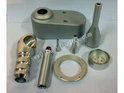
To illustrate the impact of machine vibration on CNC machining parts, let's take a look at some specific examples. Consider the Custom CNC Machining Nice Surface Stainless Steel Air Sensor Flange. This part requires a high level of precision and a smooth surface finish to ensure proper functionality. However, if machine vibration occurs during the machining process, the surface finish of the flange may be compromised, leading to potential issues with air flow and sensor performance.
Another example is the OEM Casted SS304 CNC Machine Components. These components are often used in critical applications where dimensional accuracy is crucial. Machine vibration can cause the components to deviate from the required dimensions, resulting in parts that do not fit properly or function as intended.
The OEM CNC Machining SS304 Bushing Washer is also susceptible to the effects of machine vibration. A rough surface finish or dimensional inaccuracies in the bushing washer can lead to increased friction and wear, reducing the lifespan of the component and potentially causing other problems in the machine.
Solutions to Mitigate Machine Vibration
Fortunately, there are several measures that can be taken to mitigate machine vibration in CNC machining. One of the most effective ways is to ensure proper maintenance of the CNC machine. This includes regular inspection and replacement of worn-out parts, such as bearings and belts, as well as proper alignment of the machine components.
Balancing the rotating components, such as the spindle and the cutting tool, is also crucial to reduce vibration. This can be achieved through the use of balancing equipment or by using high-quality, balanced components. Additionally, using vibration-damping materials, such as rubber pads or isolation mounts, can help to absorb and reduce the vibration transmitted to the machine.
Another solution is to optimize the machining parameters, such as the cutting speed, feed rate, and depth of cut. By selecting the appropriate parameters, it is possible to reduce the cutting forces and minimize the likelihood of vibration. Additionally, using advanced machining techniques, such as high-speed machining or trochoidal milling, can also help to reduce vibration and improve the machining quality.
Importance of Addressing Machine Vibration for CNC Machining Parts Suppliers
As a supplier of CNC machining parts, addressing machine vibration is of utmost importance. By ensuring that our machines are operating with minimal vibration, we can produce high-quality parts that meet the strict requirements of our customers. This not only helps to build a good reputation for our company but also allows us to stay competitive in the market.
Moreover, by reducing machine vibration, we can also improve the efficiency of our manufacturing process. This includes reducing tool wear, minimizing downtime for tool replacement, and increasing the productivity of our machines. In the long run, this can lead to cost savings and improved profitability for our business.
Conclusion
Machine vibration is a significant factor that can have a profound impact on the quality and precision of CNC machining parts. As a supplier of CNC machining parts, it is essential to understand the causes and consequences of machine vibration and take appropriate measures to mitigate it. By ensuring proper maintenance of the machines, balancing the rotating components, optimizing the machining parameters, and using advanced machining techniques, we can produce high-quality parts that meet the needs of our customers.
If you are in need of high-quality CNC machining parts, I encourage you to contact us for a procurement discussion. We have the expertise and experience to provide you with the best solutions for your machining needs.
References
- Altintas, Y. (2000). Manufacturing Automation: Metal Cutting Mechanics, Machine Tool Vibrations, and CNC Design. Cambridge University Press.
- Byrne, G., Dornfeld, D., Inasaki, I., Ketteler, G., & Toenshoff, H. K. (2003). Tool wear and surface integrity in machining of nickel-based superalloys. CIRP Annals - Manufacturing Technology, 52(2), 587-600.
- König, W., & Aurich, J. C. (2001). Fundamentals of Cutting. Springer.