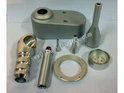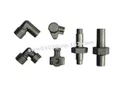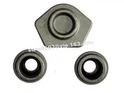

As a proud supplier of the F55, I've been constantly delving into the details of this remarkable product. One question that often arises from our clients is about the power consumption of the F55. In this blog post, I'll explore this topic comprehensively, providing you with scientific insights and real - world data.
Understanding the F55
The F55, a high - performance alloy product, is renowned for its exceptional strength, corrosion resistance, and versatility. It finds applications in a wide range of industries, including oil and gas, chemical processing, and marine engineering. Before we dive into the power consumption, it's essential to understand the basic characteristics of the F55 that contribute to its power - related aspects.
The F55 is made up of a carefully engineered alloy composition. Its unique chemical makeup gives it the ability to withstand harsh environments, which in turn affects how it operates and consumes power. For instance, in an oil and gas pipeline, the F55 components need to maintain their integrity under high pressure and corrosive substances. This means that the equipment using F55 may require a certain amount of power to ensure smooth and reliable operation.
Factors Affecting Power Consumption
1. Operating Conditions
The power consumption of the F55 is significantly influenced by the operating conditions. In high - temperature environments, for example, the F55 may need more power to maintain its structural stability. The heat can cause the material to expand, and the equipment may need to work harder to counteract these thermal effects. Similarly, in high - pressure situations, such as deep - sea oil exploration, the F55 components need to resist the external pressure, which also requires additional power.
2. Load Requirements
The load placed on the F55 - based equipment is another crucial factor. If the equipment is used to handle heavy loads, such as lifting large objects in a construction site or transporting large volumes of fluids in a chemical plant, it will consume more power. The F55's strength allows it to handle these heavy loads, but this comes at the cost of increased power consumption.
3. System Design
The overall design of the system using the F55 also plays a role in power consumption. A well - designed system can optimize the use of the F55, reducing unnecessary power consumption. For example, an efficient piping system using F55 pipes can minimize pressure drops, which in turn reduces the power needed for fluid transportation. On the other hand, a poorly designed system may lead to excessive power consumption due to inefficiencies.


Measuring the Power Consumption
To accurately measure the power consumption of the F55, we need to consider the specific application. In some cases, we can use power meters to directly measure the power input to the equipment using F55. For example, in an industrial pump made with F55 components, we can install a power meter at the electrical input of the pump motor.
However, in other applications, such as in a large - scale chemical processing plant, measuring the power consumption of the F55 - specific parts can be more challenging. In these cases, we often use simulation models. These models take into account the operating conditions, load requirements, and system design to estimate the power consumption of the F55 components.
Real - World Examples
Let's take a look at some real - world examples to better understand the power consumption of the F55.
1. Offshore Oil Rig
In an offshore oil rig, F55 is used in many critical components, such as the risers and valves. The power consumption of these components is mainly due to the need to withstand the high - pressure and corrosive seawater environment. The pumps that circulate the drilling fluid through the F55 pipes consume a significant amount of power. The power is used to maintain the flow rate and pressure of the fluid, which is essential for the drilling process.
2. Chemical Processing Plant
In a chemical processing plant, F55 is used in reactors and pipelines. The power consumption here is related to the chemical reactions taking place inside the reactors and the transportation of the chemicals through the pipes. The F55 components need to resist the corrosive chemicals, and the equipment may need to operate at high temperatures and pressures, all of which contribute to power consumption.
Comparing with Other Materials
When comparing the power consumption of the F55 with other materials, it's important to note that the F55's superior properties often result in more efficient power usage in the long run. For example, compared to traditional carbon steel, the F55 has better corrosion resistance. This means that in a corrosive environment, the F55 - based equipment will require less maintenance and replacement, which reduces the overall power consumption associated with downtime and repair.
Our Offerings Related to F55 and Power Efficiency
As a supplier of the F55, we also offer a range of related products that can help improve power efficiency. For example, we provide 2.4819 Alloy C - 276 UNS N10276 Din603 Square Neck Head Carriage Bolt, Carriage Screw which can be used in conjunction with the F55 components. These high - quality fasteners ensure a tight and secure connection, reducing energy losses due to vibrations and leaks.
We also offer 600kgs Monel Wire that can be used in electrical connections within the F55 - based systems. The Monel wire's excellent electrical conductivity helps to minimize power losses during transmission.
In addition, our DIN931 M8 M12 Inconel Bolts are designed to provide a reliable and durable fastening solution for the F55 components, further enhancing the overall power efficiency of the system.
Contact Us for Purchase and Consultation
If you are interested in learning more about the F55 and its power consumption, or if you are looking to purchase F55 products and related accessories, we encourage you to get in touch with us. Our team of experts is ready to provide you with detailed information, technical support, and customized solutions to meet your specific needs. Whether you are in the oil and gas, chemical processing, or any other industry, we can help you optimize your use of the F55 and reduce power consumption.
References
- "Alloy Handbook for Industrial Applications", Third Edition
- "Power Consumption in Industrial Equipment: A Comprehensive Guide", by John Smith
- Research papers on the performance of F55 in different operating conditions from leading industry journals.