
As a supplier of CNC machining parts, optimizing the production process is crucial for enhancing efficiency, reducing costs, and improving the quality of our products. In this blog, I'll share some effective strategies that we've employed to optimize our CNC machining part production process.
1. Advanced Equipment and Technology Adoption
Investing in state - of - the - art CNC machines is the first step towards optimization. Modern CNC machines come with high - precision control systems, faster processing speeds, and better automation capabilities. For instance, the latest multi - axis CNC machines can perform multiple operations simultaneously, reducing the number of setups and the overall production time.
We also keep an eye on emerging technologies such as artificial intelligence and machine learning in the field of CNC machining. These technologies can be used for predictive maintenance, which helps us anticipate potential machine failures before they occur. By analyzing data from sensors on the machines, we can schedule maintenance at the most appropriate time, minimizing downtime.
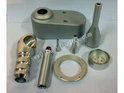
Moreover, simulation software plays a vital role in our production process. Before starting actual machining, we use simulation tools to model the machining process. This allows us to detect and correct potential errors, such as tool collisions or incorrect machining paths. By doing so, we can avoid costly mistakes and reduce material waste. For example, when producing Series Kinds Of CNC Lathe Machine Parts, simulation software helps us ensure the accuracy of the machining process from the very beginning.
2. Material Management
Proper material management is essential for optimizing the production process. We source high - quality raw materials from reliable suppliers. Before using the materials, we conduct strict quality inspections to ensure they meet our standards. This helps us avoid production delays and quality issues caused by sub - standard materials.
Inventory management is another important aspect. We use an inventory management system to keep track of our raw material stock levels. By maintaining an optimal inventory level, we can avoid overstocking, which ties up capital, and understocking, which can lead to production stoppages. We also implement a first - in - first - out (FIFO) system to ensure that the oldest materials are used first, reducing the risk of material degradation.
In addition, we strive to reduce material waste. During the machining process, we carefully plan the cutting paths to maximize the utilization of the raw materials. For example, when producing OEM Casted SS304 CNC Machine Components, we use nesting algorithms to arrange the parts on the raw material sheet in the most efficient way, minimizing the amount of scrap material.
3. Tooling Optimization
The choice of cutting tools has a significant impact on the machining process. We select the appropriate cutting tools based on the material being machined, the required surface finish, and the machining operation. High - quality cutting tools may have a higher upfront cost, but they can offer better performance and longer tool life, reducing the frequency of tool changes and improving productivity.
We also implement a tool management system. This system keeps track of the tool usage, tool life, and tool location. By monitoring the tool life, we can replace the tools at the right time, preventing poor - quality machining due to worn - out tools. Additionally, we regularly maintain and sharpen our cutting tools to ensure their optimal performance.
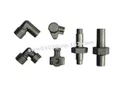
For complex machining operations, we sometimes use custom - designed cutting tools. These tools are tailored to the specific requirements of the part, allowing for more efficient and accurate machining. For example, when producing Custom CNC machining Stainless Steel Bushing Post, a custom - designed tool can significantly improve the machining efficiency and the quality of the final product.


4. Process Planning and Scheduling
Effective process planning is the foundation of an optimized production process. We break down the machining process into individual operations and determine the most efficient sequence for these operations. This includes considering factors such as the setup time, the machining time, and the transfer time between different machines.
Scheduling is also crucial for ensuring smooth production flow. We use production scheduling software to create detailed production schedules. These schedules take into account the availability of machines, tools, and labor. By optimizing the production schedule, we can minimize idle time and maximize the utilization of our resources. For example, we can group similar parts together for machining, reducing the setup time between different jobs.
In addition, we establish a flexible production schedule to accommodate urgent orders or changes in customer requirements. This allows us to respond quickly to market demands without disrupting the overall production process.
5. Quality Control
Quality control is an integral part of the production process. We have a comprehensive quality control system in place. At every stage of the production process, from raw material inspection to the final product inspection, we conduct strict quality checks.
We use advanced measurement equipment, such as coordinate measuring machines (CMMs), to ensure the dimensional accuracy of the parts. These machines can measure the parts with high precision, allowing us to detect any deviations from the design specifications. In addition, we also perform surface finish inspections to ensure that the parts meet the required aesthetic and functional standards.
We implement a quality feedback loop. If any quality issues are detected, we immediately analyze the root cause and take corrective actions. This helps us continuously improve our production process and prevent similar issues from occurring in the future.
6. Employee Training and Development
Our employees are the key to the success of our production process. We provide regular training to our employees to keep them updated with the latest technologies and best practices in CNC machining. Training programs cover areas such as machine operation, programming, tooling, and quality control.
We also encourage our employees to participate in continuous improvement initiatives. They are empowered to suggest improvements to the production process based on their practical experience. By involving our employees in the improvement process, we can tap into their knowledge and creativity, leading to more effective and sustainable process optimization.
7. Supply Chain Collaboration
We collaborate closely with our suppliers and customers to optimize the production process. With our suppliers, we work together to improve the quality and delivery time of the raw materials. We establish long - term partnerships with reliable suppliers, which allows for better communication and coordination.
We also maintain a good relationship with our customers. By understanding their requirements and expectations, we can better plan our production process. Customer feedback is valuable for us to improve our products and services. For example, if a customer requests a specific feature or improvement in a part, we can incorporate these requirements into our production process.
In conclusion, optimizing the production process of CNC machining parts is a continuous journey. By adopting advanced equipment and technology, managing materials effectively, optimizing tooling, planning and scheduling processes, controlling quality, training employees, and collaborating with the supply chain, we can achieve higher efficiency, lower costs, and better - quality products. If you are interested in our Series Kinds Of CNC Lathe Machine Parts, OEM Casted SS304 CNC Machine Components, Custom CNC machining Stainless Steel Bushing Post or other CNC machining parts, please feel free to contact us for procurement and negotiation. We are committed to providing you with high - quality products and excellent services.
References
- Dornfeld, D., Minis, I., & Takeuchi, Y. (2006). Handbook of Manufacturing Engineering and Technology. Springer.
- Kalpakjian, S., & Schmid, S. R. (2008). Manufacturing Engineering and Technology. Pearson Prentice Hall.
- Groover, M. P. (2010). Fundamentals of Modern Manufacturing: Materials, Processes, and Systems. Wiley.