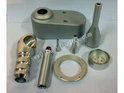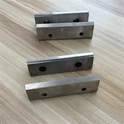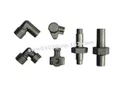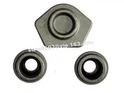

As a seasoned supplier of CNC machining parts, one of the most frequently asked questions I encounter is, "How long does it take to machine CNC parts?" The answer to this question is far from straightforward, as it hinges on a multitude of factors that can significantly influence the machining timeline. In this blog post, I'll delve into these factors to provide you with a comprehensive understanding of the time requirements for CNC machining.


Complexity of the Design
The complexity of the part design is perhaps the most significant factor affecting machining time. Simple parts with basic geometries, such as flat plates or cylinders, can be machined relatively quickly. These parts typically require fewer machining operations and less intricate tool paths, allowing for faster production. On the other hand, complex parts with intricate shapes, tight tolerances, and multiple features demand more time and precision. For example, a part with deep pockets, thin walls, or complex contours may require multiple setups, specialized tooling, and slower machining speeds to ensure accuracy.
Let's take a closer look at two hypothetical parts to illustrate this point. A basic OEM CNC Machining SS304 Bushing Washer with a simple circular shape and a few holes can be machined in a matter of minutes. The machining process involves turning the outer diameter, boring the inner diameter, and drilling the holes, all of which can be completed using standard tooling and straightforward programming. In contrast, an ODM AA6061-T6 CNC Manufacturing part with a complex 3D shape and tight tolerances may take several hours or even days to machine. The part may require multiple machining operations, such as milling, turning, and grinding, as well as advanced programming techniques to achieve the desired accuracy.
Material Selection
The choice of material also plays a crucial role in determining the machining time. Different materials have varying hardness, strength, and machinability, which can affect the cutting speed, feed rate, and tool life. For instance, soft materials like aluminum and brass are relatively easy to machine and can be cut at higher speeds, resulting in shorter machining times. These materials also have a lower tendency to cause tool wear, allowing for longer tool life and fewer tool changes.
On the other hand, hard materials like stainless steel, titanium, and hardened steel are more difficult to machine and require slower cutting speeds and lower feed rates. These materials generate more heat during machining, which can cause tool wear and reduce the accuracy of the part. As a result, machining hard materials often takes longer and requires more frequent tool changes to maintain the quality of the cut.
For example, machining an OEM Polished AA6061-T6 CNC Milling Parts made of aluminum alloy may take significantly less time than machining a similar part made of stainless steel. The aluminum alloy can be cut at higher speeds and feeds, allowing for faster material removal and shorter machining cycles. In contrast, the stainless steel part may require slower cutting speeds and more conservative machining parameters to prevent tool wear and ensure the accuracy of the part.
Quantity of Parts
The quantity of parts being machined is another important factor to consider. In general, machining a single part may take longer per unit than machining a large batch of parts. This is because setting up the CNC machine for a single part involves more time and effort, including programming the machine, installing the tooling, and performing test cuts. Once the machine is set up, however, the machining time per part can be significantly reduced when machining multiple parts.
When machining a large batch of parts, the setup time can be spread out over the entire batch, resulting in a lower per-unit setup cost. Additionally, the machine can run continuously without the need for frequent setup changes, allowing for more efficient production. However, it's important to note that the total machining time for a large batch of parts will still depend on the complexity of the part design and the material being used.
Machine Capacity and Availability
The capacity and availability of the CNC machine also impact the machining time. Different CNC machines have different capabilities, such as the number of axes, the maximum spindle speed, and the size of the work envelope. Choosing the right machine for the job is essential to ensure efficient and accurate machining.
For example, a 3-axis CNC machine may be sufficient for machining simple parts with basic geometries, while a 5-axis CNC machine may be required for machining complex parts with multiple surfaces and angles. Using a machine with the appropriate capabilities can reduce the number of setups and machining operations, resulting in shorter machining times.
In addition to machine capacity, the availability of the machine is also a factor to consider. If the machine is already booked for other jobs, there may be a waiting period before the machining can begin. This can add to the overall lead time for the project. To minimize the impact of machine availability, it's important to plan ahead and schedule the machining jobs in advance.
Quality Control and Inspection
Quality control and inspection are essential steps in the CNC machining process to ensure that the parts meet the required specifications. These steps can add to the overall machining time, especially for parts with tight tolerances and high-quality requirements.
During the machining process, the parts may be inspected at various stages to check for dimensional accuracy, surface finish, and other quality parameters. This may involve using precision measuring instruments, such as calipers, micrometers, and coordinate measuring machines (CMMs). If any issues are detected, the parts may need to be re-machined or adjusted, which can further extend the machining time.
In addition to in-process inspection, the final parts are also typically subjected to a comprehensive inspection before being shipped to the customer. This ensures that the parts meet the customer's specifications and quality standards. The time required for quality control and inspection can vary depending on the complexity of the part and the level of quality required.
Conclusion
In conclusion, the time it takes to machine CNC parts depends on a variety of factors, including the complexity of the design, the material selection, the quantity of parts, the machine capacity and availability, and the quality control and inspection requirements. As a supplier of CNC machining parts, I understand the importance of providing accurate lead times to my customers. By carefully considering these factors and working closely with my customers, I can provide them with a realistic estimate of the machining time and ensure that their projects are completed on time and to their satisfaction.
If you're in need of high-quality CNC machining parts, I invite you to contact me to discuss your requirements. I have the expertise and experience to handle a wide range of machining projects, from simple parts to complex components. Let's work together to bring your ideas to life.
References
- "CNC Machining Basics: A Comprehensive Guide." Manufacturing.net.
- "Factors Affecting CNC Machining Time." Engineering.com.
- "Material Selection for CNC Machining." Thomasnet.com.