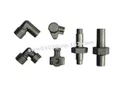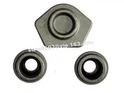

Hey there! As a forging parts supplier, I've been in the game for quite a while, and I know how crucial it is to evaluate the forging process of parts. It's not just about making something that looks right; it's about ensuring it meets the highest quality standards and performs well in its intended application. So, let's dive into how you can evaluate the forging process of parts.
1. Material Selection
First things first, the material used in forging is super important. Different materials have different properties, and choosing the right one can make or break the final product. For example, steel is a popular choice because it's strong and durable. We offer OEM Aisi1045 Steel Precise Press Forging, which is known for its excellent mechanical properties. Aluminum is another great option, especially when weight is a concern. Check out our High Quality Aluminum Forging Manufacturers page to see what we can offer in terms of aluminum forgings.
When evaluating the forging process, you need to consider if the material is suitable for the application. Is it strong enough? Does it have the right corrosion resistance? These are the questions you should be asking. Also, make sure the material is sourced from a reliable supplier. We always use high - quality materials to ensure the best results for our customers.
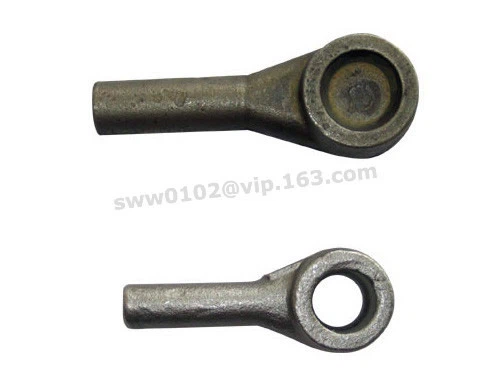

2. Forging Method
There are several forging methods out there, such as open - die forging, closed - die forging, and press forging. Each method has its own advantages and disadvantages.
Open - die forging is great for creating simple shapes and large parts. It allows for a lot of flexibility in terms of size and shape. However, it may not be as precise as closed - die forging. Closed - die forging, on the other hand, is used to create more complex and precise shapes. It's ideal for parts that require tight tolerances.
Press forging is a method that uses a press to apply force to the material. It's often used for high - volume production because it's fast and efficient. When evaluating the forging process, you need to determine which method is being used and if it's the right one for the part. For example, if you need a part with very high precision, closed - die forging or press forging might be the way to go.
3. Quality Control During Forging
Quality control is a continuous process during forging. It starts from the moment the material arrives at the shop and continues until the final product is shipped.
One of the key aspects of quality control is inspecting the material before forging. We check for any defects, such as cracks or impurities, in the raw material. During the forging process, we monitor things like temperature, pressure, and deformation. These parameters can have a big impact on the quality of the final product.
After forging, we perform a series of tests on the parts. Non - destructive testing methods, such as ultrasonic testing and magnetic particle testing, are used to detect any internal defects. Destructive testing, like tensile testing and hardness testing, can also be done to ensure the mechanical properties of the part meet the requirements.
4. Surface Finish
The surface finish of a forged part is important for both aesthetic and functional reasons. A good surface finish can improve the part's corrosion resistance and reduce friction.
There are several ways to achieve a good surface finish in forging. One way is by using the right dies. Well - designed and properly maintained dies can produce parts with a smooth surface. We also use post - forging processes, such as machining and grinding, to improve the surface finish.
When evaluating the forging process, look at the surface finish of the sample parts. Are there any rough spots, pits, or burrs? A high - quality forged part should have a smooth and uniform surface.
5. Dimensional Accuracy
Dimensional accuracy is crucial, especially for parts that need to fit together with other components. Even a small deviation in dimensions can cause problems in the assembly process and affect the performance of the final product.
During the forging process, we use precision tools and techniques to ensure the parts are within the specified tolerances. For example, we use CNC machining after forging to achieve very tight dimensional accuracy. When evaluating the forging process, ask for the tolerance specifications and check if the parts meet them. You can use measuring tools like calipers and micrometers to verify the dimensions.
6. Cost - Effectiveness
Cost is always a factor when it comes to manufacturing. When evaluating the forging process, you need to consider the cost - effectiveness. This includes not only the cost of the forging itself but also the cost of any post - forging processes, such as machining and heat treatment.
Our OEM Carbon Steel Q235 St37 - 2 C45 1010 Forged Steel is a cost - effective option for many applications. We strive to offer high - quality forgings at a reasonable price. You can compare the cost of different forging suppliers, but remember, the cheapest option may not always be the best. You need to balance cost with quality.
7. Supplier Experience and Reputation
The experience and reputation of the forging parts supplier are also important factors to consider. An experienced supplier is more likely to have the knowledge and expertise to handle different forging processes and materials.
Look for a supplier with a good track record. Check customer reviews and testimonials to see what other customers have to say about their products and services. At our company, we have years of experience in the forging industry, and we've built a reputation for providing high - quality forging parts.
In conclusion, evaluating the forging process of parts involves considering multiple factors, including material selection, forging method, quality control, surface finish, dimensional accuracy, cost - effectiveness, and the supplier's experience and reputation. By paying attention to these aspects, you can ensure that you get high - quality forging parts that meet your requirements.
If you're in the market for forging parts, we'd love to have a chat with you. Whether you have a specific design in mind or need help choosing the right forging solution, we're here to assist. Contact us for a quote and let's start a conversation about your forging needs.
References
- ASM Handbook, Volume 14A: Metalworking: Forging. ASM International.
- Kalpakjian, S., & Schmid, S. R. (2010). Manufacturing Engineering and Technology. Pearson.
- Dieter, G. E. (1988). Mechanical Metallurgy. McGraw - Hill.