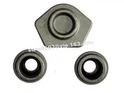

Forging is a manufacturing process that involves shaping metal using localized compressive forces. As a forging parts supplier, I've witnessed firsthand the challenges posed by cracking in forging parts during the forging process. Cracking not only affects the quality of the final product but also leads to increased production costs and potential safety hazards. In this blog, I'll share some effective strategies to prevent cracking in forging parts, drawing on my experience in the industry.


Understanding the Causes of Cracking in Forging Parts
Before delving into prevention methods, it's crucial to understand the root causes of cracking in forging parts. Several factors can contribute to cracking, including:
- Material Defects: Impurities, inclusions, or improper grain structure in the raw material can weaken the metal and make it more prone to cracking.
- Inadequate Heating: Uneven heating or improper heating rates can cause thermal stress within the metal, leading to cracking during forging.
- Excessive Deformation: Applying too much force or deformation during forging can exceed the metal's ductility limit, resulting in cracking.
- Poor Die Design: A poorly designed die can cause uneven stress distribution, leading to cracking in the forging part.
- Insufficient Lubrication: Lack of proper lubrication can increase friction between the metal and the die, causing surface cracking.
Strategies to Prevent Cracking in Forging Parts
1. Material Selection and Preparation
- Choose High - Quality Raw Materials: Selecting high - quality raw materials with minimal impurities and a proper grain structure is the first step in preventing cracking. Work closely with your material suppliers to ensure that the materials meet the required specifications.
- Perform Material Testing: Conduct thorough material testing, such as chemical analysis, hardness testing, and ultrasonic inspection, to detect any potential defects before forging.
- Pre - heat Treatment: Apply appropriate pre - heat treatment processes, such as annealing or normalizing, to refine the grain structure of the raw material and improve its ductility.
2. Heating and Temperature Control
- Uniform Heating: Ensure that the metal is heated uniformly to avoid thermal stress. Use advanced heating techniques, such as induction heating, which provides precise temperature control and uniform heating.
- Proper Heating Rate: Follow the recommended heating rate for the specific metal being forged. A slow and controlled heating rate helps to minimize thermal shock and reduce the risk of cracking.
- Temperature Monitoring: Continuously monitor the temperature of the metal during heating using thermocouples or infrared thermometers. Maintain the temperature within the optimal forging range to ensure proper metal flow and reduce the risk of cracking.
3. Forging Process Optimization
- Optimal Deformation Ratio: Determine the optimal deformation ratio for the forging process based on the material properties and the design of the part. Avoid excessive deformation, as it can lead to cracking.
- Multi - stage Forging: In some cases, multi - stage forging can be used to reduce the amount of deformation in each stage, thereby minimizing the risk of cracking. This approach allows the metal to gradually adapt to the shape changes.
- Die Design and Maintenance: Design the die with careful consideration of the metal flow and stress distribution. Use computer - aided design (CAD) and finite element analysis (FEA) to optimize the die design. Regularly inspect and maintain the dies to ensure that they are in good condition and free from wear and damage.
4. Lubrication
- Use High - Quality Lubricants: Apply high - quality lubricants to reduce friction between the metal and the die. The lubricant should have good thermal stability and adhesion properties to ensure effective lubrication throughout the forging process.
- Proper Lubrication Application: Ensure that the lubricant is applied evenly and in the right amount. Over - lubrication or under - lubrication can both have negative effects on the forging process.
5. Post - Forging Treatment
- Cooling Control: After forging, control the cooling rate of the part to prevent the formation of residual stresses. Slow cooling, such as air cooling or furnace cooling, can help to relieve residual stresses and reduce the risk of cracking.
- Stress Relieving: Apply stress - relieving heat treatment to the forging part after cooling. This process helps to eliminate any residual stresses that may have been generated during forging, further reducing the risk of cracking.
The Role of Technology in Preventing Cracking
Advancements in technology have significantly improved the forging process and helped to prevent cracking in forging parts. For example, Professional Metal Forging Process uses state - of - the - art equipment and techniques to ensure precise control over the forging process. Computer - controlled forging presses and automated die - changing systems allow for more consistent and accurate forging operations, reducing the risk of cracking.
In addition, the use of simulation software, such as FEA, enables engineers to predict the metal flow and stress distribution during forging. This helps in optimizing the forging process and die design, ultimately preventing cracking in the forging parts.
Cold Forging Considerations
Cold forging, which is carried out at room temperature or slightly elevated temperatures, has its own set of challenges when it comes to preventing cracking. China Big Quantity With Low Price Cold Forging offers cost - effective solutions, but special attention must be paid to the following points:
- Higher Material Strength Requirements: Cold forging requires materials with higher strength and ductility to withstand the deformation without cracking. Select materials that are specifically suitable for cold forging.
- Increased Friction: The lack of heat in cold forging increases friction between the metal and the die. Use high - performance lubricants and advanced die coatings to reduce friction and prevent surface cracking.
Aluminum Forging Considerations
Aluminum forging is widely used in various industries due to its lightweight and high - strength properties. However, aluminum is more prone to cracking compared to some other metals. High Quality Aluminum Forging Manufacturers need to take the following steps to prevent cracking:
- Low - Temperature Forging: Aluminum should be forged at relatively low temperatures to avoid excessive oxidation and grain growth. Precise temperature control is essential to prevent cracking.
- Special Lubricants: Use lubricants specifically designed for aluminum forging. These lubricants help to reduce friction and prevent surface damage, which can lead to cracking.
Conclusion
Preventing cracking in forging parts is a complex but achievable goal. By implementing the strategies outlined above, including proper material selection and preparation, heating and temperature control, forging process optimization, lubrication, and post - forging treatment, we can significantly reduce the risk of cracking in forging parts. As a forging parts supplier, I am committed to providing high - quality forging parts to our customers. If you are in need of forging parts or have any questions about the forging process, please feel free to contact us for a detailed discussion. We are ready to work with you to meet your forging requirements and ensure the highest quality of the products.
References
- Callister, W. D., & Rethwisch, D. G. (2017). Materials Science and Engineering: An Introduction. Wiley.
- Dieter, G. E. (1986). Mechanical Metallurgy. McGraw - Hill.
- Kalpakjian, S., & Schmid, S. R. (2014). Manufacturing Engineering and Technology. Pearson.