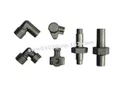

When it comes to forging parts, corrosion resistance is a crucial factor that directly impacts the longevity and performance of the components. As a forging parts supplier, I understand the significance of selecting the right materials to meet the diverse needs of our customers. In this blog, I will explore some of the corrosion - resistant forging parts materials that we commonly use and recommend.
Stainless Steel
Stainless steel is one of the most popular choices for corrosion - resistant forging parts. It contains a minimum of 10.5% chromium, which forms a passive oxide layer on the surface of the metal. This layer acts as a barrier, preventing oxygen and moisture from reaching the underlying metal and thus protecting it from corrosion.
There are several types of stainless steel, each with its own unique properties. Austenitic stainless steels, such as 304 and 316, are known for their excellent corrosion resistance, high ductility, and good formability. They are widely used in applications where corrosion resistance is a primary concern, such as in the food and beverage industry, chemical processing, and marine environments. For example, in a marine application, 316 stainless steel forging parts can withstand the harsh salt - water environment without significant corrosion.
Martensitic stainless steels, on the other hand, are heat - treatable and offer high strength and hardness. They are often used in applications where both corrosion resistance and high mechanical properties are required, such as in cutlery and turbine blades.
Ferritic stainless steels have good resistance to stress - corrosion cracking and are relatively inexpensive. They are commonly used in automotive exhaust systems and some architectural applications.
At our company, we offer a wide range of stainless steel forging parts, including OEM A105 Aisi1045 Small Steel Metal Forge. These parts are precision - forged to meet the strictest quality standards and provide reliable corrosion resistance in various applications.
Aluminum Alloys
Aluminum alloys are another excellent option for corrosion - resistant forging parts. Aluminum naturally forms a thin, protective oxide layer on its surface, which provides good resistance to atmospheric corrosion. By alloying aluminum with other elements such as copper, magnesium, and zinc, the corrosion resistance and mechanical properties can be further enhanced.
6061 aluminum alloy is a popular choice for forging parts. It has good corrosion resistance, medium strength, and excellent machinability. It is widely used in the aerospace, automotive, and marine industries. For instance, in the aerospace industry, 6061 aluminum forging parts can be found in aircraft structural components due to their combination of light weight and corrosion resistance.
5083 aluminum alloy is known for its high corrosion resistance, especially in marine environments. It has good weldability and is often used in boat building and other marine applications.
As a supplier, we have established partnerships with High Quality Aluminum Forging Manufacturers. We can provide high - quality aluminum forging parts that meet the specific requirements of our customers in terms of corrosion resistance and mechanical performance.


Nickel - Based Alloys
Nickel - based alloys are highly resistant to corrosion in a wide range of environments, including high - temperature and aggressive chemical environments. These alloys typically contain a high percentage of nickel, along with other elements such as chromium, molybdenum, and iron.
Inconel 625 is a well - known nickel - based alloy. It has excellent corrosion resistance in both oxidizing and reducing environments, as well as high strength and good weldability. It is commonly used in the aerospace, chemical processing, and oil and gas industries. For example, in the oil and gas industry, Inconel 625 forging parts can be used in subsea pipelines and wellhead equipment, where they are exposed to corrosive fluids and high pressures.
Hastelloy C - 276 is another popular nickel - based alloy. It offers outstanding resistance to a variety of corrosive media, including hydrochloric acid, sulfuric acid, and chlorine - containing solutions. It is often used in chemical processing plants and pharmaceutical manufacturing.
Titanium Alloys
Titanium alloys are renowned for their exceptional corrosion resistance, high strength - to - weight ratio, and biocompatibility. Titanium forms a stable oxide layer on its surface, which provides excellent protection against corrosion in many environments, including seawater, chlorine - containing solutions, and some acids.
Ti - 6Al - 4V is the most widely used titanium alloy. It has good corrosion resistance, high strength, and excellent fatigue resistance. It is commonly used in the aerospace, medical, and marine industries. In the aerospace industry, Ti - 6Al - 4V forging parts are used in aircraft engines and structural components due to their light weight and high performance.
Factors Affecting Corrosion Resistance of Forging Parts
In addition to the choice of material, several other factors can affect the corrosion resistance of forging parts.
The surface finish of the forging part plays an important role. A smooth surface finish can reduce the likelihood of corrosion by minimizing the areas where corrosive agents can accumulate. Surface treatments such as passivation, plating, and painting can also enhance the corrosion resistance of the parts. For example, a zinc - plated steel forging part will have better corrosion resistance than an untreated one.
The design of the forging part can also impact its corrosion resistance. Avoiding crevices, sharp corners, and areas where water can collect can help prevent corrosion. Proper drainage and ventilation should be considered in the design process.
The operating environment is a crucial factor. Different materials have different levels of resistance to specific corrosive agents. For example, a material that is highly resistant to acid corrosion may not perform well in a salt - water environment. Therefore, it is essential to select the appropriate material based on the actual operating conditions.
Our Professional Metal Forging Process
We follow a Professional Metal Forging Process to ensure the quality and corrosion resistance of our forging parts. Our process includes careful material selection, precision forging, heat treatment, and surface finishing.
During the material selection stage, we conduct thorough testing and analysis to ensure that the chosen material meets the required corrosion resistance and mechanical properties. Our precision forging process uses advanced equipment and techniques to produce parts with accurate dimensions and excellent internal structure.
Heat treatment is an important step to improve the mechanical properties and corrosion resistance of the forging parts. We use controlled heating and cooling processes to achieve the desired microstructure and properties.
Surface finishing is the final step to enhance the corrosion resistance of the parts. We offer a variety of surface treatments, including passivation, plating, and painting, to meet the specific requirements of our customers.
Contact Us for Your Forging Parts Needs
If you are in need of high - quality corrosion - resistant forging parts, we are here to help. Our team of experts can assist you in selecting the most suitable material and design for your specific application. Whether you need stainless steel, aluminum alloy, nickel - based alloy, or titanium alloy forging parts, we have the capabilities and experience to meet your needs.
We are committed to providing our customers with the best products and services. Contact us today to start a discussion about your forging parts requirements and let us work together to find the perfect solution for your project.
References
- ASM Handbook Volume 13A: Corrosion: Fundamentals, Testing, and Protection
- Metals Handbook Desk Edition, Third Edition
- "Corrosion Resistance of Metals and Alloys" by David A. Jones