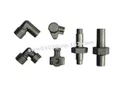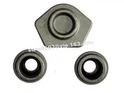

As a supplier of CNC machining parts, I've witnessed firsthand the dynamic nature of the market and the numerous factors that influence the pricing of these precision components. In this blog post, I'll delve into the key elements that play a role in determining the cost of CNC machining parts, offering insights that can help both buyers and industry enthusiasts better understand the pricing structure.


Material Selection
One of the most significant factors affecting the price of CNC machining parts is the choice of material. Different materials come with varying costs, and these costs can have a substantial impact on the final price of the part. For instance, metals like aluminum are relatively affordable and widely used in CNC machining due to their excellent machinability, lightweight, and corrosion resistance. On the other hand, materials such as titanium and stainless steel are more expensive. Titanium is known for its high strength - to - weight ratio and excellent corrosion resistance, making it ideal for aerospace and medical applications. However, its high cost is attributed to the difficulty in mining, refining, and machining.
Stainless steel, especially grades like Stainless Steel 304 Bov Flange [/cnc - machining - parts/stainless - steel - 304 - bov - flange.html], is also more costly compared to aluminum. It offers better corrosion resistance and durability, which is essential in applications where the part will be exposed to harsh environments. The price of the material is not only determined by its base cost but also by factors such as availability and market demand. If a particular material is in high demand and short supply, its price will naturally increase.
Complexity of Design
The complexity of the part's design is another crucial factor in pricing. Simple parts with basic geometries, such as flat plates or cylinders, are generally less expensive to machine. These parts require fewer machining operations and less time on the CNC machine. In contrast, parts with intricate designs, such as those with complex curves, deep pockets, or tight tolerances, demand more advanced machining techniques and longer machining times.
For example, a part with a high number of internal features or a part that requires multi - axis machining will be more costly. Multi - axis machining allows for the creation of complex shapes but requires more sophisticated equipment and highly skilled operators. Additionally, tight tolerances, which are often necessary in precision engineering applications, require more precise machining processes and more frequent quality control checks. This increases the overall cost of production as it takes more time and effort to ensure that the part meets the specified tolerances.
Quantity of Order
The quantity of parts ordered has a significant impact on the price per unit. When a customer places a large order, the cost per part is typically lower. This is because many of the costs associated with CNC machining, such as setup costs and tooling costs, are fixed. These costs are spread over a larger number of parts when the order quantity is high.
For example, setting up a CNC machine for a particular part involves tasks such as programming the machine, installing the appropriate cutting tools, and calibrating the machine. These setup costs are the same whether you are producing 10 parts or 1000 parts. When you produce a large quantity, the setup cost per part is significantly reduced. On the other hand, small quantity orders, like Small Quantity Order Custom CNC Aluminum Parts [/cnc - machining - parts/small - quantity - order - custom - cnc - aluminum.html], often have a higher cost per unit because the fixed costs are spread over a smaller number of parts.
Machining Processes
The type of machining processes used to produce the part also affects the price. There are various CNC machining processes, including milling, turning, drilling, and grinding. Each process has its own cost implications. Milling, for example, is a versatile process that can be used to create a wide range of shapes and features. However, it can be time - consuming, especially for complex parts, which increases the cost.
Turning is commonly used for cylindrical parts and is generally more efficient than milling for certain geometries. However, if a part requires both turning and milling operations, the cost will be higher as it involves multiple setups and more machining time. Grinding is a precision process used to achieve very smooth surfaces and tight tolerances. It is a slower and more expensive process compared to milling and turning, which adds to the overall cost of the part.
Tooling Costs
Tooling is an essential aspect of CNC machining, and the cost of tools can significantly impact the price of the parts. Different machining operations require different types of cutting tools, such as end mills, drills, and inserts. These tools wear out over time and need to be replaced regularly. High - quality tools are more expensive but can offer better performance and longer tool life.
For example, carbide cutting tools are more expensive than high - speed steel tools but are more wear - resistant and can maintain their cutting edge for a longer time. The number of tools required for a particular part also affects the cost. If a part requires a large number of different tools, the tooling cost will be higher. Additionally, the cost of tooling is not just the purchase price of the tools but also includes the cost of tool management, such as tool storage, sharpening, and replacement.
Surface Finish Requirements
The desired surface finish of the part is another factor that can influence the price. A smooth surface finish is often required for parts that will be in contact with other components or for aesthetic reasons. Achieving a high - quality surface finish requires additional machining operations, such as polishing or lapping.
These operations are time - consuming and may require specialized equipment and expertise. For example, parts used in the medical or aerospace industries often require a very smooth surface finish to ensure proper functionality and to meet strict industry standards. The cost of achieving a specific surface finish can vary depending on the material and the complexity of the part's geometry.
Quality Control
Quality control is an integral part of the CNC machining process, and it has a direct impact on the price of the parts. Ensuring that the parts meet the specified design requirements and quality standards requires rigorous inspection and testing. This includes dimensional inspection using tools such as coordinate measuring machines (CMMs) and non - destructive testing methods.
The cost of quality control includes the cost of the inspection equipment, the time spent on inspections, and the cost of any rework or scrap parts that are identified during the inspection process. For high - precision parts, more frequent and comprehensive quality control checks are necessary, which increases the overall cost of production.
Location of the Supplier
The location of the CNC machining parts supplier can also affect the price. Suppliers in regions with a high cost of living and high labor costs, such as Western Europe and North America, may charge more for their parts compared to suppliers in regions with lower labor costs, such as Asia.
However, it's important to note that the price difference may not always reflect the quality of the parts. Suppliers in high - cost regions may offer better quality control, more advanced technology, and faster turnaround times. On the other hand, suppliers in low - cost regions may be able to offer more competitive prices but may have longer lead times or lower quality standards.
Market Conditions
Finally, market conditions play a role in determining the price of CNC machining parts. The overall demand for CNC machining services, the availability of raw materials, and the level of competition in the market all influence pricing. In a highly competitive market, suppliers may offer lower prices to attract customers.
Conversely, if there is a high demand for CNC machining parts and a limited supply of suppliers, prices are likely to increase. Additionally, fluctuations in the global economy, such as changes in currency exchange rates and inflation, can also impact the cost of production and, consequently, the price of the parts.
In conclusion, the price of CNC machining parts is influenced by a multitude of factors, including material selection, design complexity, order quantity, machining processes, tooling costs, surface finish requirements, quality control, supplier location, and market conditions. As a supplier, I understand the importance of providing transparent pricing to my customers. By understanding these factors, buyers can make more informed decisions when purchasing CNC machining parts.
If you are interested in purchasing CNC machining parts, whether it's Series Kinds Of CNC Lathe Machine Parts [/cnc - machining - parts/series - kinds - of - cnc - lathe - machine - parts.html] or any other custom - made components, I invite you to contact me for a detailed quote. I'm committed to providing high - quality parts at competitive prices and look forward to discussing your specific requirements.
References
- "CNC Machining Handbook", Industrial Press Inc.
- "Manufacturing Engineering and Technology", S. Kalpakjian and S. Schmid