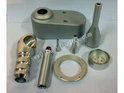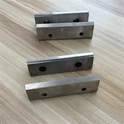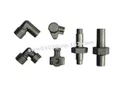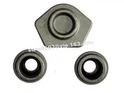

Fatigue resistance is a critical aspect when it comes to CNC machining parts, especially for suppliers like us. As a provider of high - quality CNC machining parts, understanding and meeting the fatigue - resistance requirements is essential to ensure the reliability and longevity of the products we offer.
Understanding Fatigue in CNC Machining Parts
Fatigue in CNC machining parts occurs when a material is subjected to repeated loading and unloading cycles. Over time, these cyclic loads can cause microscopic cracks to form in the material. As the cycles continue, these cracks grow until the part eventually fails. This type of failure can be catastrophic, especially in applications where safety is a concern, such as aerospace, automotive, and medical devices.
The fatigue - resistance requirements for CNC machining parts depend on several factors. Firstly, the type of application plays a crucial role. For example, parts used in high - speed rotating machinery, like turbines or engines, are subjected to high - frequency cyclic loads. These parts need to have excellent fatigue resistance to withstand the continuous stress without failing. On the other hand, parts used in static or low - stress applications may have less stringent fatigue - resistance requirements.
Secondly, the operating environment also affects the fatigue - resistance requirements. Parts exposed to harsh environments, such as high temperatures, corrosive chemicals, or abrasive particles, are more likely to experience accelerated fatigue. In such cases, the material selection and surface treatment of the CNC machining parts need to be carefully considered to enhance their fatigue resistance.


Material Selection for Fatigue Resistance
The choice of material is one of the most important factors in achieving the desired fatigue resistance for CNC machining parts. Different materials have different fatigue properties, and selecting the right material can significantly improve the part's performance and lifespan.
One of the commonly used materials in CNC machining is AA6061 - T6 Aluminum CNC Machine. Aluminum 6061 - T6 is a heat - treatable alloy that offers a good combination of strength, corrosion resistance, and machinability. It has relatively high fatigue strength, making it suitable for a wide range of applications, including automotive components, aerospace parts, and consumer products.
Steel is another popular material for CNC machining parts. High - strength steels, such as 4140 or 4340, have excellent fatigue resistance due to their high strength and toughness. These steels are often used in applications where high loads and cyclic stresses are present, such as gears, shafts, and connecting rods.
Titanium is also a preferred material for applications that require high fatigue resistance and lightweight. Titanium alloys, like Ti - 6Al - 4V, have high strength - to - weight ratios and good corrosion resistance. They are commonly used in aerospace and medical industries, where the parts need to withstand extreme conditions while maintaining their structural integrity.
Surface Treatment and Finishing
In addition to material selection, surface treatment and finishing can also improve the fatigue resistance of CNC machining parts. Surface treatments can modify the surface properties of the part, such as hardness, roughness, and residual stress, which can have a significant impact on its fatigue performance.
Shot peening is a widely used surface treatment method for enhancing fatigue resistance. It involves bombarding the surface of the part with small spherical particles, creating compressive residual stresses on the surface. These compressive stresses can counteract the tensile stresses generated during cyclic loading, delaying the initiation and propagation of cracks.
Nitriding is another effective surface treatment for improving fatigue resistance, especially for steel parts. Nitriding involves diffusing nitrogen into the surface of the part, forming a hard nitride layer. This layer can increase the surface hardness and wear resistance of the part, as well as improve its fatigue strength.
Proper surface finishing can also reduce the stress concentration on the surface of the part, which is beneficial for fatigue resistance. A smooth surface finish can minimize the initiation of cracks, while a rough surface can act as stress raisers, accelerating crack growth. Therefore, ensuring a high - quality surface finish during the CNC machining process is crucial for meeting the fatigue - resistance requirements.
Design Considerations for Fatigue Resistance
The design of CNC machining parts also plays a vital role in achieving the desired fatigue resistance. A well - designed part can distribute the stress evenly, reducing the likelihood of stress concentration and crack initiation.
One of the key design principles for fatigue resistance is to avoid sharp corners and edges. Sharp corners can create high stress concentrations, which can lead to premature crack initiation. Instead, rounded corners and fillets should be used to smooth the transition between different sections of the part, reducing the stress concentration.
The shape and geometry of the part should also be optimized to minimize stress concentrations. For example, using a uniform cross - section throughout the part can help distribute the stress evenly. Additionally, avoiding sudden changes in cross - section or shape can prevent the formation of stress raisers.
Quality Control and Testing
As a CNC machining parts supplier, we understand the importance of quality control and testing to ensure that our parts meet the fatigue - resistance requirements. We have a comprehensive quality control system in place, which includes in - process inspection and final product testing.
During the CNC machining process, we use advanced measurement tools, such as coordinate measuring machines (CMMs), to ensure the dimensional accuracy of the parts. We also conduct visual inspections to detect any surface defects, such as cracks or scratches, which can affect the fatigue performance of the part.
For final product testing, we use various methods to evaluate the fatigue resistance of the parts. Fatigue testing machines can simulate the cyclic loading conditions that the part will experience in its actual application. By subjecting the part to a large number of loading cycles, we can determine its fatigue life and ensure that it meets the specified requirements.
Meeting the Diverse Needs of Customers
At our company, we are committed to meeting the diverse fatigue - resistance requirements of our customers. Whether it is a small - batch prototype or a large - scale production order, we have the expertise and capabilities to provide high - quality CNC machining parts that meet the strictest fatigue - resistance standards.
We work closely with our customers to understand their specific application requirements and design the parts accordingly. Our experienced engineers can provide technical advice on material selection, surface treatment, and design optimization to ensure the best fatigue performance of the parts.
If you are looking for a reliable CNC machining parts supplier that can meet your fatigue - resistance requirements, China Fast Speed Prototype Machining Shop In Professiona Services is here to serve you. We offer a wide range of CNC machining services, including milling, turning, drilling, and grinding, using state - of - the - art equipment and advanced manufacturing techniques.
Case Study: Aluminum 6061 - T6 Air Bung
To illustrate our ability to meet the fatigue - resistance requirements, let's take a look at a case study of an Aluminum 6061 - T6 Air Bung. The air bung is a critical component in a pneumatic system, which is subjected to cyclic pressure changes during operation.
We used AA6061 - T6 aluminum for this part due to its good fatigue resistance and lightweight. After CNC machining, we applied a shot peening treatment to the surface of the air bung to enhance its fatigue performance. The part was then carefully inspected and tested to ensure its dimensional accuracy and fatigue resistance.
The final product met all the customer's requirements and has been successfully used in the pneumatic system. The air bung has shown excellent performance in terms of fatigue resistance, with no signs of cracking or failure even after thousands of cycles of pressure changes.
Conclusion
In conclusion, fatigue resistance is a crucial factor in the design and manufacturing of CNC machining parts. As a CNC machining parts supplier, we need to consider various factors, such as material selection, surface treatment, design, and quality control, to ensure that our parts meet the fatigue - resistance requirements of our customers.
By providing high - quality CNC machining parts with excellent fatigue resistance, we can help our customers improve the reliability and longevity of their products. If you are interested in our CNC machining services or have any questions about fatigue - resistance requirements for your parts, please feel free to contact us for further discussion and procurement negotiation.
References
- ASM Handbook Volume 19: Fatigue and Fracture. ASM International.
- Dieter, G. E. (1986). Mechanical Metallurgy. McGraw - Hill.
- Kalpakjian, S., & Schmid, S. R. (2014). Manufacturing Engineering and Technology. Pearson.