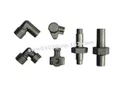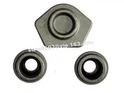

Forging parts play a crucial role in various industries, and the detergent industry is no exception. As a forging parts supplier, I have witnessed firsthand how these components contribute to the efficient and reliable operation of detergent manufacturing processes. In this blog post, I will explore the different types of forging parts used in the detergent industry, their functions, and the benefits they offer.
Types of Forging Parts in the Detergent Industry
1. Mixing and Agitation Components
In the detergent manufacturing process, proper mixing and agitation are essential to ensure a homogeneous product. Forged parts such as impellers, agitator shafts, and mixing blades are commonly used in mixing tanks and reactors. These parts are typically made from high - strength materials like OEM Carbon Steel Q235 St37 - 2 C45 1010 Forged Steel. The forging process gives them excellent mechanical properties, including high strength and good wear resistance. This allows them to withstand the high - speed rotation and the corrosive nature of the detergent ingredients during the mixing process.
The impellers, for example, are designed to create a turbulent flow within the mixing tank, ensuring that all the raw materials are thoroughly blended. Agitator shafts transmit the power from the motor to the impellers, and their forging - based strength ensures smooth and reliable operation. Mixing blades, on the other hand, are shaped to optimize the mixing efficiency, breaking up any clumps of raw materials and promoting a uniform distribution of the detergent components.
2. Pump Components
Pumps are used extensively in the detergent industry for transferring raw materials, intermediate products, and the final detergent from one stage of the manufacturing process to another. Forged pump components such as pump casings, impellers, and shafts are vital for the proper functioning of these pumps. OEM A105 Aisi1045 Small Steel Metal Forge is often used for these parts due to its good machinability and high - pressure resistance.
Pump casings need to be strong enough to contain the fluid under pressure. The forging process ensures that the casings have a dense and uniform structure, which is crucial for preventing leaks and maintaining the integrity of the pump. Pump impellers are responsible for creating the flow of the fluid, and their precise forging allows for efficient fluid transfer. Shafts connect the motor to the impeller, and their high - strength forging enables them to transmit the power effectively without deformation.

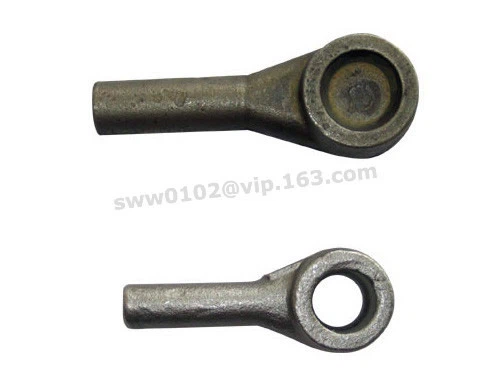
3. Conveyor System Components
Conveyor systems are used to move raw materials, semi - finished products, and finished detergents within the manufacturing facility. Forged parts in conveyor systems include rollers, sprockets, and chain links. These parts need to be durable and able to withstand heavy loads and continuous operation.
Rollers are used to support and guide the conveyor belt. Their forging provides them with a smooth surface finish and high - load - bearing capacity, ensuring that the conveyor belt moves smoothly. Sprockets are used to drive the chain in the conveyor system, and their precise forging ensures accurate meshing with the chain, preventing slippage. Chain links are made from forged materials to ensure high strength and good flexibility, allowing them to endure the repeated bending and stretching during operation.
4. Molding and Packaging Equipment Components
In the detergent industry, molding and packaging are important steps in the production process. Forged parts are used in molding equipment to create the desired shape of detergent bars or tablets. Components such as mold cavities, punches, and dies are often forged. These parts need to have high precision and good surface finish to produce high - quality detergent products.
In packaging equipment, forged parts like grippers, cutting blades, and sealing jaws are used. Grippers are designed to hold the detergent products during the packaging process, and their forging provides them with the necessary strength and gripping force. Cutting blades are used to cut the packaging materials, and their sharpness and durability are ensured by the forging process. Sealing jaws are responsible for sealing the packages, and their forging ensures a reliable and consistent seal.
Benefits of Using Forging Parts in the Detergent Industry
1. High Strength and Durability
Forging parts have a dense and uniform grain structure, which gives them high strength and excellent durability. In the detergent industry, where the manufacturing processes involve high - pressure, high - speed, and corrosive environments, these properties are crucial. For example, the pump components need to withstand the pressure of the fluid being transferred, and the mixing components need to endure the wear caused by the abrasive detergent ingredients. The high - strength forging parts can operate for a long time without failure, reducing the need for frequent replacements and minimizing production downtime.
2. Precision and Consistency
The forging process allows for high - precision manufacturing. This is essential in the detergent industry, especially for components used in molding and packaging equipment. Precise forging ensures that the mold cavities produce detergent products with accurate dimensions and shapes. In packaging equipment, the precise forging of grippers, cutting blades, and sealing jaws ensures consistent packaging quality, which is important for product branding and customer satisfaction.
3. Cost - Effectiveness in the Long Run
Although the initial cost of forging parts may be higher than some other manufacturing methods, their long - term cost - effectiveness is significant. Due to their high durability, they have a longer service life, reducing the frequency of replacements. Additionally, their high - precision manufacturing reduces the likelihood of production errors, which can lead to waste and rework. This overall reduction in maintenance and production costs makes forging parts a cost - effective choice for the detergent industry.
Our Company's Advantage as a Forging Parts Supplier
As a forging parts supplier, we are committed to providing high - quality products to the detergent industry. We have a team of experienced engineers and technicians who are proficient in the forging process. We use advanced forging equipment and technologies to ensure the precision and quality of our products.
We offer a wide range of forging parts, including those mentioned above for mixing, pumping, conveying, molding, and packaging equipment. Our products are made from high - quality materials, such as the ones mentioned in the OEM Professiona Supply Casting And Forging In Ningbo China link. We can also customize the forging parts according to the specific requirements of our customers, providing them with tailor - made solutions for their detergent manufacturing processes.
Conclusion
Forging parts are indispensable in the detergent industry, playing a vital role in various manufacturing processes. Their high strength, durability, precision, and cost - effectiveness make them the preferred choice for detergent manufacturers. As a forging parts supplier, we are dedicated to meeting the needs of the detergent industry by providing high - quality forging parts and excellent customer service.
If you are in the detergent industry and are looking for reliable forging parts, we invite you to contact us for procurement and negotiation. We are confident that our products and services will meet your expectations and contribute to the success of your detergent manufacturing business.
References
- ASM Handbook Committee. (2000). ASM Handbook Volume 14A: Metalworking: Forging. ASM International.
- Kalpakjian, S., & Schmid, S. R. (2010). Manufacturing Engineering and Technology. Pearson Prentice Hall.
- Dieter, G. E. (1986). Mechanical Metallurgy. McGraw - Hill.