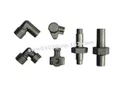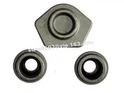

Producing parts with internal cavities through the forging process is a complex and challenging task. As a forging parts supplier, I've encountered numerous obstacles in this area. In this blog, I'll share some of the key challenges we face when forging parts with internal cavities and how we strive to overcome them.
Material Flow and Filling
One of the primary challenges in forging parts with internal cavities is ensuring proper material flow and filling. When you're trying to create an internal cavity, the metal needs to flow around the cavity area in a controlled manner. But it's not always easy to predict how the metal will behave during the forging process.
For instance, if the design of the cavity is too complex or the draft angles are not appropriate, the metal might not fill the cavity completely. This can lead to defects such as incomplete filling, porosity, or cracks. We often have to work closely with our design team to optimize the part design to facilitate better material flow. Sometimes, we might need to make adjustments to the shape of the cavity, add fillets or radii, or change the draft angles to ensure that the metal can flow smoothly into all the areas of the part.


Another factor that affects material flow is the forging temperature. If the temperature is too low, the metal will be less malleable, and it will be more difficult for it to flow into the cavity. On the other hand, if the temperature is too high, the metal might become too soft, which can also lead to problems such as excessive deformation or grain growth. We have to carefully control the forging temperature within a narrow range to ensure optimal material flow.
Tooling Design and Wear
Tooling design is crucial when forging parts with internal cavities. The tools need to be designed in such a way that they can create the desired cavity shape accurately while also withstanding the high pressures and forces involved in the forging process.
Designing the right tooling for parts with internal cavities is a complex task. We need to consider factors such as the shape and size of the cavity, the material being forged, and the forging process parameters. For example, if the cavity has a deep or narrow shape, we might need to use special tooling techniques such as insert punches or split dies to create the cavity. These techniques can help us overcome the challenges associated with creating complex cavity shapes.
However, tooling wear is a major issue when forging parts with internal cavities. The high pressures and forces exerted on the tools during the forging process can cause significant wear and tear. This is especially true in the areas around the cavity, where the stress concentrations are higher. To minimize tooling wear, we use high-quality tooling materials that are resistant to wear and heat. We also apply surface treatments such as coatings to the tools to improve their wear resistance. Regular maintenance and inspection of the tools are also essential to ensure their longevity and performance.
Defect Detection and Quality Control
Detecting defects in parts with internal cavities can be a challenge. Traditional inspection methods such as visual inspection or surface testing might not be sufficient to detect internal defects. We need to use more advanced non-destructive testing (NDT) techniques such as ultrasonic testing, X-ray inspection, or magnetic particle inspection to detect defects inside the parts.
Ultrasonic testing is a commonly used NDT method for detecting internal defects in forging parts. It works by sending high-frequency sound waves into the part and analyzing the echoes that are reflected back. If there are any defects such as cracks or porosity inside the part, the sound waves will be reflected differently, which can be detected by the ultrasonic testing equipment.
X-ray inspection is another effective NDT method for detecting internal defects. It uses X-rays to create an image of the internal structure of the part. This can help us identify any defects such as voids, inclusions, or misalignments inside the cavity.
Magnetic particle inspection is mainly used for detecting surface and near-surface defects in ferromagnetic materials. It works by applying a magnetic field to the part and then sprinkling magnetic particles on the surface. If there are any defects on the surface or near the surface, the magnetic particles will be attracted to the defect area, making it visible.
Quality control is also crucial when forging parts with internal cavities. We need to ensure that the parts meet the required specifications and quality standards. This involves conducting regular inspections at various stages of the forging process, from the raw material inspection to the final part inspection. We also use statistical process control (SPC) techniques to monitor and control the quality of the forging process.
Cost and Production Efficiency
Producing parts with internal cavities through the forging process can be more expensive and less efficient compared to producing solid parts. The complex tooling design, the need for advanced inspection techniques, and the higher risk of defects all contribute to the increased cost.
To reduce the cost and improve the production efficiency, we need to optimize the forging process. This can involve using more efficient forging equipment, reducing the number of forging operations, and improving the material utilization. For example, we can use computer-aided design (CAD) and computer-aided manufacturing (CAM) technologies to optimize the tooling design and the forging process parameters. This can help us reduce the tooling cost and the production time.
We can also explore alternative forging processes such as near-net-shape forging or precision forging. These processes can produce parts with closer tolerances and less material waste, which can help us reduce the cost and improve the production efficiency.
Overcoming the Challenges
Despite the challenges, we at [our company] are committed to providing high-quality forging parts with internal cavities. We have a team of experienced engineers and technicians who are constantly working on developing new solutions to overcome these challenges.
We invest in the latest forging equipment and technologies to improve our production capabilities. For example, we have recently acquired a new forging press that can provide higher pressures and more precise control over the forging process. This has allowed us to produce parts with more complex internal cavities with better quality and efficiency.
We also collaborate closely with our customers to understand their specific requirements and design the parts accordingly. By working together, we can optimize the part design and the forging process to ensure that the parts meet the customer's expectations.
If you're looking for a reliable forging parts supplier who can handle the challenges of producing parts with internal cavities, look no further. We offer a wide range of forging services, including link text: Professional 6061-T6 Aluminum Forging Suppliers, link text: High Quality Aluminum Forging Manufacturers, and link text: Large Dimension Q235 Carbon Steel Open Die Forging. Our team of experts is ready to work with you to develop the best solutions for your forging needs. Whether you have a small or large order, we can provide you with high-quality forging parts at competitive prices. Contact us today to start a procurement negotiation and let's work together to bring your forging projects to life.
References
- Smith, J. (2018). Forging Technology: Principles and Applications. New York: Wiley.
- Jones, R. (2019). Tooling Design for Metal Forming Processes. London: Elsevier.
- Brown, S. (2020). Non-Destructive Testing Techniques for Forged Parts. Chicago: ASM International.