


Hey there! If you're in the market for high - quality forging parts, you've come to the right place. I'm a forging parts supplier, and today I'm gonna talk about the forging processes for titanium alloy parts. Titanium alloys are super popular in various industries because of their excellent properties like high strength - to - weight ratio, good corrosion resistance, and high - temperature performance.
1. Understanding Titanium Alloys
Before we dive into the forging processes, let's quickly understand what titanium alloys are. Titanium alloys are made by combining titanium with other elements such as aluminum, vanadium, or molybdenum. These alloying elements enhance the properties of pure titanium, making it suitable for different applications. For instance, in the aerospace industry, titanium alloys are used to make components like turbine blades and aircraft frames due to their light weight and high strength.
2. Pre - forging Preparation
The first step in forging titanium alloy parts is the pre - forging preparation. This includes material selection and billet preparation. When it comes to material selection, we need to pick the right titanium alloy based on the requirements of the final part. Different alloys have different properties, so it's crucial to get this step right.
After selecting the material, we prepare the billet. The billet is a piece of metal that will be forged into the final part. We cut the billet to the appropriate size and shape. Sometimes, we also heat the billet to a specific temperature range to make it more malleable for forging. This pre - heating is important to ensure that the forging process goes smoothly and the final part has good quality.
3. Open - die Forging
One of the common forging processes for titanium alloy parts is open - die forging. In open - die forging, the billet is placed between two flat or shaped dies, and pressure is applied to deform the metal. This process allows for a high degree of flexibility in terms of the shape and size of the final part.
During open - die forging, the operator can control the deformation of the billet by adjusting the pressure and the movement of the dies. This is great for producing large and simple - shaped parts. For example, we can use open - die forging to make shafts or bars using titanium alloys. If you're interested in other forging parts, we also offer OEM Aisi1045 Steel Precise Press Forging.
4. Closed - die Forging
Closed - die forging is another important process for titanium alloy parts. In this process, the billet is placed in a die cavity that has the exact shape of the final part. As pressure is applied, the metal fills the die cavity, taking on the desired shape.
Closed - die forging can produce parts with high precision and complex shapes. It's widely used in industries where accuracy is crucial, such as the automotive and aerospace industries. For example, we can make engine components or aircraft fittings using closed - die forging. And if you're looking for high - quality stainless steel forging parts, check out our High Quality Forging Stainless Steel.
5. Isothermal Forging
Isothermal forging is a specialized forging process for titanium alloy parts. In isothermal forging, the billet, dies, and the forging equipment are all maintained at the same temperature throughout the forging process. This ensures that the metal deforms uniformly and reduces the risk of cracking or other defects.
Isothermal forging is ideal for producing parts with high - precision and excellent mechanical properties. It's often used for critical components in the aerospace and medical industries. For example, we can use isothermal forging to make surgical implants or aerospace turbine disks.
6. Post - forging Treatment
After the forging process, the titanium alloy parts need to go through post - forging treatment. This includes heat treatment, machining, and surface finishing. Heat treatment is used to improve the mechanical properties of the parts, such as hardness and toughness. Machining is done to achieve the final dimensions and tolerances of the part. And surface finishing is used to enhance the appearance and corrosion resistance of the part.
For example, we can perform annealing, quenching, or tempering during heat treatment. Machining operations like turning, milling, and drilling are used to shape the part precisely. And surface finishing techniques such as grinding, polishing, or coating can be applied to make the part look good and last longer. If you're interested in aluminum forging parts with heat treatment, we have OEM 6061 - T6 Aluminium Forging With Heat Treatment.
7. Quality Control
Quality control is an essential part of the forging process for titanium alloy parts. We use various inspection methods to ensure that the parts meet the required standards. Non - destructive testing methods like ultrasonic testing, X - ray testing, and magnetic particle testing are used to detect internal and surface defects.
We also perform mechanical testing to check the strength, hardness, and other mechanical properties of the parts. By implementing strict quality control measures, we can guarantee that the titanium alloy parts we supply are of the highest quality.
8. Why Choose Us as Your Forging Parts Supplier
As a forging parts supplier, we have years of experience in forging titanium alloy parts. We have a team of skilled technicians and engineers who are experts in the forging process. We use state - of - the - art equipment and technology to ensure the quality and precision of our products.
We offer a wide range of forging parts, not just titanium alloy parts. Whether you need steel, stainless steel, or aluminum forging parts, we've got you covered. And we're committed to providing excellent customer service. We can work with you to understand your specific requirements and provide customized solutions.
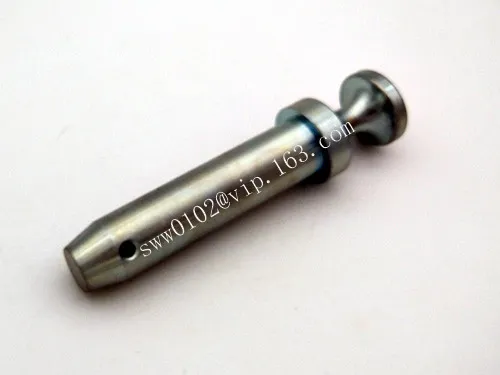

If you're looking for high - quality forging parts, don't hesitate to contact us for procurement and negotiation. We're here to help you get the best forging parts for your needs.
References
- "Forging Technology Handbook" by ASM International
- "Titanium Alloys: Fundamentals and Applications" by John C. Williams


