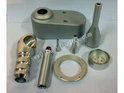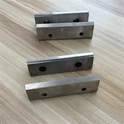

Forging parts play a crucial role in various industries, and the genetic engineering industry is no exception. As a forging parts supplier, I have witnessed firsthand the unique requirements that this high - tech field demands. In this blog, I will delve into the specific requirements for forging parts in the genetic engineering industry.
Precision and Accuracy
One of the most critical requirements for forging parts in the genetic engineering industry is precision and accuracy. Genetic engineering experiments often involve extremely delicate operations and measurements. For example, in DNA sequencing machines, forging parts are used to support and position various components with high precision. A slight deviation in the dimensions of these parts can lead to inaccurate data collection and analysis, which can have a significant impact on the research results.
Our company offers Large Dimension Q235 Carbon Steel Open Die Forging that are manufactured with high - end machining techniques to ensure tight tolerances. We use advanced CNC (Computer Numerical Control) machines to precisely shape the forging parts, which can achieve dimensional accuracies within a few micrometers. This level of precision is essential for the proper functioning of genetic engineering equipment, such as centrifuges and microfluidic devices.
Material Compatibility
The genetic engineering industry often deals with biological samples and chemicals. Therefore, the forging parts used in this industry must be made of materials that are compatible with these substances. Stainless steel is a popular choice for forging parts in genetic engineering equipment due to its excellent corrosion resistance and biocompatibility.
Stainless steel 304, in particular, is widely used. It can withstand exposure to various biological buffers, acids, and bases without corroding or leaching harmful substances into the samples. Our OEM Stainless Steel 304 Precise Custom Forgings are specifically designed to meet the material compatibility requirements of the genetic engineering industry. These forgings are carefully heat - treated to enhance their corrosion resistance and mechanical properties, ensuring long - term reliability in a biological and chemical environment.
Surface Finish
A smooth and clean surface finish is another important requirement for forging parts in the genetic engineering industry. Rough surfaces can trap biological contaminants, such as bacteria and DNA fragments, which can interfere with experiments and lead to false results. Additionally, a good surface finish can reduce friction and wear, improving the overall performance and lifespan of the equipment.
We use advanced surface finishing techniques, such as grinding, polishing, and electro - polishing, to achieve a mirror - like surface on our forging parts. Electro - polishing, in particular, can remove surface impurities and create a passive oxide layer on the surface of stainless steel forgings, further enhancing their corrosion resistance. Our Custom Fabrication Carbon Steel Hot Forging Parts are also treated with high - quality surface finishes to meet the strict cleanliness and smoothness requirements of genetic engineering applications.
Hygiene and Sterilization
Hygiene is of utmost importance in the genetic engineering industry. Forging parts must be easy to clean and sterilize to prevent cross - contamination between different samples. We design our forging parts with simple geometries and smooth surfaces to facilitate cleaning. Additionally, the materials we use are resistant to common sterilization methods, such as autoclaving and chemical disinfection.
Autoclaving is a widely used sterilization method in genetic engineering laboratories, which involves subjecting the equipment to high - pressure steam at elevated temperatures. Our forging parts made of stainless steel can withstand multiple autoclaving cycles without significant degradation of their mechanical properties or surface finish.
Mechanical Strength and Durability
Genetic engineering equipment often operates under various mechanical stresses, such as vibration, shock, and repeated loading. Therefore, the forging parts used in this industry must have sufficient mechanical strength and durability. Carbon steel is a suitable material for applications where high strength is required.
Our carbon steel forging parts are carefully forged and heat - treated to optimize their mechanical properties. The forging process aligns the grain structure of the steel, improving its strength and toughness. Heat treatment further enhances these properties, making the parts capable of withstanding the mechanical stresses encountered in genetic engineering equipment.
Design Flexibility
The genetic engineering industry is constantly evolving, with new technologies and experimental methods emerging regularly. Therefore, there is a need for forging parts that can be customized to meet specific design requirements. As a forging parts supplier, we offer design flexibility to our customers.
We work closely with genetic engineering equipment manufacturers to understand their unique needs and develop custom - designed forging parts. Our experienced engineering team can use 3D modeling software to create detailed designs and simulate the performance of the forging parts before manufacturing. This allows us to optimize the design and ensure that the final product meets the customer's expectations.
Quality Control
Quality control is a top priority in the production of forging parts for the genetic engineering industry. We have a comprehensive quality control system in place to ensure that every forging part meets the highest standards. Our quality control process starts from the selection of raw materials. We source high - quality steel from reliable suppliers and conduct strict inspections to ensure the chemical composition and mechanical properties of the raw materials meet our requirements.
During the manufacturing process, we use in - process inspections to monitor the dimensional accuracy, surface finish, and mechanical properties of the forging parts. After production, each part undergoes a final inspection, including non - destructive testing methods such as ultrasonic testing and magnetic particle testing to detect any internal defects.
Cost - Effectiveness
While meeting the high - end requirements of the genetic engineering industry, cost - effectiveness is also an important consideration. We understand that genetic engineering research and development often operate on limited budgets. Therefore, we strive to offer high - quality forging parts at competitive prices.
We optimize our production processes to reduce waste and improve efficiency. By using advanced manufacturing technologies and economies of scale, we can keep our production costs down without compromising on quality. This allows us to provide cost - effective solutions to our customers in the genetic engineering industry.
Conclusion
In conclusion, the requirements for forging parts in the genetic engineering industry are diverse and demanding. Precision, material compatibility, surface finish, hygiene, mechanical strength, design flexibility, quality control, and cost - effectiveness are all key factors that need to be considered. As a forging parts supplier, we are committed to meeting these requirements and providing high - quality forging parts to the genetic engineering industry.


If you are in the genetic engineering industry and are looking for reliable forging parts, we would be more than happy to discuss your specific needs and provide you with customized solutions. Contact us today to start a procurement negotiation and take your genetic engineering equipment to the next level.
References
- "Materials Science and Engineering: An Introduction" by William D. Callister Jr. and David G. Rethwisch
- "Genetic Engineering Principles and Methods" edited by Jane K. Setlow
- "Biomaterials Science: An Introduction to Materials in Medicine" by Buddy D. Ratner, Allan S. Hoffman, Frederick J. Schoen, and Jack E. Lemons