
Hey there! I'm a supplier of forging parts, and I've been in this game for quite a while. Today, I wanna chat about the requirements for forging parts in the Internet of Things (IoT) industry.
First off, let's understand what the IoT industry is all about. The IoT is basically a network of physical devices, vehicles, home appliances, and other items embedded with sensors, software, and network connectivity. These devices collect and exchange data, making our lives more convenient and efficient. And forging parts play a crucial role in making these devices work smoothly.
Precision and Accuracy
One of the most important requirements for forging parts in the IoT industry is precision and accuracy. Since IoT devices are often small and complex, the forging parts need to be made with extremely high precision. Even a tiny deviation can cause the whole device to malfunction. For example, in a smartwatch, the forging parts used in the internal mechanism need to fit together perfectly to ensure accurate timekeeping and other functions.
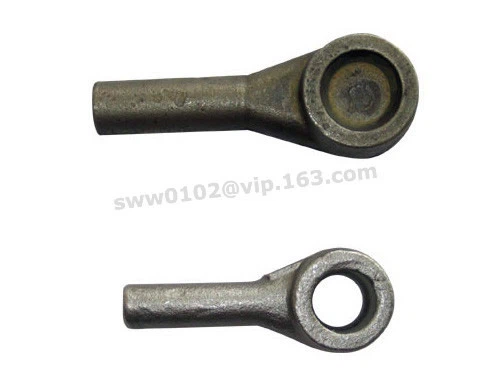

We use advanced forging techniques and state - of - the - art machinery to achieve the required precision. Our team of skilled technicians carefully monitors every step of the forging process to make sure that each part meets the strict tolerance levels. This way, we can provide high - quality forging parts that are suitable for the demanding IoT applications.
Material Quality
The choice of materials for forging parts in the IoT industry is also critical. IoT devices are often exposed to various environmental conditions, such as humidity, temperature changes, and mechanical stress. So, the forging parts need to be made of materials that can withstand these conditions.
Stainless steel is a popular choice for many IoT forging parts. It has excellent corrosion resistance, which is important for devices that might be used outdoors or in humid environments. We offer High Quality Forging Stainless Steel that meets the high - standards of the IoT industry.
Carbon steel is another commonly used material. It is strong and durable, and can be easily machined. Our OEM Carbon Steel Q235 St37 - 2 C45 1010 Forged Steel is designed to provide reliable performance in IoT devices.
Surface Finish
A good surface finish is essential for forging parts in the IoT industry. A smooth surface not only looks better but also has practical benefits. It can reduce friction, prevent wear and tear, and improve the overall performance of the device.
We use various surface treatment methods to achieve the desired surface finish. For example, we can perform polishing, plating, or coating on the forging parts. This not only enhances the appearance but also protects the parts from corrosion and other forms of damage.
Miniaturization
As IoT devices are getting smaller and more portable, the forging parts also need to be miniaturized. This requires advanced forging technologies and a high level of expertise. We've been working hard to develop processes that allow us to produce small - sized forging parts without compromising on quality.
Our OEM A105 Aisi1045 Small Steel Metal Forge is a great example of our ability to produce miniaturized forging parts. These parts are used in a wide range of IoT devices, from smart sensors to wearable devices.
Customization
The IoT industry is constantly evolving, and different devices have different requirements. That's why customization is a key factor in providing forging parts for this industry. We understand that each customer may have unique needs, and we're more than happy to work with them to develop custom - made forging parts.
Whether it's a special shape, size, or material requirement, our team of engineers can work closely with you to come up with the perfect solution. We have the flexibility and expertise to handle small - batch as well as large - scale production of customized forging parts.
Cost - effectiveness
In the highly competitive IoT market, cost - effectiveness is always a concern. We strive to provide high - quality forging parts at a reasonable price. By optimizing our production processes, using efficient materials, and reducing waste, we can keep our costs down without sacrificing quality.
We believe that by offering cost - effective forging parts, we can help our customers in the IoT industry to stay competitive in the market.
Connectivity - related Requirements
Since IoT devices rely on connectivity, forging parts may also need to be designed to support this. For example, some parts may need to have electrical conductivity or be able to house connectors and antennas. We take these connectivity - related requirements into account when designing and manufacturing forging parts.
Our engineers are well - versed in the latest IoT technologies and can ensure that the forging parts we produce are compatible with the connectivity needs of modern IoT devices.
If You're Looking for Forging Parts for Your IoT Project
If you're in the IoT industry and looking for high - quality forging parts, we'd love to hear from you. We have the experience, expertise, and resources to meet your specific requirements. Whether you need a small number of custom - made parts or a large - scale production run, we're here to help. Don't hesitate to reach out to us for a quote or to discuss your project in more detail. We're confident that we can provide you with the best forging parts for your IoT applications.
References
- Some industry reports on IoT device manufacturing
- Technical papers on advanced forging techniques
- Case studies of successful forging part applications in IoT devices