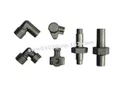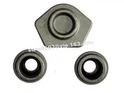

Hey there! I'm a supplier of forging parts, and today I wanna talk about the requirements for forging parts in the shipbuilding industry. As someone who's been in the forging parts business for quite a while, I've seen firsthand how crucial these parts are in shipbuilding.
First off, let's talk about the materials. In the shipbuilding industry, the materials used for forging parts need to be top - notch. They gotta be strong enough to withstand the harsh marine environment, including saltwater corrosion, high pressures, and extreme temperatures. For instance, steel is a popular choice. High - strength alloy steels are often used because they offer excellent mechanical properties. These steels can resist cracking and deformation under heavy loads, which is super important considering the massive forces ships encounter at sea.
Another material option is aluminum. Aluminum forging parts are becoming more and more popular in shipbuilding. They're lightweight, which helps to reduce the overall weight of the ship, leading to better fuel efficiency. You can check out OEM 6061 - T6 Forged Aluminum With CNC Machining for some great examples of high - quality aluminum forging parts that are suitable for shipbuilding. The 6061 - T6 aluminum alloy has good corrosion resistance and can be precisely machined to meet the specific requirements of ship components.
Now, let's get into the mechanical properties. Forging parts in the shipbuilding industry need to have specific mechanical properties. Tensile strength is a key factor. The parts should be able to handle high tensile forces without breaking. For example, the shafts and connecting rods in a ship's engine need to have high tensile strength to transfer power effectively. Yield strength is also important. It determines the maximum stress a part can withstand before it starts to deform permanently.
Ductility is another crucial property. A ductile forging part can deform under stress without fracturing. This is important in shipbuilding because ships are subject to dynamic loads, such as waves and vibrations. Parts with good ductility can absorb these loads and prevent sudden failures. Hardness is also a consideration. The right hardness can ensure that the parts are wear - resistant. For example, gears and bearings in a ship's machinery need to be hard enough to resist wear from constant contact and movement.
The forging process itself is also a big deal. Precision is of the essence. The forging parts need to be made with high precision to fit perfectly into the ship's structure. Any small deviation can lead to problems during installation and operation. For example, if a flange doesn't fit properly, it can cause leaks in the ship's piping system.
Heat treatment is an important step in the forging process. It can improve the mechanical properties of the parts. You can learn more about Aluminum Forging Process With Heat Treatment. Heat treatment can increase the strength, hardness, and toughness of the forging parts. It can also relieve internal stresses that are generated during the forging process, which helps to prevent cracking and other defects.
Surface finish is another requirement. A smooth surface finish is necessary for forging parts in shipbuilding. It not only improves the appearance but also has practical benefits. A smooth surface can reduce friction, which is important for moving parts like pistons and cylinders. It can also prevent the accumulation of dirt and debris, which can cause corrosion over time.
In addition to the above, forging parts in the shipbuilding industry need to meet strict quality control standards. There are various international and national standards that govern the production of these parts. For example, ISO standards ensure that the parts are produced in a consistent and high - quality manner. Quality control involves a series of inspections, including non - destructive testing methods like ultrasonic testing and magnetic particle testing. These tests can detect internal defects in the forging parts without damaging them.
Certification is also important. Shipyards usually require forging parts suppliers to have relevant certifications. This shows that the supplier follows proper manufacturing processes and quality control procedures. Certifications like ISO 9001 and ASME certifications are highly regarded in the industry.
As a forging parts supplier, I understand the importance of meeting all these requirements. I work hard to ensure that the parts I supply are of the highest quality. We use advanced manufacturing techniques and state - of - the - art equipment to produce forging parts that meet the strict demands of the shipbuilding industry.


If you're in the shipbuilding business and looking for high - quality forging parts, don't hesitate to reach out. We can provide you with customized solutions based on your specific needs. You can also explore OEM Professiona Supply Casting And Forging In Ningbo China to see more of our product range. Whether it's a small component or a large - scale forging, we've got you covered. Let's work together to build the ships of the future!
References
- Shipbuilding Industry Standards Handbook
- Materials Science for Marine Applications