
Hey there! As a supplier of CNC machining parts, I've seen firsthand how crucial cutting speed is in the manufacturing process. In this blog, I'll break down the impact of cutting speed on CNC machining parts, sharing insights from my experience and knowledge in the field.
Let's start by understanding what cutting speed is. Simply put, cutting speed refers to how fast the cutting tool moves across the workpiece during the machining process. It's usually measured in surface feet per minute (SFM) or meters per minute (m/min). The right cutting speed can make a world of difference in the quality, efficiency, and cost of producing CNC machining parts.
One of the most significant impacts of cutting speed is on the surface finish of the parts. When you use a higher cutting speed, the tool removes material more quickly, which can result in a smoother surface finish. This is because the rapid movement of the tool reduces the chances of leaving behind rough edges or uneven surfaces. For example, if you're working on a Custom Fabrication 2-4kgs Aluminum 6061-T6 CNC Machine Turning, a higher cutting speed can give the aluminum part a sleek and professional look, which is often essential for applications where aesthetics matter.
On the other hand, if the cutting speed is too high, it can also lead to some problems. The increased friction and heat generated at high speeds can cause the cutting tool to wear out faster. This not only means more frequent tool replacements, which can be costly, but it can also affect the dimensional accuracy of the parts. As the tool wears, it may not cut the material as precisely as it did when it was new, leading to parts that don't meet the required specifications.
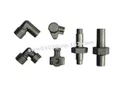
Now, let's talk about the impact on the machining time. A higher cutting speed generally means that the machining process is completed more quickly. This is a huge advantage in a production environment where time is money. For instance, if you're producing multiple Aluminum AA6061-T6 Adapter Fitting parts, a faster cutting speed can significantly reduce the overall production time, allowing you to meet tight deadlines and increase your output.
However, it's important to find the right balance. If you push the cutting speed too high, you might end up with a lower quality part or damage the cutting tool. So, it's crucial to consider the material you're working with, the type of cutting tool, and the specific requirements of the part when determining the optimal cutting speed.
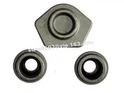
The material of the workpiece also plays a vital role in how cutting speed affects the machining process. Different materials have different properties, such as hardness, toughness, and thermal conductivity. For example, when machining a OEM CNC Milling Carbon Steel Flange As Drawing, carbon steel is generally harder than aluminum. This means that you may need to use a lower cutting speed to avoid excessive tool wear and ensure a good surface finish. On the other hand, softer materials like aluminum can often tolerate higher cutting speeds.
Another aspect to consider is the chip formation. The cutting speed can have a significant impact on how chips are formed during the machining process. At the right cutting speed, the chips are formed in a way that they can be easily removed from the cutting area. This helps to prevent chip buildup, which can cause problems such as poor surface finish, tool damage, and even machine malfunctions. If the cutting speed is too low, the chips may be long and stringy, which can be difficult to manage. On the other hand, if the speed is too high, the chips may be too small and can cause issues with chip evacuation.
In addition to surface finish, machining time, and chip formation, cutting speed also affects the power consumption of the CNC machine. A higher cutting speed typically requires more power from the machine. This means that if you're constantly using high cutting speeds, your energy costs will increase. So, it's important to find a cutting speed that not only meets the quality and production requirements but also keeps the power consumption in check.
To sum it up, the impact of cutting speed on CNC machining parts is multi-faceted. It affects the surface finish, machining time, tool life, chip formation, and power consumption. As a supplier of CNC machining parts, I always strive to find the optimal cutting speed for each project. This involves considering the material, the part design, and the customer's requirements. By doing so, I can ensure that the parts I produce are of the highest quality, are cost-effective, and are delivered on time.
If you're in the market for high-quality CNC machining parts, I'd love to have a chat with you. Whether you need Custom Fabrication 2-4kgs Aluminum 6061-T6 CNC Machine Turning, Aluminum AA6061-T6 Adapter Fitting, or OEM CNC Milling Carbon Steel Flange As Drawing, I have the expertise and experience to meet your needs. Feel free to reach out to me to discuss your project and get a quote.


References
- Boothroyd, G., Dewhurst, P., & Knight, W. A. (2011). Product Design for Manufacturing and Assembly. CRC Press.
- Kalpakjian, S., & Schmid, S. R. (2009). Manufacturing Engineering and Technology. Pearson.
- Trent, E. M., & Wright, P. K. (2000). Metal Cutting. Butterworth-Heinemann.