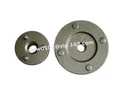

In the realm of CNC machining, understanding the spindle power requirement is crucial for producing high - quality parts efficiently. As a supplier of CNC machining parts, I've witnessed firsthand the impact that proper spindle power has on the machining process. In this blog, we'll explore what the spindle power requirement for CNC machining parts is, why it matters, and how it can influence the overall quality and cost - effectiveness of your projects.
What is Spindle Power?
Spindle power refers to the amount of power that the spindle motor in a CNC machine can deliver. It is typically measured in kilowatts (kW) or horsepower (hp). The spindle is the component of the CNC machine that holds and rotates the cutting tool. The power of the spindle determines the machine's ability to cut through different materials, at various feed rates and depths of cut.
Factors Affecting Spindle Power Requirement
Material Type
Different materials have different hardness and machinability. For example, machining a soft material like aluminum requires less spindle power compared to machining a hard material such as stainless steel or titanium. Aluminum has a relatively low density and can be cut with less force. On the other hand, stainless steel has high strength and hardness, which means more power is needed to cut through it. As a supplier, we often encounter a wide range of materials, from OEM CNC Milling Carbon Steel Flange As Drawing to CNC Milling 7075 Aluminum Hinge. Each material demands a specific spindle power to ensure a smooth and efficient machining process.
Cutting Parameters
The cutting parameters, including the feed rate, depth of cut, and cutting speed, also significantly affect the spindle power requirement. A higher feed rate means the cutting tool moves faster through the material, which requires more power. Similarly, a greater depth of cut increases the amount of material being removed at once, thus demanding more power from the spindle. Cutting speed, which is the speed at which the cutting tool rotates, also plays a role. Higher cutting speeds can generate more heat and require more power to maintain the cutting process.
Tool Geometry
The geometry of the cutting tool, such as the number of flutes, rake angle, and clearance angle, can influence the spindle power requirement. Tools with more flutes can remove material more quickly but may require more power to operate. A proper rake angle can reduce the cutting force and, in turn, the power needed. As a CNC machining parts supplier, we carefully select the appropriate cutting tools based on the material and the required machining operations to optimize the spindle power usage.
Importance of Correct Spindle Power
Quality of Machined Parts
Using the correct spindle power is essential for achieving high - quality machined parts. If the spindle power is too low, the cutting tool may not be able to cut through the material effectively. This can result in poor surface finish, inaccurate dimensions, and even tool breakage. On the other hand, if the spindle power is too high, it can cause excessive heat generation, which can lead to thermal damage to the material and the cutting tool. For instance, when machining OEM Chroming Custom Milled Aluminum, the right spindle power ensures that the part has a smooth surface finish and accurate dimensions.
Productivity
Proper spindle power can significantly improve productivity. With the right amount of power, the CNC machine can operate at optimal cutting parameters, allowing for faster material removal rates. This means that more parts can be produced in a shorter amount of time. As a supplier, we aim to maximize productivity for our customers by selecting the appropriate spindle power for each project.
Cost - Effectiveness
Using the correct spindle power can also lead to cost - savings. By operating at the optimal power level, the wear and tear on the cutting tools and the machine itself are reduced. This extends the lifespan of the tools and the machine, reducing the need for frequent replacements and maintenance. Additionally, less power consumption means lower energy costs.
Determining the Spindle Power Requirement
To determine the spindle power requirement for a specific CNC machining project, several steps can be taken. First, the material type and its properties need to be identified. Then, the cutting parameters such as feed rate, depth of cut, and cutting speed should be selected based on the material and the desired machining outcome. The tool geometry also needs to be considered.
There are various formulas and guidelines available to calculate the spindle power requirement. However, in practice, it often requires experience and experimentation. As a CNC machining parts supplier, we have a team of experts who are well - versed in determining the optimal spindle power for different projects. We use advanced software and simulation tools to analyze the machining process and make accurate power calculations.
Case Studies
Let's take a look at a couple of case studies to illustrate the importance of spindle power in CNC machining.
Case Study 1: Machining Carbon Steel Flanges
We received an order for OEM CNC Milling Carbon Steel Flange As Drawing. The initial attempt at machining with a spindle power that was too low resulted in poor surface finish and long machining times. After analyzing the material and the cutting parameters, we increased the spindle power to an appropriate level. This led to a significant improvement in the surface finish and a reduction in the machining time by almost 30%.
Case Study 2: Machining Aluminum Hinges
For the CNC Milling 7075 Aluminum Hinge project, we started with a spindle power that was slightly too high. This caused excessive heat generation, which affected the dimensional accuracy of the parts. By adjusting the spindle power to the optimal level, we were able to achieve the desired surface finish and dimensional accuracy, while also reducing the tool wear.
Conclusion
In conclusion, the spindle power requirement for CNC machining parts is a critical factor that affects the quality, productivity, and cost - effectiveness of the machining process. As a supplier of CNC machining parts, we understand the importance of selecting the right spindle power for each project. By considering factors such as material type, cutting parameters, and tool geometry, we can ensure that our customers receive high - quality parts in a timely and cost - effective manner.


If you are in need of CNC machining parts, we invite you to contact us for a detailed discussion about your project requirements. Our team of experts is ready to assist you in determining the optimal spindle power and providing the best machining solutions for your needs.
References
- "CNC Machining Handbook" - A comprehensive guide on CNC machining processes and parameters.
- "Machining Technology: An Introduction" - Textbook that covers the fundamental concepts of machining, including spindle power requirements.