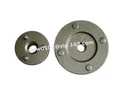

When it comes to forging parts, manufacturers often face a crucial decision: whether to opt for cold forging or hot forging. As a forging parts supplier, I've witnessed firsthand the unique advantages that cold forging parts bring to the table compared to their hot forging counterparts. In this blog post, I'll delve into the various benefits of cold forging parts, shedding light on why they might be the superior choice for many applications.


1. Superior Dimensional Accuracy
One of the most significant advantages of cold forging parts is their exceptional dimensional accuracy. Cold forging is performed at room temperature, which means there is no thermal expansion or contraction during the forging process. This allows for precise control over the dimensions of the final part, ensuring tight tolerances and high consistency. In contrast, hot forging involves heating the metal to a high temperature, which can lead to variations in dimensions due to thermal effects.
For industries that require parts with tight specifications, such as automotive and aerospace, cold forging is often the preferred method. The high dimensional accuracy of cold forging parts reduces the need for additional machining operations, saving time and costs. As a forging parts supplier, we can provide High Quality Aluminum Forging Manufacturers with parts that meet the most stringent dimensional requirements.
2. Enhanced Surface Finish
Cold forging produces parts with a superior surface finish compared to hot forging. The cold forging process compresses the metal, resulting in a smooth and shiny surface. This is particularly beneficial for parts that require a high aesthetic quality or need to be easily cleaned. In addition, the smooth surface reduces friction and wear, improving the performance and lifespan of the part.
Hot forging, on the other hand, can leave a rough surface due to the presence of scale and oxidation. This often requires additional finishing operations, such as grinding or polishing, to achieve the desired surface quality. By choosing cold forging parts, manufacturers can eliminate these additional steps and reduce production costs. Our company, Custom 7year Experience Aluminum And Stainless Steel Forging Company, is committed to providing parts with excellent surface finishes.
3. Improved Mechanical Properties
Cold forging can significantly improve the mechanical properties of the metal. The cold working process during forging aligns the grain structure of the metal, increasing its strength, hardness, and wear resistance. This results in parts that are more durable and can withstand higher loads and stresses.
In hot forging, the high temperature can cause grain growth and reduce the mechanical properties of the metal. Although heat treatment can be used to improve the properties after hot forging, it adds additional complexity and cost to the manufacturing process. Cold forging offers a more straightforward and cost - effective way to enhance the mechanical properties of the parts. As China Professional Forging Parts Manufacturers In Ningbo, we have the expertise to produce cold - forged parts with excellent mechanical properties.
4. Material Savings
Cold forging is a more material - efficient process compared to hot forging. The precision of cold forging allows for closer net - shape manufacturing, which means less material needs to be removed during subsequent machining operations. This reduces material waste and lowers the overall cost of production.
Hot forging often requires more stock material to account for thermal expansion, scale formation, and machining allowances. The excess material needs to be removed later, which not only increases the cost of materials but also adds to the machining time and cost. By choosing cold forging, manufacturers can optimize material usage and achieve cost savings.
5. Energy Efficiency
Cold forging is an energy - efficient manufacturing process. Since it is performed at room temperature, there is no need to heat the metal to high temperatures, which saves a significant amount of energy. In contrast, hot forging requires a large amount of energy to heat the metal to the appropriate forging temperature.
The energy savings associated with cold forging not only reduce the environmental impact but also lower the production costs. As a responsible forging parts supplier, we recognize the importance of energy efficiency and are committed to promoting cold forging as an environmentally friendly and cost - effective solution.
6. Higher Production Rates
Cold forging can be automated more easily than hot forging, which allows for higher production rates. The cold forging process is relatively straightforward and can be carried out using high - speed presses and automated handling systems. This enables mass production of parts with high efficiency.
Hot forging, on the other hand, is more complex and requires more manual intervention. The heating and handling of hot metal make it more difficult to automate the process, resulting in lower production rates. By choosing cold forging parts, manufacturers can meet high - volume production requirements more quickly and cost - effectively.
7. Design Flexibility
Cold forging offers greater design flexibility compared to hot forging. The cold forging process can produce complex shapes and intricate details with high precision. This allows manufacturers to create parts with unique geometries that may not be possible or cost - effective with hot forging.
For example, cold forging can be used to produce parts with thin walls, sharp corners, and internal features. The ability to create such complex designs opens up new possibilities for product innovation and differentiation. As a forging parts supplier, we have the technical capabilities to work with customers to develop custom - designed cold - forged parts.
Conclusion
In conclusion, cold forging parts offer numerous advantages over hot forging parts, including superior dimensional accuracy, enhanced surface finish, improved mechanical properties, material savings, energy efficiency, higher production rates, and greater design flexibility. As a forging parts supplier, we are dedicated to providing high - quality cold - forged parts that meet the diverse needs of our customers.
If you are in the market for forging parts and are considering the benefits of cold forging, we invite you to contact us for a consultation. Our team of experts can help you determine the best forging solution for your specific application and provide you with competitive pricing and excellent customer service. Let's work together to meet your forging needs and drive your business forward.
References
- Callister, W. D., & Rethwisch, D. G. (2017). Materials Science and Engineering: An Introduction. Wiley.
- Dieter, G. E. (1988). Mechanical Metallurgy. McGraw - Hill.
- Kalpakjian, S., & Schmid, S. R. (2013). Manufacturing Engineering and Technology. Pearson.