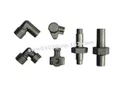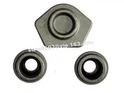

Hey there! As a supplier of CNC machining parts, I've had my fair share of experience working with different materials. Today, I wanna talk about brass and copper - two metals that are pretty popular in the CNC machining world. Are there any differences in machining these two for CNC parts? Well, let's dive right in.
Physical and Chemical Properties
First off, let's take a look at the physical and chemical properties of brass and copper. Copper is a pure metal. It's got this really nice reddish - brown color that we all recognize. It's highly conductive, both thermally and electrically. That's why you often see it used in electrical wiring and heat exchangers.
Brass, on the other hand, is an alloy. It's mainly made up of copper and zinc. The amount of zinc can vary, and that variation can lead to different types of brass with different properties. Generally, brass is a bit harder than copper. It also has a more yellowish color compared to the red of copper.
These differences in properties have a big impact on how we machine them. For example, the hardness of brass means it can withstand more wear and tear during the machining process. Copper, being softer, might be more prone to deformation if not machined carefully.
Machinability
When it comes to machinability, brass is often considered the easier of the two to work with. It has good chip formation. During the CNC machining process, the chips break off in a way that's easy to manage. This means less chance of the chips getting tangled up in the cutting tools, which can cause damage to both the tool and the part.
Copper, however, can be a bit more of a challenge. Its softness means that the chips tend to be stringy. These long, stringy chips can wrap around the cutting tool, causing it to overheat and wear out faster. To deal with this, we often have to use special cutting techniques and tools when machining copper. For instance, using a tool with a sharp edge and a high cutting speed can help break up the chips more effectively.
Another aspect of machinability is the surface finish. Brass usually gives a smoother surface finish right out of the machining process. Copper, again because of its softness, might require some additional finishing steps to achieve the same level of smoothness.
Tool Wear
Tool wear is a big deal in CNC machining. It affects the quality of the parts and the cost of production. When machining brass, the tools tend to wear out at a slower rate. The hardness of brass means that it doesn't cause as much abrasion on the cutting tools as some other materials.
With copper, the situation is different. The softness of copper can cause the tool to "gum up." This means that copper particles stick to the cutting edge of the tool, reducing its effectiveness. To combat this, we need to use tools made from materials that are resistant to this kind of adhesion. Carbide tools are often a good choice for machining copper as they are less likely to have the copper stick to them.


Applications
The differences in machining brass and copper also influence their applications in CNC parts. Brass is commonly used in parts where a good combination of strength and corrosion resistance is needed. For example, it's often used in plumbing fittings, electrical connectors, and decorative parts. You can check out our OEM Stainless Steel 304L CNC Lathe Turning service to see how we can machine brass for various applications.
Copper, with its excellent electrical conductivity, is mainly used in electrical components. Things like circuit boards, bus bars, and electrical contacts often use copper. If you're looking for custom - made copper parts, our Custom Fabrication SS430 CNC Cabinet Parts service can be tailored to meet your specific needs.
Cost
Cost is another factor to consider. Copper is generally more expensive than brass. This is because copper is a pure metal and its extraction and refining processes are more costly. The cost of machining also plays a role. Since brass is easier to machine, the overall cost of producing a brass part might be lower compared to a copper part of the same complexity.
However, the choice between brass and copper shouldn't be based solely on cost. The specific requirements of the application, such as electrical conductivity or corrosion resistance, are often more important.
Design Considerations
When designing CNC parts using brass or copper, we need to take into account their different properties. For brass, we can design parts with more intricate details because of its better machinability. We can create complex shapes and features without too much worry about the machining process being too difficult.
For copper, we might need to simplify the design a bit. Due to its challenges in machining, overly complex designs could lead to a higher rate of defects. Also, when designing copper parts, we need to think about how to manage the chip formation to ensure a smooth machining process.
Quality Control
Quality control is crucial in CNC machining. When working with brass, we can use standard inspection methods to ensure the part meets the required specifications. Since brass has relatively consistent properties, it's easier to predict how the part will turn out.
With copper, quality control can be a bit more complex. We need to pay extra attention to the surface finish and the integrity of the part. The softness of copper means that it can be more easily damaged during handling and inspection. We also need to check for any signs of tool - related defects, such as scratches or uneven surfaces caused by the stringy chips.
Another Consideration: Environmental Impact
We also can't forget about the environmental impact of using brass and copper. Both metals are recyclable, which is a big plus. However, the production processes for both have their own environmental footprints.
The extraction and refining of copper can be energy - intensive and can have some negative environmental impacts. Brass production, being an alloy, also requires energy for the mixing and processing of the copper and zinc. As a responsible CNC machining parts supplier, we're always looking for ways to reduce our environmental impact. For example, we try to source our metals from suppliers who follow sustainable practices.
Conclusion
So, to sum it up, there are definitely differences in machining brass and copper for CNC parts. Brass is generally easier to machine, has better chip formation, and causes less tool wear. Copper, on the other hand, offers excellent electrical conductivity but comes with its own set of machining challenges.
Whether you're looking for parts made from brass or copper, we've got the expertise to handle your project. Our OEM Chroming Custom Milled Aluminum service is just one example of the high - quality CNC machining we offer. If you're in the market for CNC parts, don't hesitate to get in touch with us. We can work with you to determine the best material for your specific needs and provide you with top - notch parts at a competitive price. Let's start a conversation about your next project!
References
- "Machining Handbook" by Industrial Press Inc.
- Various industry research papers on metal machining and material properties.