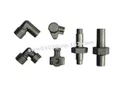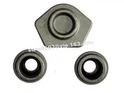

Hey there! If you're in the market for high - quality CNC machining parts, you've come to the right place. I'm a supplier of CNC machining parts, and one of the common issues we often deal with is burrs on these parts. In this post, I'll share with you how we handle the burrs on CNC machining parts.


First off, let's understand what burrs are. Burrs are those unwanted, tiny pieces of material that stick out from the edges or surfaces of a machined part. They can be caused by a bunch of factors. For example, the cutting tools we use might be getting dull. When a tool is worn out, it doesn't cut cleanly, and that can leave burrs behind. Also, the feed rate and cutting speed we set on the CNC machine matter a lot. If the feed rate is too high or the cutting speed is too low, the material can't be removed smoothly, resulting in burrs.
So, how do we deal with these pesky burrs? Well, we've got a few tricks up our sleeves.
1. Tool Selection and Maintenance
One of the first things we do is pay close attention to the cutting tools. We always use high - quality tools that are sharp and suitable for the material we're machining. Different materials, like aluminum, steel, or titanium, require different types of cutting tools. For instance, when we're machining OEM Roughness Ra1.6 CNC Aluminum, we use tools that are specifically designed to cut aluminum cleanly.
We also make sure to maintain our tools properly. Regularly inspecting and sharpening or replacing them when they start to wear out is crucial. A sharp tool can cut through the material much more precisely, reducing the chances of burr formation. We've found that by investing in good tools and taking care of them, we can significantly minimize burrs on our parts.
2. Optimizing Machining Parameters
The settings on our CNC machines play a huge role in burr control. We spend a lot of time experimenting with different feed rates, cutting speeds, and depths of cut. For example, when we're working on OEM CNC Fabrication As Drawing, we need to make sure the machine is programmed with the right parameters to match the design requirements.
If we increase the cutting speed while keeping the feed rate at an appropriate level, the material is removed more quickly and cleanly. However, we have to be careful not to go too fast, as that can also cause other problems like overheating and tool wear. Similarly, adjusting the depth of cut can also affect burr formation. A shallower depth of cut might result in less burr, but it could also increase the machining time. So, it's all about finding that sweet spot.
3. Deburring Processes
Even with the best tool selection and optimized machining parameters, some burrs might still show up. That's when our deburring processes come into play.
- Manual Deburring: This is a simple but effective method. We use hand tools like files, sandpaper, and deburring knives to remove the burrs. It's a labor - intensive process, but it allows us to have a high level of control, especially for parts with complex shapes. We can get into those hard - to - reach areas and make sure the edges are smooth.
- Mechanical Deburring: We also use mechanical methods, such as tumbling and brushing. Tumbling involves putting the parts in a barrel with abrasive media and some cleaning agents. As the barrel rotates, the parts rub against the media, which helps to remove the burrs. Brushing, on the other hand, uses rotating brushes to clean the edges of the parts. It's a faster method than manual deburring and is great for large quantities of parts.
- Chemical Deburring: For certain materials, chemical deburring can be a good option. We use special chemical solutions that react with the burrs and dissolve them. This method is very precise and can be used for parts with small or delicate burrs. However, we have to be careful with the chemicals we use, as they need to be compatible with the material of the part.
4. Quality Control
After deburring, we always conduct a thorough quality control check. We use various inspection tools, like calipers, micrometers, and surface roughness testers, to make sure the parts meet our high - quality standards. We check the dimensions, the smoothness of the edges, and the overall appearance of the parts. If we find any remaining burrs or other defects, we go back and re - work the parts until they're perfect.
5. Continuous Improvement
We're always looking for ways to improve our burr - handling methods. We keep an eye on the latest technologies and techniques in the CNC machining industry. For example, there are new types of cutting tools and deburring equipment coming out all the time. We're also constantly analyzing our production processes to see where we can make adjustments. By learning from our past experiences and staying up - to - date with the industry, we can offer our customers even better - quality CNC machining parts.
In conclusion, handling burrs on CNC machining parts is a multi - step process that requires careful attention to every detail. From tool selection and machining parameter optimization to deburring and quality control, we leave no stone unturned to ensure our parts are free of burrs and meet the highest quality standards.
If you're interested in our OEM ODM 316Ti CNC Machining Quote or any other CNC machining parts, don't hesitate to reach out to us for a quote. We'd love to discuss your specific requirements and how we can provide you with top - notch products. Contact us today to start the procurement process and let's work together to bring your projects to life!
References
- “CNC Machining Handbook”
- Industry research reports on CNC machining and deburring techniques.