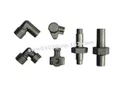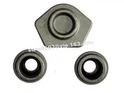

The size of CNC machining parts is a critical factor that significantly influences the machining process. As a seasoned CNC machining parts supplier, I've witnessed firsthand how different part sizes can pose unique challenges and opportunities in the manufacturing world. In this blog, I'll delve into the various ways part size impacts the CNC machining process, from tool selection and cutting parameters to setup time and production efficiency.
Tool Selection
One of the most immediate effects of part size on the CNC machining process is tool selection. Smaller parts often require smaller cutting tools to achieve the necessary precision and surface finish. For instance, when machining miniature components, such as those used in the electronics or medical industries, micro end mills with diameters as small as 0.1 mm may be necessary. These tiny tools are designed to handle the delicate nature of small parts, allowing for intricate cuts and tight tolerances.
On the other hand, larger parts typically demand larger and more robust cutting tools. When working on big components, like those in the automotive or aerospace sectors, heavy-duty end mills and drills are required to remove large amounts of material efficiently. These tools are designed to withstand the high forces and stresses associated with machining large parts, ensuring a stable and accurate cutting process.
The choice of tool material also varies depending on the part size. Smaller parts may benefit from high-speed steel (HSS) or carbide tools, which offer excellent cutting performance and precision. Larger parts, however, often require tools made from tougher materials, such as cobalt or ceramics, to handle the increased cutting forces and maintain tool life.
Cutting Parameters
Part size also plays a crucial role in determining the optimal cutting parameters, including cutting speed, feed rate, and depth of cut. Smaller parts generally require higher cutting speeds and feed rates to achieve efficient material removal while maintaining precision. This is because smaller tools have less mass and can rotate at higher speeds without generating excessive heat or vibration.
Conversely, larger parts typically require lower cutting speeds and feed rates to prevent tool wear and damage. The increased mass of larger tools and the greater amount of material being removed generate more heat and stress, which can lead to premature tool failure if the cutting parameters are not properly adjusted.
The depth of cut is another parameter that is affected by part size. Smaller parts may allow for shallower cuts to achieve the desired surface finish and dimensional accuracy. Larger parts, however, often require deeper cuts to remove material more efficiently, especially when roughing operations are involved.
Setup Time
The size of CNC machining parts can significantly impact the setup time required for the machining process. Smaller parts often require more precise and intricate setups to ensure proper alignment and clamping. This may involve the use of specialized fixtures and tooling to hold the part securely in place and prevent movement during machining.
In addition, smaller parts may require more frequent tool changes due to their complex geometries and tight tolerances. This can further increase the setup time and reduce the overall production efficiency.
Larger parts, on the other hand, generally require less precise setups since they are more stable and easier to handle. However, the setup time for larger parts may still be significant due to the need for heavy-duty fixtures and tooling to support the weight and size of the part.
Production Efficiency
The size of CNC machining parts also affects the overall production efficiency. Smaller parts often require longer machining times per part due to their complex geometries and tight tolerances. In addition, the need for frequent tool changes and precise setups can further reduce the production rate.
To improve the production efficiency of small parts, manufacturers may employ techniques such as multi-axis machining and high-speed machining. Multi-axis machining allows for simultaneous machining of multiple surfaces, reducing the number of setups and tool changes required. High-speed machining, on the other hand, uses advanced cutting tools and techniques to increase the cutting speed and feed rate, resulting in shorter machining times.
Larger parts, while generally requiring less precise setups, may still take longer to machine due to the greater amount of material being removed. To improve the production efficiency of larger parts, manufacturers may use techniques such as roughing and finishing operations. Roughing operations are used to remove the majority of the material quickly, while finishing operations are used to achieve the final surface finish and dimensional accuracy.


Quality Control
Quality control is an essential aspect of the CNC machining process, and part size can have a significant impact on the quality of the finished product. Smaller parts often require more precise measurements and inspections to ensure that they meet the required tolerances and specifications. This may involve the use of advanced metrology equipment, such as coordinate measuring machines (CMMs) and optical measuring systems.
Larger parts, while generally easier to measure and inspect, may still require careful attention to detail to ensure that they are free from defects and meet the required quality standards. This may involve the use of non-destructive testing techniques, such as ultrasonic testing and X-ray inspection, to detect internal defects and ensure the integrity of the part.
Cost
The size of CNC machining parts can also affect the cost of the machining process. Smaller parts often require more expensive tooling and fixtures due to their complex geometries and tight tolerances. In addition, the longer machining times and more frequent tool changes associated with small parts can increase the labor and overhead costs.
Larger parts, while generally requiring less expensive tooling and fixtures, may still be more costly to machine due to the greater amount of material being removed and the longer machining times. However, the cost per part may be lower for larger parts due to the economies of scale associated with mass production.
Conclusion
In conclusion, the size of CNC machining parts has a profound impact on the machining process, from tool selection and cutting parameters to setup time and production efficiency. As a CNC machining parts supplier, it's essential to understand these factors and how they affect the quality, cost, and delivery time of the finished product.
By carefully considering the size of the part and selecting the appropriate tools, cutting parameters, and machining techniques, manufacturers can optimize the machining process and ensure that the finished product meets the required quality standards and specifications.
If you're in need of high-quality CNC machining parts, whether small or large, we're here to help. We offer a wide range of OEM ODM 316Ti CNC Machining Quote, OEM Food Grade Stainless Steel 304 CNC Machining Companies, and Series Kinds Of CNC Lathe Machine Parts. Our experienced team of engineers and machinists will work closely with you to understand your requirements and provide you with the best possible solution. Contact us today to discuss your project and get a free quote.
References
- Smith, J. (2018). CNC Machining Handbook. Industrial Press.
- Brown, A. (2019). Fundamentals of Machining and Machine Tools. McGraw-Hill Education.
- Jones, R. (2020). Advanced CNC Machining Techniques. Wiley.