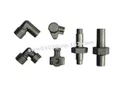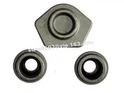

Hey there! I'm a supplier of forging parts, and today I wanna chat about how to handle the flash in forging parts. Flash is that extra material that forms around the edges of a forging when the die closes during the forging process. It's a common thing in forging, but it needs to be dealt with properly to get high - quality forging parts.
First off, let's understand why flash occurs. When we're forging, the metal is forced to fill the die cavity. Since the metal has to flow and conform to the shape of the die, some of it squeezes out between the die halves. This is how flash is created. It's not all bad, though. Flash actually helps in the forging process. It restricts the metal flow within the die cavity, ensuring that the forging gets the right shape and density.
Now, onto handling this flash. The first step is to decide when to remove it. There are two main options: hot trimming and cold trimming.
Hot trimming is done right after the forging process while the part is still hot. The advantage of hot trimming is that the metal is more malleable at high temperatures. This means it's easier to cut through the flash. You don't need as much force, and the cutting tools experience less wear and tear. Also, hot trimming can prevent some of the internal stresses that might occur if you let the part cool with the flash on. However, hot trimming requires special equipment that can handle the high - temperature environment. You need to have a trimming press that can operate in a hot - shop setting, and the operators need to take extra safety precautions.
Cold trimming, on the other hand, is done after the forging has cooled down. This method is more convenient in some ways because you don't have to deal with the high - temperature issues. You can use standard trimming equipment that's commonly available in a machine shop. But cold trimming has its drawbacks. The metal is harder when it's cold, so you need more force to cut through the flash. This can lead to more wear on the cutting tools, and there's a higher risk of cracking or damaging the forging part.
Another important aspect of handling flash is the choice of cutting tools. For hot trimming, we often use shear blades. These blades are designed to cut through the hot, soft metal cleanly. They need to be made of materials that can withstand high temperatures and the abrasive nature of the hot metal. Tungsten carbide is a popular choice for shear blades in hot - trimming applications. It's hard, wear - resistant, and can maintain its cutting edge even at high temperatures.
When it comes to cold trimming, we can use a variety of tools. Band saws are a common option. They're relatively inexpensive and can cut through the flash with a reasonable amount of precision. However, they might not be the best for very thick or hard flash. For more challenging cold - trimming jobs, we can use milling cutters. Milling cutters can remove the flash more aggressively and can handle different shapes and sizes of forging parts.
Quality control is also crucial when handling flash. After trimming, we need to inspect the forging parts to make sure the flash has been removed properly. There shouldn't be any remnants of flash left on the part, as this can affect the fit and function of the forging. We can use visual inspection, but for more accurate results, we can also use measuring tools like calipers or micrometers. These tools can help us check the dimensions of the forging and ensure that it meets the required specifications.
Now, let's talk about the impact of flash on the overall cost of forging parts. Flash removal adds to the production cost. The cost of the trimming equipment, the cutting tools, and the labor involved in the trimming process all contribute to the final price. However, if we don't handle the flash properly, it can lead to even higher costs in the long run. For example, if there's flash left on the part, it might cause problems during the assembly process. This could result in rework or even rejection of the parts, which is much more expensive than proper flash handling.


As a forging parts supplier, we offer a wide range of forging products. If you're looking for OEM Carbon Steel Stainless Steel Hot Forging, you can check out our products here. We also have high - quality aluminum forging products from top - notch High Quality Aluminum Forging Manufacturers. And if you need OEM Aisi1045 Steel Precise Press Forging, we've got you covered here.
In conclusion, handling the flash in forging parts is a multi - step process that requires careful consideration. From choosing the right trimming method to selecting the appropriate cutting tools and implementing quality control measures, every step plays a vital role in ensuring high - quality forging parts. We're committed to providing the best forging parts and services. If you're interested in our products or have any questions about flash handling or forging in general, don't hesitate to reach out for a procurement discussion.
References
- "Forging Handbook: Principles and Applications"
- "Metalworking: A Practical Guide"
- Industry research papers on forging processes and flash handling