
Hey there! As a supplier of CNC machining parts, I often get asked about the difference between CNC milling and turning. It's a crucial topic, especially for those looking to get the right parts for their projects. So, let's dive right in and break it down.
What's CNC Milling?
CNC milling is like a high - tech sculpting process. We start with a block of material, which could be metal, plastic, or wood. The milling machine has a cutting tool that moves in multiple directions – up, down, left, right, and even at angles. This multi - axis movement allows us to create complex shapes and features on the workpiece.
Think of it as carving out a detailed statue from a big piece of stone, but instead of a chisel and hammer, we use precision cutting tools. The cutting tools can be different sizes and shapes, depending on the specific requirements of the part. For example, a small end mill might be used to create intricate details, while a larger face mill could be used to quickly remove large amounts of material.
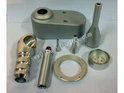
One of the great things about CNC milling is its versatility. We can make parts with flat surfaces, curved surfaces, holes, slots, and pockets. It's ideal for creating parts with complex geometries, like engine components, molds, and custom brackets. If you're interested in some of the parts we can produce through CNC milling, check out our OEM Precise Tolerance CNC Machining Parts As Drawing. These parts are made to exact specifications and are perfect for high - precision applications.
How Does CNC Turning Work?
On the other hand, CNC turning is more like a lathe operation. In this process, the workpiece rotates at high speed while a cutting tool moves along its surface to remove material. It's similar to how a potter spins a lump of clay on a wheel and shapes it with their hands, but in our case, it's all about metal and precision tools.
The main focus of CNC turning is to create cylindrical parts. We can make shafts, rods, bushings, and other round components. The cutting tool can create different diameters, tapers, and threads on the rotating workpiece. For instance, if you need a custom - sized shaft for a machine, CNC turning is the way to go.
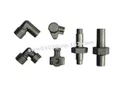
The simplicity of the process in terms of the movement of the cutting tool (mostly in a linear path along the rotating workpiece) allows for high - speed production of round parts. It's very efficient when it comes to mass - producing cylindrical components. Take a look at our Custom CNC machining Stainless Steel Bushing Post, which is a great example of a part made through CNC turning. These bushings are made with high - quality stainless steel and are designed to fit specific applications.
Key Differences
Geometry of Parts
The most obvious difference is the type of parts they can produce. CNC milling is for complex, non - cylindrical shapes. You can have parts with multiple planes, angles, and irregular features. In contrast, CNC turning is mainly for cylindrical and round parts. If your part has a lot of curves and flat surfaces that need to be machined at different angles, milling is the better choice. But if it's a simple round rod or a part with a circular cross - section, turning is more appropriate.
Tool Movement
In CNC milling, the cutting tool moves in multiple axes to shape the stationary workpiece. This allows for a wide range of movements and the ability to create complex shapes. In CNC turning, the cutting tool moves linearly while the workpiece rotates. The movement is more straightforward and is focused on creating round profiles.
Material Removal
Milling can remove material from different directions and can handle large - scale material removal in a relatively short time, especially when using large - diameter cutters. Turning, however, is more about precision removal of material to achieve the desired diameter and surface finish on a rotating workpiece. It's more focused on fine - tuning the shape of the round part.
Production Speed
For mass - producing simple cylindrical parts, CNC turning is usually faster. Since the movement of the cutting tool is more straightforward and the process is well - suited for round parts, it can churn out parts quickly. But for complex parts with many features, CNC milling might take longer because of the multiple tool paths and the need for precise positioning.
Applications in Real - World Projects
Let's say you're working on an automotive project. You might need engine blocks, which have complex internal and external features. CNC milling would be used to create the intricate cooling channels, mounting holes, and the overall shape of the block. On the other hand, the drive shafts in the same vehicle would be made through CNC turning because they are long, cylindrical components.
In the electronics industry, if you're making a custom - designed enclosure for a device, milling would be used to create the detailed shapes, cutouts for buttons and ports, and the overall form of the enclosure. But the screws and pins used to assemble the device could be made through turning.
Quality and Precision
Both CNC milling and turning can achieve high levels of precision. However, the precision requirements might vary depending on the application. For example, in aerospace applications, parts need to be extremely precise. CNC milling can achieve very tight tolerances, especially when using advanced machining centers and high - quality cutting tools.
CNC turning can also achieve high precision, especially when it comes to the roundness and concentricity of cylindrical parts. For parts that require precise threading, turning is the ideal process. Our OEM Stainless Steel 303 Knurled Machining Metal Parts are a great example of high - precision parts. These parts are made with strict quality control measures to ensure they meet the required specifications.
Cost Considerations
The cost of CNC machining depends on several factors, including the complexity of the part, the material used, and the production volume. For simple parts, turning is generally more cost - effective because of its faster production speed and simpler tooling requirements. But for complex parts with many features, the cost of milling might be justified by the ability to create the part accurately.
If you're on a tight budget and need a large number of simple cylindrical parts, turning is the way to go. But if you need a one - off, highly complex part, you might have to invest in the more expensive milling process.
Conclusion
So, there you have it – the difference between CNC milling and turning. As a CNC machining parts supplier, we have the expertise and equipment to handle both processes. Whether you need a complex part made through milling or a simple cylindrical part through turning, we've got you covered.


If you're in the market for high - quality CNC machining parts, don't hesitate to reach out for a quote. We can work with you to determine the best process for your project and ensure that you get the parts you need, exactly as you want them. Contact us today to start the procurement process and discuss your specific requirements.
References
- Groover, M. P. (2010). Fundamentals of Modern Manufacturing: Materials, Processes, and Systems. Wiley.
- DeGarmo, E. P., Black, J. T., & Kohser, R. A. (2003). Materials and Processes in Manufacturing. Wiley.