
Hey there! As a supplier of CNC machining parts, I've been in the game for quite a while, and I know how crucial it is to get that high - speed machining accuracy spot - on. In high - speed machining, even the tiniest error can lead to big problems, like parts not fitting together or not meeting the required specifications. So, let's dive into some practical ways to boost that accuracy.


1. Machine Selection and Maintenance
First off, the machine you use is super important. You gotta pick a high - quality CNC machine that's built for high - speed machining. Look for ones with good rigidity and stability. A machine that shakes or vibrates a lot during high - speed operation is gonna mess up your accuracy big time.
Regular maintenance is also key. Just like you take your car in for a tune - up, your CNC machine needs some love too. Keep the spindles clean and lubricated. Check the ball screws and linear guides for wear and tear. If these parts are worn out, they can cause inaccuracies in the movement of the cutting tool. For example, a worn ball screw might not move as smoothly as it should, leading to uneven cuts.
2. Tool Selection and Management
The cutting tools you use are like the chef's knives in the kitchen of CNC machining. You need to choose the right ones for the job. High - speed steel (HSS) tools are okay for some applications, but for high - speed machining, carbide tools are usually a better bet. They can handle the high speeds and temperatures better, which means less wear and more accurate cuts.
Tool management is also crucial. Keep track of how long each tool has been in use. As tools wear, they become less accurate. You can use tool monitoring systems to figure out when it's time to replace a tool. For instance, if a tool starts to produce rough surfaces on the part, it might be time to swap it out.
3. Workpiece Fixturing
How you hold the workpiece in place can make or break the accuracy of your machining. You need a good fixturing system that holds the part securely without deforming it. If the part moves during machining, you're gonna end up with a messed - up part.
There are different types of fixtures, like vises, clamps, and custom - made fixtures. For small parts, a vise might do the trick. But for more complex parts, you might need a custom - made fixture that's designed specifically for that part. Make sure the fixture is properly aligned with the machine axes. Any misalignment can lead to inaccuracies in the machining.
4. Programming and Path Planning
The CNC program you use is the brain behind the machining process. You need to write a program that's optimized for high - speed machining. This means using the right feed rates, spindle speeds, and cutting depths.
Path planning is also important. The toolpath should be as short and efficient as possible. Avoid unnecessary movements that can waste time and increase the chances of errors. For example, if you can machine multiple features in one continuous movement instead of stopping and starting the tool, it can improve accuracy.
5. Environmental Factors
Don't forget about the environment where the machining is taking place. Temperature and humidity can affect the accuracy of CNC machining. Metals expand and contract with changes in temperature. So, if the temperature in the machining area fluctuates a lot, it can cause the workpiece and the machine components to change size, leading to inaccuracies.
You can control the environment by using air - conditioning or heating systems in the machining area. Keep the humidity at a stable level too. Some high - precision machining operations even require a cleanroom environment to prevent dust and debris from getting into the machine and affecting the accuracy.
6. Quality Control and Inspection
Once you've machined a part, you need to check its accuracy. You can use different inspection tools like calipers, micrometers, and coordinate measuring machines (CMMs). Calipers and micrometers are good for quick checks of basic dimensions, while CMMs can provide very accurate 3D measurements of the part.
Set up a quality control process where you inspect parts at different stages of the machining process. For example, you can do a rough inspection after the initial roughing operations and a more detailed inspection after the finishing operations. If you find any inaccuracies, you can make adjustments to the machining process right away.
Real - World Examples
Let me share a couple of real - world examples from my experience as a CNC machining parts supplier.
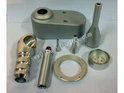
One time, we were working on a project to machine some OEM SS321 CNC Machining Process Machinery Parts. The customer had very strict accuracy requirements. At first, we were using HSS tools, and we were having some issues with the surface finish and the dimensional accuracy. After switching to carbide tools and adjusting the feed rates and spindle speeds in the CNC program, we were able to achieve the required accuracy.
Another project involved OEM CNC Fabrication As Drawing. The parts were complex and had tight tolerances. We had some problems with the workpiece moving during machining, which was causing inaccuracies. We designed a custom - made fixture that held the part more securely, and that solved the problem.
We also worked on OEM CNC Machining Aluminum BOV Weld Flange. The temperature in the machining area was fluctuating a lot, and we noticed that the parts were coming out with slightly different dimensions. We installed an air - conditioning system to keep the temperature stable, and that improved the accuracy significantly.
Conclusion
Improving the accuracy of CNC machining parts in high - speed machining is a multi - faceted challenge. It involves everything from choosing the right machine and tools to controlling the environment and inspecting the parts. By following the tips I've shared here, you can significantly improve the accuracy of your machining operations.
If you're in the market for high - quality CNC machining parts, I'd love to have a chat with you. Whether you need custom - made parts or standard components, we've got the expertise and the equipment to meet your needs. Feel free to reach out to discuss your requirements and let's see how we can work together to get you the best - quality parts.
References
- Smith, J. (2018). CNC Machining Handbook. Publisher X.
- Johnson, A. (2019). High - Speed Machining Techniques. Publisher Y.
- Brown, C. (2020). Tooling for CNC Machining. Publisher Z.