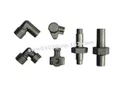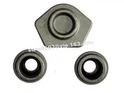

Selecting the appropriate forging factory for parts production is a crucial decision that can significantly impact the quality, cost, and efficiency of your manufacturing process. As a forging parts supplier, I understand the challenges and considerations involved in this process. In this blog, I will share some insights and tips on how to choose the right forging factory for your specific needs.
Quality Assurance
One of the most important factors to consider when selecting a forging factory is its commitment to quality assurance. A reliable forging factory should have a comprehensive quality management system in place to ensure that all parts meet or exceed industry standards. Look for a factory that is ISO 9001 certified, as this indicates that they have implemented a quality management system that is recognized worldwide.
In addition to ISO 9001 certification, you should also inquire about the factory's inspection and testing procedures. A reputable forging factory will conduct thorough inspections at every stage of the manufacturing process, from raw material inspection to final product testing. They should also have the necessary equipment and facilities to perform non-destructive testing, such as ultrasonic testing and magnetic particle testing, to detect any internal defects in the parts.
Another aspect of quality assurance is the factory's ability to provide traceability. This means that they should be able to track and document the origin of the raw materials used in the production of your parts, as well as the manufacturing processes and inspections that were performed. Traceability is important for ensuring the quality and safety of the parts, as well as for compliance with regulatory requirements.
Production Capacity and Capabilities
The production capacity and capabilities of the forging factory are also important considerations. You need to ensure that the factory has the capacity to meet your production requirements, both in terms of quantity and lead time. Look for a factory that has a large production facility and a sufficient number of forging presses and other equipment to handle your orders.
In addition to production capacity, you should also consider the factory's capabilities in terms of the types of parts they can produce. Different forging factories may specialize in different types of forging processes, such as open die forging, closed die forging, or seamless rolled ring forging. Make sure that the factory you choose has the expertise and experience to produce the specific type of parts you need.


You should also inquire about the factory's ability to work with different materials. Forging parts can be made from a variety of materials, including carbon steel, stainless steel, alloy steel, and non-ferrous metals such as aluminum and brass. A good forging factory should be able to work with a wide range of materials and have the necessary knowledge and experience to select the appropriate material for your application.
Cost and Pricing
Cost is always a factor when it comes to manufacturing, and forging is no exception. However, it is important to remember that the cheapest option is not always the best. When evaluating the cost of forging parts, you need to consider not only the price per part but also the quality, lead time, and other factors that can impact the overall cost of the project.
A reputable forging factory will be transparent about their pricing and will provide you with a detailed quote that includes all the costs associated with the production of your parts, such as raw materials, labor, machining, and finishing. They should also be willing to work with you to find ways to reduce the cost of the parts without compromising on quality.
One way to reduce the cost of forging parts is to optimize the design of the parts. A good forging factory will have a team of experienced engineers who can work with you to optimize the design of the parts to reduce the amount of material used and the complexity of the manufacturing process. This can result in significant cost savings over the long term.
Technical Expertise and Support
The technical expertise and support provided by the forging factory are also important considerations. You need to ensure that the factory has a team of experienced engineers and technicians who can provide you with technical advice and support throughout the production process. They should be able to help you with the design of the parts, the selection of the appropriate materials and forging processes, and the optimization of the manufacturing process.
In addition to technical expertise, you should also consider the factory's ability to provide after-sales support. A good forging factory will stand behind their products and will be willing to work with you to resolve any issues or problems that may arise after the parts have been delivered. They should also be able to provide you with technical documentation, such as drawings and specifications, to ensure that the parts are installed and used correctly.
Environmental and Social Responsibility
In today's world, environmental and social responsibility are becoming increasingly important considerations for businesses. When selecting a forging factory, you should look for a factory that is committed to sustainable manufacturing practices and has a good reputation for environmental and social responsibility.
A good forging factory should have a comprehensive environmental management system in place to minimize the environmental impact of their operations. This may include measures such as reducing energy consumption, minimizing waste generation, and recycling materials. They should also comply with all relevant environmental regulations and standards.
In addition to environmental responsibility, you should also consider the factory's social responsibility. This includes issues such as worker safety, labor rights, and community engagement. Look for a factory that has a good reputation for treating its employees fairly and providing a safe and healthy working environment. They should also be involved in community development initiatives and have a positive impact on the local community.
Conclusion
Selecting the appropriate forging factory for parts production is a complex decision that requires careful consideration of a variety of factors. By evaluating the quality assurance, production capacity and capabilities, cost and pricing, technical expertise and support, and environmental and social responsibility of the forging factory, you can make an informed decision that will ensure the success of your manufacturing project.
If you are looking for a reliable forging factory for your parts production needs, I recommend considering our company. We are a leading OEM Carbon Steel Stainless Steel Hot Forging supplier with a proven track record of delivering high-quality parts at competitive prices. We have a state-of-the-art production facility and a team of experienced engineers and technicians who can provide you with the technical expertise and support you need.
We also offer a wide range of OEM Stainless Steel 304 Precise Custom Forgings and Customize China CuZn39Pb3 Brass Forging services to meet your specific requirements. Whether you need a small batch of custom parts or a large-scale production run, we have the capacity and capabilities to handle your orders.
If you are interested in learning more about our forging services or would like to request a quote, please contact us today. We look forward to working with you to meet your forging needs.
References
- ASM Handbook, Volume 14A: Metalworking - Forging, ASM International, 2013.
- Metals Handbook Desk Edition, Third Edition, ASM International, 2005.
- Forging Industry Association, "Forging Technology and Applications," 2018.
- ISO 9001:2015, Quality management systems - Requirements.