
In the world of statistics and data analysis, frequency distribution plays a pivotal role in understanding the patterns and characteristics of a dataset. When we encounter a specific value like 2.4851 within a frequency distribution, the question of its frequency naturally arises. As a supplier dealing with products closely related to the value 2.4851, I'm here to explore this concept in detail and shed light on how it relates to our business.
Understanding Frequency Distribution
Frequency distribution is a tabular or graphical representation that shows how often each value or range of values occurs in a dataset. It helps us identify the central tendency, variability, and shape of the data. For instance, in a manufacturing process, a frequency distribution can be used to analyze the dimensions of produced parts. If we measure the diameters of a large number of bolts, we can create a frequency distribution to see how many bolts have a particular diameter value.
Let's assume that the value 2.4851 represents a specific measurement, such as the thickness of a metal sheet or the diameter of a precision component. To determine its frequency, we need to have a dataset that includes multiple measurements of the same characteristic. For example, if we have measured the thickness of 100 metal sheets, and 2.4851 is one of the measured values, we need to count how many times this exact value appears in the dataset.
The Role of 2.4851 in Our Business
As a supplier of products related to the value 2.4851, we understand the importance of precision and consistency. Our products are often used in industries where even the slightest deviation from the specified value can lead to significant issues. For example, in the aerospace industry, components need to have extremely precise dimensions to ensure the safety and performance of aircraft.
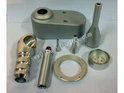
We offer a wide range of products that are manufactured to meet the strictest quality standards. Our 2.4605 alloy59 U Bolt Bending Machine Square is designed to produce U bolts with high precision, and the value 2.4851 might represent a critical dimension in the manufacturing process. Similarly, our OEM Customized Stainless Steel Precision Casting In Machining Surface is tailored to meet the specific requirements of our customers, and the value 2.4851 could be a key measurement in the casting or machining process.
Determining the Frequency of 2.4851
To determine the frequency of 2.4851 in a frequency distribution, we can follow these steps:
- Collect the Data: Gather all the relevant measurements related to the characteristic of interest. This could involve measuring the dimensions of products during the manufacturing process, conducting quality control inspections, or collecting data from customer feedback.
- Organize the Data: Arrange the data in ascending or descending order to make it easier to count the occurrences of each value. You can use a spreadsheet or a statistical software to perform this task.
- Count the Occurrences: Go through the dataset and count how many times the value 2.4851 appears. This can be done manually for small datasets or using automated functions in software for larger datasets.
- Calculate the Frequency: Divide the number of occurrences of 2.4851 by the total number of data points in the dataset. This will give you the relative frequency of the value, which can be expressed as a percentage or a decimal.
For example, if we have a dataset of 500 measurements and the value 2.4851 appears 25 times, the frequency of 2.4851 is 25/500 = 0.05 or 5%.
Significance of Frequency in Quality Control
In our business, understanding the frequency of specific values is crucial for quality control. A high frequency of a particular value indicates that the manufacturing process is consistent and producing products within the desired specifications. On the other hand, a low frequency or a significant deviation from the expected frequency could signal potential issues in the manufacturing process, such as equipment malfunction, operator error, or problems with the raw materials.
We use frequency distribution analysis as part of our quality control procedures to monitor the performance of our manufacturing processes. By regularly collecting and analyzing data, we can identify trends, detect anomalies, and take corrective actions to ensure the quality of our products. For example, if we notice a sudden decrease in the frequency of a critical value, we can investigate the root cause and make adjustments to the manufacturing process to bring it back within the desired range.
Our Commitment to Quality and Precision
At our company, we are committed to providing our customers with high-quality products that meet their exact specifications. We understand that the value 2.4851 might be a critical parameter in their applications, and we take every measure to ensure that our products are manufactured with the highest level of precision.
We invest in state-of-the-art manufacturing equipment and technology to ensure the accuracy and consistency of our products. Our team of experienced engineers and technicians is dedicated to quality control and continuous improvement. We also offer Competitive Investment Casting Cost With High Quality to provide our customers with cost-effective solutions without compromising on quality.


Conclusion
In conclusion, the question of the frequency of the value 2.4851 in a frequency distribution is not only a statistical concept but also has significant implications for our business. By understanding the frequency of specific values, we can ensure the quality and consistency of our products, which is essential for the satisfaction of our customers.
If you are in need of products related to the value 2.4851 or have any questions about our offerings, we encourage you to contact us for a procurement discussion. We are ready to work with you to meet your specific requirements and provide you with the best possible solutions.
References
- Anderson, D. R., Sweeney, D. J., & Williams, T. A. (2014). Statistics for Business and Economics. Cengage Learning.
- Montgomery, D. C., Runger, G. C., & Hubele, N. F. (2015). Engineering Statistics. Wiley.