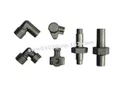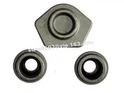

Hey there! As a supplier of CNC machining parts, I often get asked about the compressive strength properties of these parts. Compressive strength is a big deal when it comes to CNC machining parts. It's all about how well a part can handle being squeezed or pressed without breaking or deforming. Let's dig into this topic and see what it means for us in the business.


First off, what exactly is compressive strength? Well, it's the maximum amount of compressive stress a material can take before it fails. When we're making CNC machining parts, we need to know this number because it tells us how much weight or pressure the part can handle in real - world applications.
There are a bunch of factors that can affect the compressive strength of CNC machining parts. One of the most important is the material we use. Different materials have different inherent compressive strengths. For example, metals like steel and aluminum are known for their relatively high compressive strength. Steel can withstand a huge amount of pressure, which makes it a popular choice for parts that need to bear heavy loads, like engine components or structural parts in machinery.
On the other hand, plastics usually have lower compressive strength compared to metals. But that doesn't mean they're not useful. Plastics are often lighter and more cost - effective, so they're great for parts where weight is a concern or where the part doesn't need to handle extremely high pressures. For instance, plastic parts can be used in consumer electronics or some automotive interior components.
The manufacturing process also plays a huge role in determining the compressive strength of CNC machining parts. In CNC machining, we use computer - controlled machines to shape the parts. The precision of these machines allows us to create parts with very accurate dimensions. But how we machine the part can affect its strength. If we machine a part too aggressively, it can create internal stresses in the material, which can reduce its compressive strength.
Another factor is the heat treatment of the material. Heat treatment can change the internal structure of the metal, making it stronger or more ductile. For example, quenching and tempering are common heat - treatment processes for steel. Quenching rapidly cools the steel, which hardens it, and then tempering is done to relieve some of the internal stresses and make the steel more tough. This combination can significantly increase the compressive strength of the steel part.
Let's talk a bit about some specific types of CNC machining parts and their compressive strength. We offer Cheap price Rapid CNC Prototyping. These prototypes are a great way to test out a design before mass - producing it. When it comes to compressive strength, we can use different materials for these prototypes. If the final part is going to be used in a high - pressure environment, we might choose a high - strength metal for the prototype. This way, we can test if the design can handle the expected loads.
Our SS303 CNC Metal Machining By Hexagon Rod is another interesting product. SS303 is a type of stainless steel. Stainless steel is known for its corrosion resistance and good compressive strength. The hexagonal shape of the rod gives the part some unique properties. The corners of the hexagon can distribute the compressive load in a different way compared to a round rod. This can be beneficial in some applications where we need to optimize the load - bearing capacity.
Then there are our China Aluminum 6061 - T6 CNC Components. Aluminum 6061 - T6 is a popular alloy. The "T6" indicates that it has been heat - treated to achieve a good balance of strength and ductility. It has a relatively high compressive strength for an aluminum alloy, and it's also lightweight. This makes it ideal for aerospace and automotive applications, where we need parts that can handle some pressure but also keep the overall weight down.
When it comes to testing the compressive strength of our CNC machining parts, we use a few different methods. One common method is the uniaxial compression test. In this test, we apply a compressive load to the part along one axis until it fails. We measure the maximum load the part can take and calculate the compressive strength based on the cross - sectional area of the part.
We also use non - destructive testing methods to check for any internal defects in the parts. Defects like cracks or voids can significantly reduce the compressive strength of a part. By detecting these defects early, we can take steps to fix them or reject the part before it goes into use.
In the real - world applications of our CNC machining parts, understanding the compressive strength is crucial. For example, in the construction industry, parts need to be able to handle the weight of the building and any additional loads like wind or seismic forces. In the automotive industry, engine parts need to withstand the high pressures generated during combustion.
As a supplier, we always strive to provide the best - quality CNC machining parts with the appropriate compressive strength for our customers' needs. We work closely with our customers to understand their requirements and then select the right materials and manufacturing processes to achieve the desired compressive strength.
If you're in the market for CNC machining parts and you're concerned about the compressive strength, don't hesitate to reach out. We can have a detailed discussion about your project, recommend the best materials and processes, and provide you with samples for testing. Whether you need a small batch of prototypes or a large - scale production run, we've got you covered.
In conclusion, the compressive strength of CNC machining parts is a complex but important aspect of their performance. By considering factors like material selection, manufacturing processes, and heat treatment, we can produce parts that meet the high - pressure demands of various industries. So, if you're looking for high - quality CNC machining parts, give us a shout, and let's start a conversation about your project.
References
- Callister, W. D., & Rethwisch, D. G. (2011). Materials Science and Engineering: An Introduction. Wiley.
- ASM Handbook Committee. (2008). ASM Handbook, Volume 2: Properties and Selection: Nonferrous Alloys and Special - Purpose Materials. ASM International.