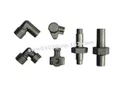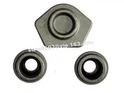

Hey there! I'm a supplier of forging parts, and today I wanna chat about the precision requirements for forging parts. It's super important in our business, and understanding these requirements can help us deliver top - notch products to our customers.
Why Precision Matters in Forging Parts
First off, let's talk about why precision is such a big deal. In most industries, forging parts are used in machinery and equipment where even a tiny deviation can cause major problems. For example, in the automotive industry, engine components made from forging parts need to fit perfectly. If the parts aren't precise, it can lead to engine malfunctions, reduced performance, and even safety hazards.
In aerospace, the stakes are even higher. Aircraft parts must meet extremely strict precision requirements. A small error in the forging process could compromise the structural integrity of the aircraft, endangering the lives of passengers and crew. So, precision isn't just a nice - to - have; it's an absolute necessity.
Geometric Precision
One of the key aspects of precision in forging parts is geometric precision. This includes things like dimensions, shape, and surface finish.


Dimensions
The dimensions of a forging part need to be within a very tight tolerance. For instance, if we're making a piston for an engine, the diameter and length of the piston have to match the design specifications exactly. Even a difference of a few thousandths of an inch can affect how well the piston fits into the cylinder and how efficiently the engine runs.
As a forging parts supplier, we use advanced measuring tools like calipers, micrometers, and coordinate measuring machines (CMMs) to ensure that the dimensions of our parts are spot - on. These tools can measure with high accuracy, allowing us to catch any deviations early in the production process.
Shape
The shape of a forging part is also crucial. Some parts have complex shapes, like gears or turbine blades. These shapes need to be formed precisely to function correctly. For example, a gear with an incorrect tooth profile won't mesh properly with other gears, leading to noise, wear, and reduced efficiency.
To achieve the right shape, we use precision forging techniques. This might involve using dies that are machined to very high precision. The dies are designed to shape the metal into the desired form during the forging process. We also have to control factors like the temperature and pressure during forging to ensure that the metal flows correctly and takes on the intended shape.
Surface Finish
The surface finish of a forging part can impact its performance and durability. A rough surface can cause increased friction, which can lead to wear and tear over time. In some applications, like hydraulic cylinders, a smooth surface finish is essential to prevent leakage.
We use various methods to improve the surface finish of our forging parts. This can include machining operations like grinding and polishing. These processes can remove any rough spots or imperfections on the surface, leaving a smooth and even finish.
Material Properties Precision
Another important aspect of precision in forging parts is related to material properties.
Hardness
The hardness of a forging part is critical. It needs to be hard enough to withstand the forces and stresses it will encounter in its application, but not so hard that it becomes brittle and prone to cracking.
We control the hardness of our forging parts through heat treatment processes. For example, quenching and tempering can be used to adjust the hardness of steel parts. By carefully controlling the temperature and cooling rate during heat treatment, we can achieve the desired hardness level.
Density and Porosity
The density and porosity of a forging part can also affect its performance. A part with high porosity may have reduced strength and durability. To ensure low porosity, we use proper forging techniques and control the quality of the raw materials.
During the forging process, the metal is compressed, which helps to reduce porosity. We also inspect the raw materials for any signs of porosity or other defects before starting the forging process.
Precision Requirements in Different Applications
The precision requirements for forging parts can vary depending on the application.
Automotive Industry
In the automotive industry, as I mentioned earlier, precision is crucial for engine components, transmission parts, and suspension components. For example, crankshafts need to be forged with high precision to ensure smooth engine operation. The connecting rods also need to have precise dimensions and material properties to handle the high - speed and high - stress conditions in the engine.
We offer a range of forging parts for the automotive industry, such as OEM 6061 - T6 Forged Aluminum With CNC Machining. These parts are made to meet the strict precision requirements of the automotive sector, ensuring high performance and reliability.
Machinery Manufacturing
In general machinery manufacturing, forging parts are used in a wide variety of equipment. The precision requirements can vary depending on the type of machinery. For example, in heavy - duty machinery like construction equipment, the forging parts need to be strong and durable. They also need to have precise dimensions to ensure proper assembly and operation.
We have products like OEM Aisi1045 Steel Precise Press Forging that are suitable for machinery manufacturing applications. These parts are forged with precision to meet the specific needs of different types of machinery.
Custom Fabrication
For custom fabrication projects, the precision requirements are often unique to each project. Customers may have specific design requirements and performance expectations. We work closely with our customers to understand their needs and produce forging parts that meet their exact specifications.
Our Custom Fabrication Carbon Steel Hot Forging Parts are a great option for custom projects. We can customize the dimensions, shape, and material properties of these parts to fit the specific requirements of our customers.
Meeting Precision Requirements
As a forging parts supplier, we have a strict quality control system in place to ensure that our parts meet the precision requirements.
Quality Control Processes
We start with the inspection of raw materials. We only use high - quality metals that meet our standards. During the forging process, we monitor key parameters like temperature, pressure, and deformation rate. After forging, we conduct a series of inspections, including dimensional checks, hardness testing, and non - destructive testing.
Skilled Workforce
Our team of skilled workers plays a crucial role in meeting precision requirements. They have years of experience in forging and are trained to operate our advanced equipment. They know how to handle the materials and processes to ensure that the parts are made with high precision.
Conclusion
In conclusion, the precision requirements for forging parts are multi - faceted and critical for the performance and safety of the end - products. Whether it's geometric precision, material properties precision, or meeting the specific needs of different applications, we take precision very seriously at our company.
If you're in the market for high - precision forging parts, we'd love to hear from you. We have the expertise, equipment, and quality control measures in place to provide you with the best - in - class forging parts. Don't hesitate to reach out and start a conversation about your forging part needs.
References
- "Metal Forging Handbook: Processes, Materials, and Design" by ASM International
- "Precision Forging Technology" by various industry experts in forging technology publications.