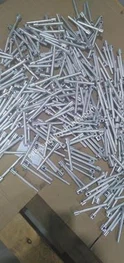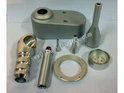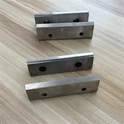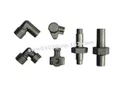

When it comes to manufacturing precision parts, two prominent techniques stand out: CNC machining and Electrical Discharge Machining (EDM). As a seasoned supplier of CNC machining parts, I've witnessed firsthand the unique capabilities and differences between these two methods. In this blog post, I'll delve into the key distinctions between CNC machining and EDM, exploring their processes, applications, advantages, and limitations.
Process Comparison
CNC machining is a subtractive manufacturing process that uses computer numerical control to automate the movement of cutting tools. These tools, such as drills, end mills, and lathes, remove material from a workpiece to create the desired shape. The process starts with a 3D model of the part, which is then translated into a set of instructions for the CNC machine. The machine then follows these instructions to precisely cut the material, layer by layer.
On the other hand, EDM is a non - traditional machining process that uses electrical discharges (sparks) to remove material from a workpiece. There are two main types of EDM: wire EDM and sinker EDM. In wire EDM, a thin wire electrode is used to cut through the workpiece along a programmed path, while in sinker EDM, a custom - shaped electrode is used to create a cavity in the workpiece. The workpiece and the electrode are submerged in a dielectric fluid, and an electrical current is passed between them, causing sparks to erode the material.


Material Compatibility
CNC machining is highly versatile when it comes to material selection. It can be used to machine a wide range of materials, including metals (such as aluminum, steel, titanium), plastics, and composites. For instance, our company offers CNC Milling 7075 Aluminum Hinge, which showcases the excellent machining capabilities of CNC on high - strength aluminum alloys. The cutting tools can be selected based on the material properties, ensuring efficient and accurate machining.
EDM, on the other hand, is particularly well - suited for machining hard and conductive materials. It can handle materials that are difficult to machine using traditional cutting tools, such as hardened steels, carbides, and superalloys. Since EDM does not rely on mechanical cutting forces, it can machine materials without causing excessive tool wear or deformation. However, non - conductive materials cannot be machined using EDM without special modifications.
Precision and Surface Finish
CNC machining can achieve high levels of precision, with tolerances as tight as ±0.005 mm or even better, depending on the machine and the material. The surface finish of CNC - machined parts can also be controlled to a certain extent, with options for different levels of smoothness. For example, AA6061 - T6 Aluminum CNC Machine can produce parts with a fine surface finish, which is crucial for applications where aesthetics and functionality are important.
EDM is known for its ability to produce extremely precise parts with complex geometries. It can achieve very tight tolerances, often in the range of ±0.001 mm. The surface finish of EDM - machined parts is typically smooth, with a characteristic matte appearance. However, the process can leave small craters on the surface due to the spark erosion, which may require additional finishing operations in some cases.
Machining Complexity
CNC machining is well - suited for producing parts with simple to moderately complex geometries. It can perform a variety of operations, such as milling, turning, drilling, and tapping, in a single setup or multiple setups. However, for parts with extremely complex shapes, such as those with deep cavities, thin walls, or intricate internal features, CNC machining may face limitations. The cutting tools may not be able to access all areas of the part, and the risk of tool breakage or deflection increases.
EDM excels in machining complex geometries. It can create parts with deep and narrow cavities, sharp corners, and intricate shapes that are difficult or impossible to achieve using CNC machining. The wire EDM process, in particular, can cut through the workpiece along any programmed path, allowing for the production of parts with complex contours. For example, in the aerospace and medical industries, where parts with complex geometries are often required, EDM is a preferred choice.
Production Speed and Cost
CNC machining is generally faster than EDM for producing parts with simple geometries. The cutting tools can remove material at a relatively high rate, and the process can be automated for mass production. However, for parts with complex geometries, the setup time for CNC machining can be significant, as the cutting tools need to be carefully selected and programmed. The cost of CNC machining is also influenced by the material, the complexity of the part, and the quantity of parts produced.
EDM is a relatively slow process compared to CNC machining, especially for large - scale production. The spark erosion process takes time, and the wire EDM process requires the wire to be fed continuously. However, for small - batch production of complex parts, EDM can be cost - effective. Since it does not require expensive cutting tools and can machine hard materials without excessive tool wear, the overall cost of production can be lower in some cases.
Applications
CNC machining is widely used in various industries, including automotive, aerospace, electronics, and consumer goods. It is suitable for producing a wide range of parts, such as engine components, brackets, housings, and gears. Our Aluminum Rapid CNC Machining With Anodized service is popular among customers who need high - quality aluminum parts with fast turnaround times.
EDM is commonly used in industries where high precision and complex geometries are required, such as aerospace, medical, and tool and die making. It is used to produce parts such as turbine blades, surgical instruments, and injection molds. The ability of EDM to machine hard materials and create complex shapes makes it indispensable in these industries.
Conclusion
In conclusion, both CNC machining and EDM have their own unique advantages and limitations. CNC machining is a versatile and fast - paced process that is suitable for a wide range of materials and geometries, especially for simple to moderately complex parts. EDM, on the other hand, is ideal for machining hard and conductive materials with complex geometries, offering high precision and the ability to create intricate shapes.
As a supplier of CNC machining parts, we understand the importance of choosing the right manufacturing process for each project. We are committed to providing our customers with high - quality parts that meet their specific requirements. Whether you need a simple CNC - machined part or a complex EDM - produced component, we have the expertise and capabilities to deliver.
If you are interested in our CNC machining services or have any questions about the manufacturing process, please feel free to contact us for a detailed discussion. We look forward to partnering with you on your next project.
References
- Groover, M. P. (2010). Fundamentals of Modern Manufacturing: Materials, Processes, and Systems. John Wiley & Sons.
- Dornfeld, D. A., Minis, I., & Takeuchi, Y. (2006). Handbook of Machining with Grinding Wheels. CRC Press.