
Forging is a critical manufacturing process that involves shaping metal using localized compressive forces. When it comes to elevator parts, the forging requirements are particularly stringent due to the high safety and performance standards in the elevator industry. As a forging parts supplier, I understand the importance of meeting these requirements to ensure the reliability and longevity of elevator systems. In this blog, I will discuss the key forging requirements for elevator parts.
Material Selection
The choice of material is the first and most fundamental requirement in forging elevator parts. The material must possess the necessary mechanical properties to withstand the stresses and loads encountered in elevator operation. Commonly used materials for elevator parts include carbon steel, stainless steel, and alloy steel.
Carbon steel is a popular choice due to its high strength, good ductility, and relatively low cost. It is suitable for parts such as shafts, gears, and brackets. Stainless steel, on the other hand, offers excellent corrosion resistance, making it ideal for parts exposed to harsh environments or requiring high hygiene standards, such as elevator doors and handrails. Alloy steel combines the advantages of different elements, providing enhanced strength, toughness, and wear resistance. It is often used for critical parts like brake components and suspension systems.
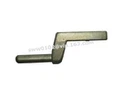
For example, OEM Stainless Steel 304 Precise Custom Forgings are made from high - quality stainless steel 304, which is well - known for its corrosion resistance and good formability. This makes them suitable for various elevator parts where corrosion protection is essential.
Dimensional Accuracy
Elevator parts must be forged to precise dimensions to ensure proper fit and function within the elevator system. Even a small deviation in dimensions can lead to problems such as misalignment, increased wear, and reduced performance. Therefore, strict dimensional tolerances must be maintained during the forging process.
Advanced forging techniques, such as precision forging and near - net - shape forging, are often employed to achieve high dimensional accuracy. These techniques minimize the need for subsequent machining operations, reducing production time and cost. Additionally, modern measurement and inspection equipment, such as coordinate measuring machines (CMMs), are used to verify the dimensions of forged parts and ensure they meet the specified requirements.


Mechanical Properties
The mechanical properties of forged elevator parts, including strength, hardness, toughness, and fatigue resistance, are crucial for their performance and safety. These properties are determined by the material composition, forging process parameters, and heat treatment.
During forging, the metal is deformed under high pressure, which refines the grain structure and improves the mechanical properties. Heat treatment, such as quenching and tempering, is often applied after forging to further enhance the strength and toughness of the parts. For example, brake components in elevators need to have high hardness and wear resistance to ensure reliable braking performance. By carefully controlling the forging and heat treatment processes, we can achieve the desired mechanical properties for different elevator parts.
Surface Quality
The surface quality of forged elevator parts is also an important consideration. A smooth and defect - free surface not only improves the appearance of the parts but also reduces the risk of corrosion and wear. During forging, surface defects such as cracks, laps, and scale can occur. These defects must be removed through processes like machining, grinding, and shot peening.
Shot peening is a common surface treatment method for elevator parts. It involves bombarding the surface of the part with small metal shots, which creates compressive stresses on the surface and improves the fatigue resistance of the part. This is especially important for parts that are subjected to cyclic loading, such as elevator ropes and pulleys.
Design and Shape Complexity
Elevator parts come in a wide variety of shapes and designs, from simple shafts and brackets to complex components with intricate geometries. The forging process must be able to accommodate these design requirements.
For simple - shaped parts, open - die forging may be sufficient. This process involves deforming the metal between two flat or shaped dies. However, for parts with complex shapes, closed - die forging is often used. In closed - die forging, the metal is placed in a die cavity and forced to take the shape of the cavity under high pressure. This allows for the production of parts with high precision and complex geometries.
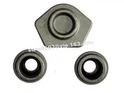
For instance, Custom Fabrication Carbon Steel Hot Forging Parts can be fabricated into various complex shapes according to the specific design requirements of elevator parts. Our advanced forging technology enables us to produce parts with high precision and excellent mechanical properties.
Quality Control
Quality control is an integral part of the forging process for elevator parts. A comprehensive quality control system should be in place to ensure that every part meets the specified requirements. This includes raw material inspection, in - process inspection, and final inspection.
Raw material inspection involves checking the chemical composition, mechanical properties, and surface quality of the incoming metal. In - process inspection is carried out during the forging process to monitor the process parameters and detect any potential defects early. Final inspection is performed on the finished parts to verify their dimensions, mechanical properties, and surface quality.
Non - destructive testing methods, such as ultrasonic testing, magnetic particle testing, and radiographic testing, are often used to detect internal defects in the forged parts. These methods can identify cracks, voids, and other defects that may not be visible on the surface.
Cost - Effectiveness
While meeting the high - quality requirements of elevator parts is essential, cost - effectiveness is also a significant consideration. As a forging parts supplier, we need to balance the quality and cost of production.
By optimizing the forging process, using efficient production equipment, and reducing waste, we can lower the production cost without sacrificing quality. For example, near - net - shape forging reduces the amount of machining required, which saves time and material. Additionally, by establishing long - term partnerships with raw material suppliers, we can obtain materials at a more favorable price.
Environmental Considerations
In today's environmentally conscious world, the forging process for elevator parts should also take environmental factors into account. This includes reducing energy consumption, minimizing waste generation, and using environmentally friendly materials and processes.
Advanced forging technologies, such as electric - powered forging equipment, can significantly reduce energy consumption compared to traditional hydraulic or pneumatic forging equipment. Recycling and reusing waste materials generated during the forging process can also help to minimize environmental impact.
Conclusion
As a forging parts supplier, we understand the complex and demanding forging requirements for elevator parts. By carefully selecting materials, ensuring dimensional accuracy, optimizing mechanical properties, improving surface quality, accommodating design complexity, implementing strict quality control, achieving cost - effectiveness, and considering environmental factors, we can produce high - quality elevator parts that meet the needs of the elevator industry.
If you are in the market for high - quality forged elevator parts, we invite you to OEM Professiona Supply Casting And Forging In Ningbo China to explore our product range. We are committed to providing you with the best - in - class forging solutions and look forward to discussing your specific requirements and starting a fruitful business partnership. Contact us today to initiate a procurement negotiation and find the perfect forged elevator parts for your project.
References
- ASME A17.1 - Safety Code for Elevators and Escalators
- ISO 9001:2015 - Quality management systems - Requirements
- ASTM standards related to forging materials and processes