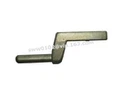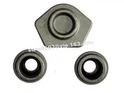

Forging is a crucial manufacturing process that utilizes compressive forces to shape metal into desired forms. When it comes to thin - walled parts, the forging process presents unique challenges and requires specific techniques. As a forging parts supplier, I have extensive experience in manufacturing thin - walled forging parts, and in this blog, I will share the forging part manufacturing processes for thin - walled parts.
Material Selection
The first step in manufacturing thin - walled forging parts is selecting the appropriate material. The material should have good ductility, low deformation resistance, and high strength - to - weight ratio. Commonly used materials for thin - walled forging parts include carbon steels, alloy steels, and aluminum alloys.
Carbon steels are widely used due to their relatively low cost and good mechanical properties. For example, 1045, c45, Q235, St37 - 2, Q345 Carbon Steel Forging are popular choices. These steels can be easily forged and heat - treated to achieve the desired strength and hardness. Alloy steels, on the other hand, offer enhanced mechanical properties such as higher strength, better wear resistance, and improved corrosion resistance. Aluminum alloys are favored for their lightweight nature, which is especially important in applications where weight reduction is a priority, such as in the aerospace and automotive industries.
Pre - forging Preparation
Once the material is selected, pre - forging preparation is essential. This includes cutting the raw material into appropriate sizes, heating the material to the appropriate forging temperature, and lubricating the dies.
Cutting the raw material accurately is crucial to ensure that the material volume is sufficient to fill the die cavity during forging. The cutting process can be carried out using sawing, shearing, or flame cutting methods, depending on the material type and thickness.
Heating the material to the proper forging temperature is vital for reducing deformation resistance and improving the material's ductility. For carbon steels, the forging temperature typically ranges from 800°C to 1200°C. The heating process should be carefully controlled to avoid over - heating or under - heating, which can lead to defects in the forging. Induction heating is a commonly used method for heating the material due to its high efficiency and precise temperature control.
Lubricating the dies is necessary to reduce friction between the material and the dies, prevent sticking, and improve the surface finish of the forging. Graphite - based lubricants are often used for steel forging, while oil - based lubricants are suitable for aluminum alloy forging.
Forging Processes
There are several forging processes that can be used to manufacture thin - walled parts, including open - die forging, closed - die forging, and precision forging.


Open - Die Forging
Open - die forging is a relatively simple forging process where the material is placed between two flat or shaped dies, and the dies are then pressed together to deform the material. This process is suitable for producing simple - shaped thin - walled parts with relatively large dimensions. However, open - die forging has limited control over the final shape and dimensions of the part, and it may require additional machining operations to achieve the desired accuracy.
Closed - Die Forging
Closed - die forging, also known as impression - die forging, is a more precise forging process. In this process, the material is placed in a die cavity that has the exact shape of the desired part. The dies are then closed, and the material is forced to fill the die cavity under high pressure. Closed - die forging can produce thin - walled parts with high accuracy and complex shapes. However, it requires more expensive dies and higher forging forces compared to open - die forging.
Precision Forging
Precision forging is an advanced forging process that aims to produce parts with very high accuracy and minimal machining allowance. This process often involves multiple steps, including pre - forging, finish - forging, and sometimes post - forging heat treatment. For thin - walled parts, precision forging can achieve tight tolerances and excellent surface finish. For instance, OEM Aisi1045 Steel Precise Press Forging is a good example of precision forging technology applied to thin - walled parts.
Post - forging Treatment
After forging, the thin - walled parts usually require post - forging treatment to improve their mechanical properties and dimensional accuracy.
Heat Treatment
Heat treatment is a crucial post - forging process that can significantly enhance the strength, hardness, and toughness of the forging. Common heat treatment processes for thin - walled parts include annealing, normalizing, quenching, and tempering. Annealing is used to relieve internal stresses, improve the material's ductility, and refine the grain structure. Normalizing is similar to annealing but is carried out at a higher temperature, resulting in a more uniform grain structure. Quenching and tempering are used to achieve high strength and hardness while maintaining a certain level of toughness.
Machining and Finishing
Machining operations such as turning, milling, and drilling are often required to achieve the final dimensions and surface finish of the thin - walled parts. These operations can remove excess material, create holes, and improve the part's accuracy. Surface finishing processes, such as grinding, polishing, and coating, can be applied to enhance the part's appearance and corrosion resistance.
Quality Control
Quality control is an integral part of the forging part manufacturing process, especially for thin - walled parts. Non - destructive testing methods such as ultrasonic testing, magnetic particle testing, and radiographic testing can be used to detect internal defects such as cracks and porosity. Dimensional inspection using measuring tools such as calipers, micrometers, and coordinate measuring machines (CMM) is essential to ensure that the parts meet the required specifications.
Conclusion
Manufacturing thin - walled forging parts requires careful consideration of material selection, pre - forging preparation, forging processes, post - forging treatment, and quality control. As a forging parts supplier, we have the expertise and experience to produce high - quality thin - walled forging parts using advanced manufacturing technologies. If you are in need of thin - walled forging parts, we invite you to China Professional Forging Parts Manufacturers In Ningbo to discuss your requirements and explore the possibilities of cooperation. We are committed to providing you with the best - quality products and services.
References
- Dieter, G. E. (1988). Mechanical Metallurgy. McGraw - Hill.
- Kalpakjian, S., & Schmid, S. R. (2008). Manufacturing Engineering and Technology. Pearson Prentice Hall.
- ASM Handbook Committee. (1998). ASM Handbook Volume 14A: Metalworking: Forging. ASM International.