
Hey there! As a forging parts supplier, I've been in the game for quite some time. One of the most common challenges we face in the industry is creating parts that can withstand high - chemical resistance. In this blog post, I'll share some forging solutions for those high - chemical - resistant parts.
Understanding the Challenge
First things first, why do we even need parts with high - chemical resistance? Well, in many industries, such as chemical processing, oil and gas, and pharmaceuticals, parts are constantly exposed to all sorts of chemicals. These chemicals can be corrosive, acidic, or reactive, which can cause significant damage to regular parts over time. If a part fails because of chemical corrosion, it can lead to costly downtime, safety hazards, and a whole lot of headaches. So, finding the right forging solutions is crucial.
Material Selection
The choice of material is the foundation of creating high - chemical - resistant parts. Different materials have different levels of resistance to various chemicals.
Stainless Steel
Stainless steel is a go - to material for many high - chemical - resistant applications. It contains chromium, which forms a passive oxide layer on the surface. This layer acts as a barrier, protecting the underlying metal from corrosion. There are different grades of stainless steel, like 304 and 316. Grade 316, in particular, has molybdenum added to it, which enhances its resistance to pitting and crevice corrosion in chloride - containing environments. For example, in a chemical plant where parts are exposed to saltwater or other chloride - rich solutions, 316 stainless steel would be a great choice.
Titanium
Titanium is another excellent option. It has an extremely high strength - to - weight ratio and outstanding corrosion resistance. Titanium forms a dense, stable oxide layer when exposed to oxygen, which makes it highly resistant to many acids, alkalis, and salt solutions. In the aerospace and marine industries, where parts are exposed to harsh chemical environments, titanium forgings are often used. However, titanium is more expensive than stainless steel, so the cost - benefit analysis needs to be carefully considered.
Nickel - Based Alloys
Nickel - based alloys, such as Inconel and Hastelloy, are also popular for high - chemical - resistant applications. These alloys can withstand high temperatures and aggressive chemical environments. For instance, Inconel is great for applications in high - temperature and high - stress environments, like gas turbines. Hastelloy is known for its resistance to acids, especially in reducing environments.
Check out our OEM Carbon Steel Q235 St37 - 2 C45 1010 Forged Steel, which offers a range of options that can be tailored to meet specific chemical - resistance needs with proper treatment.
Forging Process Optimization
Once we've selected the right material, the forging process itself also plays a key role in enhancing chemical resistance.
Precision Forging
Precision forging ensures that the part has a uniform microstructure. A uniform microstructure means that there are no weak points in the part where chemicals could potentially start corroding. By controlling the forging temperature, pressure, and deformation rate, we can create parts with a more homogeneous grain structure. This makes the part more resistant to chemical attack as there are no areas with higher stress concentrations or different material properties that could act as corrosion initiation sites.
Heat Treatment
Heat treatment is another important step. After forging, heat treatment can be used to modify the microstructure of the material. For example, annealing can relieve internal stresses in the part, which can prevent stress - corrosion cracking. Quenching and tempering can improve the hardness and toughness of the material, which can also enhance its chemical resistance. Our Aluminum Forging Process With Heat Treatment shows how heat treatment can be applied to different materials to optimize their properties.
Surface Treatment
Surface treatment can significantly improve the chemical resistance of a forged part. One common method is plating. For example, electroplating a part with a layer of nickel or chromium can create an additional protective barrier against chemicals. Another option is to apply a chemical conversion coating, such as phosphating or chromating. These coatings can react with the surface of the metal to form a thin, protective layer that reduces the reactivity of the surface with chemicals.
Design Considerations
The design of the part also affects its chemical resistance.
Avoiding Sharp Corners and Edges
Sharp corners and edges can create stress concentrations in the part. These stress concentrations can lead to micro - cracks, which provide entry points for chemicals. Designing parts with rounded corners and smooth transitions can help distribute stress more evenly and reduce the risk of corrosion at these critical points.
Drainage and Ventilation
In applications where parts are exposed to chemicals, it's important to design the part in a way that allows for proper drainage and ventilation. If chemicals are allowed to pool on the surface of a part, it can increase the likelihood of corrosion. Providing channels or holes for drainage and ventilation can help keep the surface of the part dry and reduce the contact time between the part and the chemicals.
Quality Control
Finally, quality control is essential in ensuring that the forged parts have the desired chemical resistance.
Non - Destructive Testing
Non - destructive testing methods, such as ultrasonic testing, magnetic particle testing, and dye penetrant testing, can be used to detect any surface or subsurface defects in the forged parts. These defects could potentially compromise the chemical resistance of the part. By detecting and eliminating these defects early in the production process, we can ensure that the final parts meet the high - chemical - resistance requirements.
Chemical Resistance Testing
We also conduct chemical resistance testing on the forged parts. This involves exposing the parts to specific chemicals for a certain period of time and then evaluating the extent of corrosion. By comparing the test results with the desired performance standards, we can make adjustments to the material selection, forging process, or surface treatment if necessary.
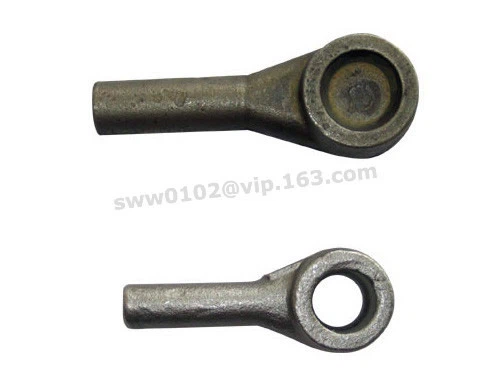
At our company, we take quality control very seriously. Our OEM A105 Aisi1045 Small Steel Metal Forge goes through a rigorous quality control process to ensure it meets the highest standards of chemical resistance.

Conclusion
Creating forged parts with high - chemical resistance is a multi - faceted process that involves careful material selection, optimized forging processes, smart design considerations, and strict quality control. As a forging parts supplier, we're committed to providing our customers with the best solutions for their high - chemical - resistant part needs. If you're in the market for high - quality forged parts with excellent chemical resistance, don't hesitate to reach out for a procurement discussion. We're here to work with you to find the perfect solutions for your specific applications.
References
- ASM Handbook Volume 14A: Metalworking: Forging.
- Corrosion Basics: An Introduction by NACE International.
- Metals Handbook Desk Edition, Third Edition.