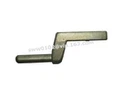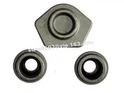

Hey there! I'm a supplier of forging parts, and today I wanna talk about the forging techniques for parts with high - corrosion resistance in specific environments. Corrosion can be a real pain in the neck for parts used in certain settings, like marine, chemical, or even some industrial environments. So, getting the right forging techniques is super important.
Selecting the Right Materials
First off, the choice of materials is crucial. We're not just talking about any old metal here. For high - corrosion resistance, stainless steels are often our go - to. They've got a high chromium content, which forms a passive oxide layer on the surface. This layer acts as a shield, protecting the underlying metal from corrosive agents. For example, in a marine environment where saltwater is constantly splashing around, 316 stainless steel is a popular choice. It has molybdenum in it, which boosts its resistance to pitting corrosion caused by chloride ions in the saltwater.
Then there are also titanium alloys. They're lightweight but extremely strong and have excellent corrosion resistance. In aerospace applications, where parts are exposed to harsh atmospheric conditions and chemicals, titanium alloys are used a lot. These materials have a natural oxide film that regenerates quickly if damaged, keeping corrosion at bay.
You can check out more about high - quality forging parts at China Professional Forging Parts Manufacturers In Ningbo.
Hot Forging
Hot forging is one of the most common techniques we use. When we heat the metal to a high temperature, it becomes more malleable. This allows us to shape it into the desired part without causing too much internal stress.
During hot forging, we heat the selected metal to a temperature above its recrystallization point. For stainless steel, this can be around 1000 - 1200°C. At this temperature, the metal grains can easily rearrange themselves as we apply pressure with forging hammers or presses. This results in a more uniform grain structure, which in turn enhances the mechanical properties of the part, including its corrosion resistance.
One of the advantages of hot forging is that it can eliminate internal defects in the metal, like porosity. These defects can be potential sites for corrosion to start. By squeezing out the air pockets and aligning the grains, we create a denser and more corrosion - resistant part.
However, hot forging also has its challenges. The high temperature can cause oxidation on the surface of the metal. We have to take extra steps to prevent this, like using protective coatings or forging in a controlled atmosphere. Otherwise, the oxide layer can affect the final finish and corrosion resistance of the part.


Cold Forging
Cold forging is another option, especially for parts that require high precision and a good surface finish. Unlike hot forging, cold forging is done at room temperature or slightly above it.
The main benefit of cold forging is that it can produce parts with very tight tolerances. The metal retains its original hardness and strength, and the surface finish is often better compared to hot - forged parts. This smooth surface is less likely to trap corrosive substances, which is great for corrosion resistance.
For example, when we're making small, intricate parts for the electronics industry, cold forging is a great choice. The parts need to be highly precise and resistant to corrosion from environmental factors like humidity.
But cold forging has its limitations. The metal is less malleable at lower temperatures, so we can't form complex shapes as easily as we can with hot forging. Also, the process can introduce more internal stress into the part, which might require additional heat treatment to relieve the stress and improve corrosion resistance.
If you're interested in high - volume, cost - effective cold - forged parts, check out China Big Quantity With Low Price Cold Forging.
Open - Die Forging
Open - die forging is a technique where the metal is shaped between flat or simple - shaped dies. This method is great for large - dimension parts.
In open - die forging, we can control the grain flow of the metal to a certain extent. By applying pressure in different directions, we can align the grains along the stress - bearing axis of the part. This not only improves the mechanical strength but also the corrosion resistance.
For instance, Large Dimension Q235 Carbon Steel Open Die Forging is often used in heavy - duty industrial applications. These parts need to withstand both mechanical stress and corrosion from industrial chemicals. Open - die forging allows us to create large, strong parts with good corrosion - resistant properties.
The process is relatively flexible, as we can make a variety of shapes by changing the way we apply pressure and manipulate the metal between the dies. But it does require skilled operators to ensure the proper shaping and quality of the part.
Post - Forging Treatments
After forging, we often carry out post - forging treatments to further enhance the corrosion resistance of the parts.
One common treatment is heat treatment. This can involve annealing, quenching, or tempering. Annealing is used to relieve internal stress and refine the grain structure. Quenching and tempering can increase the hardness and strength of the part, which can also improve its resistance to corrosion.
Surface treatments are also important. We can apply coatings like zinc plating, which acts as a sacrificial anode. The zinc corrodes first, protecting the underlying metal. Another option is powder coating, which provides a durable and corrosion - resistant finish.
Conclusion
In conclusion, there are several forging techniques and post - forging treatments that we can use to create parts with high - corrosion resistance in specific environments. The choice of technique depends on the material, the shape and size of the part, and the specific requirements of the application.
If you're in the market for high - quality forging parts with excellent corrosion resistance, don't hesitate to get in touch. We've got the expertise and experience to provide you with the right solutions for your needs. Whether you need parts for the marine, aerospace, electronics, or any other industry, we're here to help.
References
- ASM Handbook Volume 14A: Metalworking - Forging. ASM International.
- Callister, W. D., & Rethwisch, D. G. (2017). Materials Science and Engineering: An Introduction. Wiley.