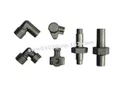

As a supplier of CNC machining parts, I've witnessed firsthand the critical role that wear resistance plays in the performance and longevity of these components. In various industries, from automotive to aerospace, the ability of CNC machining parts to withstand wear and tear is paramount. This blog will explore several effective ways to enhance the wear resistance of CNC machining parts, drawing on both industry best practices and our own experiences.
Material Selection
The choice of material is the first and most fundamental step in enhancing wear resistance. Different materials have distinct properties that affect their ability to resist wear. For instance, hardened steels are known for their high strength and hardness, making them suitable for applications where parts are subjected to heavy loads and abrasive forces. Stainless steels, on the other hand, offer excellent corrosion resistance in addition to good wear resistance, which is crucial in environments where parts are exposed to moisture or chemicals.
Titanium alloys are another popular choice for CNC machining parts, especially in aerospace and medical industries. They have a high strength - to - weight ratio and good wear resistance, even at high temperatures. When selecting a material, it's important to consider the specific operating conditions of the part. For example, if the part will be in contact with abrasive particles, a material with high hardness and toughness, such as tungsten carbide, might be the best option. You can explore a wide range of materials in our Series Kinds Of CNC Lathe Machine Parts.
Heat Treatment
Heat treatment is a powerful technique for improving the wear resistance of CNC machining parts. Processes like quenching and tempering can significantly increase the hardness of the material. Quenching involves rapidly cooling the part from a high temperature, which transforms the microstructure of the material and increases its hardness. Tempering is then performed to relieve the internal stresses generated during quenching and improve the toughness of the part.
Case hardening is another heat - treatment method commonly used for CNC machining parts. It involves adding a hard outer layer to the part while maintaining a tough core. This can be achieved through processes such as carburizing, nitriding, or carbonitriding. Carburizing, for example, involves heating the part in a carbon - rich environment, allowing carbon to diffuse into the surface layer. The part is then quenched to harden the carburized layer. Nitriding, on the other hand, introduces nitrogen into the surface of the part, forming hard nitride compounds. These heat - treatment processes can be tailored to meet the specific requirements of the part, enhancing its wear resistance without sacrificing other important properties.
Surface Coating
Applying a surface coating is an effective way to enhance the wear resistance of CNC machining parts. There are several types of coatings available, each with its own unique properties. One of the most common coatings is titanium nitride (TiN). TiN coatings are hard, wear - resistant, and have a low coefficient of friction. They can reduce the adhesion between the part and the mating surface, which helps to prevent galling and wear.
Diamond - like carbon (DLC) coatings are also popular for their excellent wear resistance and low friction. DLC coatings can be applied to a variety of materials, including metals, ceramics, and polymers. They are particularly suitable for applications where low friction and high wear resistance are required, such as in automotive engines and precision machinery.
Another type of coating is ceramic coatings. Ceramic coatings offer high hardness, excellent chemical resistance, and good thermal stability. They can be used to protect parts from abrasive wear, corrosion, and high - temperature oxidation. Our Custom CNC Machining Nice Surface Stainless Steel Air Sensor Flange can be customized with different surface coatings to meet specific wear - resistance requirements.
Machining Process Optimization
The machining process itself can have a significant impact on the wear resistance of CNC machining parts. Proper selection of cutting tools and machining parameters is crucial. For example, using sharp cutting tools can reduce the cutting forces and heat generated during machining, which helps to maintain the integrity of the part's surface. Dull cutting tools can cause excessive wear on the part's surface and introduce surface defects, which can reduce its wear resistance.
The choice of machining parameters, such as cutting speed, feed rate, and depth of cut, also affects the surface finish and integrity of the part. Optimizing these parameters can result in a smoother surface finish, which reduces the contact area between the part and the mating surface and improves wear resistance. Additionally, using coolant during machining can help to reduce heat and friction, improving the surface quality of the part and enhancing its wear resistance.
Design Optimization
The design of the CNC machining part can also play an important role in enhancing its wear resistance. For example, reducing sharp corners and edges in the design can help to distribute the load more evenly, reducing stress concentrations that can lead to premature wear. Incorporating features such as fillets and radii can improve the fatigue life and wear resistance of the part.
Proper lubrication design is another aspect of design optimization. Providing adequate lubrication channels or reservoirs in the part can ensure that a continuous supply of lubricant is available to reduce friction and wear. In some cases, the design can also incorporate self - lubricating materials or coatings to further enhance the wear - resistant properties of the part. Our OEM Precise Tolerance CNC Machining Parts As Drawing can be designed and manufactured to meet your specific wear - resistance requirements.
Quality Control
Quality control is essential throughout the manufacturing process to ensure that the CNC machining parts have the desired wear - resistant properties. This includes inspecting the raw materials for quality and consistency, monitoring the machining process to ensure that the parts are being manufactured to the correct specifications, and performing post - machining inspections to verify the surface finish and hardness of the parts.
Non - destructive testing methods, such as ultrasonic testing and magnetic particle testing, can be used to detect internal defects in the parts that could affect their wear resistance. Additionally, wear testing can be performed on sample parts to evaluate their performance under simulated operating conditions. By implementing a comprehensive quality control system, we can ensure that our CNC machining parts meet the highest standards of wear resistance.
In conclusion, enhancing the wear resistance of CNC machining parts requires a comprehensive approach that involves material selection, heat treatment, surface coating, machining process optimization, design optimization, and quality control. As a supplier of CNC machining parts, we are committed to providing our customers with high - quality, wear - resistant parts that meet their specific requirements. If you are interested in purchasing CNC machining parts or have any questions about enhancing wear resistance, please feel free to contact us for a detailed discussion and procurement negotiation.


References
- Kalpakjian, S., & Schmid, S. R. (2013). Manufacturing Engineering and Technology. Pearson.
- ASM Handbook Committee. (2000). ASM Handbook Volume 4: Heat Treating. ASM International.
- Trumper, D. L. (2000). Precision Machine Design. Prentice Hall.