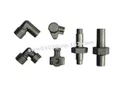

As a supplier of CNC machining parts, I've encountered numerous situations where these precision - crafted components get damaged. Whether it's due to wear and tear during regular operation, accidental impacts, or improper handling, damaged CNC machining parts can disrupt production lines and cause significant financial losses. In this blog, I'll share some of the best ways to repair these damaged parts, based on my years of experience in the industry.
1. Initial Inspection and Diagnosis
The first step in repairing damaged CNC machining parts is a thorough inspection. This involves a detailed examination of the part to identify the extent and nature of the damage. Visual inspection is often the starting point. Look for obvious signs such as cracks, chips, or deformations on the surface of the part. Use tools like magnifying glasses or microscopes to detect smaller defects that might not be visible to the naked eye.
After the visual inspection, it's crucial to measure the part. Precision measurement tools like calipers, micrometers, and coordinate measuring machines (CMMs) can be used to check if the dimensions of the part are still within the required tolerances. Any deviation from the specified dimensions could indicate internal damage or warping.
Based on the inspection and measurement results, a diagnosis can be made. Is the damage superficial, or does it affect the internal structure of the part? Understanding the root cause of the damage is essential for determining the most appropriate repair method. For example, if the damage is caused by excessive heat during machining, the repair might involve heat - treatment processes to restore the material's properties.
2. Surface Repair
Surface damage is one of the most common issues with CNC machining parts. Scratches, dents, and corrosion can affect the functionality and appearance of the part. There are several methods for surface repair, depending on the severity of the damage.
Polishing and Grinding
For minor scratches and surface irregularities, polishing and grinding are effective repair methods. Polishing involves using abrasive materials to smooth the surface of the part, removing the scratches and restoring its shine. Grinding, on the other hand, is used to remove larger amounts of material to correct surface defects. It can be done using a variety of grinding wheels, depending on the material of the part and the required finish.
Coating and Plating
In cases where the surface has been corroded or needs additional protection, coating and plating can be used. Coating involves applying a thin layer of material, such as paint or epoxy, to the surface of the part to prevent further corrosion and improve its wear resistance. Plating, such as chrome plating or nickel plating, can also be used to enhance the surface hardness and corrosion resistance of the part.
3. Welding and Brazing
When a CNC machining part has cracks or breaks, welding and brazing can be used to repair it. These processes involve joining the damaged parts together using heat and filler materials.
Welding
Welding is a widely used method for repairing metal parts. There are different types of welding processes, such as TIG (Tungsten Inert Gas) welding, MIG (Metal Inert Gas) welding, and arc welding. TIG welding is often preferred for repairing CNC machining parts because it provides precise control over the heat input and produces high - quality welds. However, it requires skilled operators and is more time - consuming compared to other welding methods.
Brazing
Brazing is another option for joining metal parts. Unlike welding, brazing uses a filler metal with a lower melting point than the base metal. The filler metal is heated until it melts and flows into the joint between the damaged parts, creating a strong bond. Brazing is less likely to cause distortion of the part compared to welding and is suitable for joining dissimilar metals.


4. Heat Treatment
Heat treatment is an important process for restoring the mechanical properties of damaged CNC machining parts. When a part is subjected to high stress or heat during operation, its internal structure can change, leading to reduced strength and hardness. Heat treatment can be used to reverse these changes and restore the part's original properties.
Annealing
Annealing is a heat - treatment process that involves heating the part to a specific temperature and then cooling it slowly. This process relieves internal stresses in the part and makes it more ductile. Annealing is often used after welding or machining to prevent cracking and improve the machinability of the part.
Quenching and Tempering
Quenching and tempering are two - step heat - treatment processes used to increase the hardness and strength of the part. Quenching involves heating the part to a high temperature and then rapidly cooling it in a quenching medium, such as water or oil. This creates a hard and brittle structure in the part. Tempering is then performed to reduce the brittleness and improve the toughness of the part. The part is heated to a lower temperature and held for a specific time before being cooled.
5. Machining and Remanufacturing
In some cases, the damage to a CNC machining part is so severe that it requires machining or remanufacturing. This involves removing the damaged portion of the part and then machining it to the original specifications.
CNC Machining
CNC machining can be used to repair or remanufacture damaged parts with high precision. Using a CNC machine, the damaged part can be fixtured, and the damaged area can be accurately removed. The machine can then be programmed to machine the part to the required dimensions and surface finish. This method is suitable for parts with complex geometries and tight tolerances.
Remanufacturing
Remanufacturing involves completely rebuilding the damaged part. This might include replacing worn - out components, machining new parts, and reassembling the part. Remanufacturing can be a cost - effective alternative to buying a new part, especially for high - value or custom - made CNC machining parts.
6. Quality Control after Repair
After the repair process is completed, it's essential to perform quality control checks to ensure that the part meets the required specifications. This involves repeating the inspection and measurement processes used during the initial diagnosis.
The repaired part should be checked for dimensions, surface finish, and mechanical properties. Non - destructive testing methods, such as ultrasonic testing or X - ray inspection, can be used to detect any internal defects that might not be visible on the surface. Only after the part has passed all the quality control checks can it be considered ready for use.
Conclusion
Repairing damaged CNC machining parts requires a systematic approach that involves careful inspection, appropriate repair methods, and strict quality control. By understanding the different repair techniques and choosing the most suitable one for each situation, it's possible to extend the lifespan of the parts and reduce production costs.
If you're in need of high - quality CNC machining parts or have damaged parts that need repair, we're here to help. We offer a wide range of CNC machining services, including OEM ODM 316Ti CNC Machining Quote, OEM SS321 CNC Machining Process Machinery Parts, and OEM Roughness Ra1.6 CNC Aluminum. Contact us to discuss your requirements and start a procurement negotiation.
References
- ASM Handbook Volume 6: Welding, Brazing, and Soldering. ASM International.
- Machining Fundamentals: A Practical Guide. Society of Manufacturing Engineers.
- Heat Treater's Guide: Practices and Procedures for Non - Ferrous Metals. ASM International.