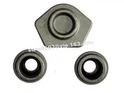

As a forging parts supplier, I've witnessed firsthand the unique and fascinating forging characteristics of stainless steel parts. In this blog post, I'll share some insights into these characteristics, which are crucial for anyone involved in the manufacturing, design, or procurement of stainless steel forged components.
1. Excellent Corrosion Resistance
One of the most well - known features of stainless steel is its remarkable corrosion resistance. This property stems from the presence of chromium in the alloy, which forms a thin, adherent, and self - healing oxide layer on the surface of the metal. During the forging process, this oxide layer can be maintained and even enhanced under proper conditions.
When forging stainless steel parts, the high temperatures and mechanical forces involved can cause the metal to deform. However, as long as the forging is carried out in a controlled environment, the chromium in the steel will continue to react with oxygen in the air or in the forging atmosphere to form the protective oxide layer. This makes stainless steel forged parts ideal for applications in harsh environments, such as marine, chemical, and food processing industries. For example, in a marine environment, stainless steel forged bolts and nuts can resist the corrosive effects of saltwater, ensuring the long - term integrity of structures.
If you are looking for high - quality forged parts with excellent corrosion resistance, you can explore High Quality Aluminum Forging Manufacturers, which also offers some insights into related forging processes.
2. High Strength and Toughness
Stainless steel has a high strength - to - weight ratio, making it suitable for applications where both strength and lightness are required. During forging, the grain structure of the stainless steel is refined and oriented in a specific direction, which significantly improves its mechanical properties.
The forging process involves applying pressure to the stainless steel billet, causing the metal to flow and deform. This deformation aligns the grains along the direction of the applied force, resulting in a more uniform and stronger structure. Additionally, the high temperatures used in forging can also cause the precipitation of certain alloying elements, further enhancing the strength of the material.
Toughness is another important property of stainless steel forged parts. Toughness refers to the ability of a material to absorb energy and deform plastically before fracturing. Stainless steel's inherent toughness, combined with the benefits of forging, makes it capable of withstanding high - impact loads without failure. For instance, in the automotive industry, stainless steel forged components such as crankshafts and connecting rods need to withstand the high - stress conditions of engine operation, and their toughness ensures reliable performance.
3. Good Ductility
Ductility is the ability of a material to be stretched or deformed without breaking. Stainless steel generally exhibits good ductility, which is a significant advantage during the forging process. The high ductility of stainless steel allows it to be forged into complex shapes with relative ease.


When forging stainless steel parts, the metal can be gradually shaped into the desired form through a series of forging operations, such as upsetting, drawing out, and bending. The ductility of stainless steel ensures that the material can flow smoothly under the applied pressure, filling the die cavities completely and producing parts with high dimensional accuracy.
For example, in the production of custom - shaped stainless steel forged art pieces or architectural components, the good ductility of stainless steel enables the creation of intricate designs. If you are interested in professional forging parts, China Professional Forging Parts Manufacturers In Ningbo can provide you with more options.
4. Heat Resistance
Stainless steel has good heat resistance, which is essential for applications where the parts are exposed to high temperatures. During forging, the high - temperature resistance of stainless steel allows it to maintain its mechanical properties even under extreme heat conditions.
In high - temperature environments, such as in power generation plants or aerospace applications, stainless steel forged parts need to retain their strength and dimensional stability. The alloying elements in stainless steel, such as nickel and chromium, contribute to its heat - resistant properties. These elements form a stable oxide layer on the surface of the metal, which acts as a barrier against further oxidation and prevents the material from losing its strength at high temperatures.
For example, in gas turbine engines, stainless steel forged blades and vanes are exposed to extremely high temperatures and pressures. The heat - resistant properties of stainless steel ensure that these components can operate reliably under such harsh conditions.
5. Machinability
Although stainless steel is known for its hardness and strength, it also has reasonable machinability, especially after forging. The forging process can improve the internal structure of the stainless steel, making it easier to machine.
After forging, the grain structure of the stainless steel becomes more uniform, reducing the likelihood of tool wear and tear during machining operations. Additionally, the forging process can relieve internal stresses in the material, which helps to prevent cracking and distortion during machining.
However, it's important to note that the machinability of stainless steel can be affected by factors such as the alloy composition, forging temperature, and post - forging heat treatment. Proper selection of cutting tools and machining parameters is crucial to ensure efficient and high - quality machining of stainless steel forged parts. If you are involved in the production of OEM parts, OEM Carbon Steel Stainless Steel Hot Forging can offer some useful information.
6. Surface Finish
The surface finish of stainless steel forged parts is an important consideration, especially for applications where aesthetics or low - friction surfaces are required. The forging process can have a significant impact on the surface finish of the parts.
During forging, the die surface can transfer its texture to the surface of the stainless steel part. By using high - quality dies with a smooth surface finish, it is possible to produce stainless steel forged parts with a good surface appearance. Additionally, post - forging processes such as grinding, polishing, or shot peening can further improve the surface finish of the parts.
A good surface finish not only enhances the visual appeal of the parts but also improves their corrosion resistance and wear resistance. For example, in the medical device industry, stainless steel forged implants require a smooth surface finish to minimize the risk of infection and to ensure proper interaction with the human body.
7. Challenges in Forging Stainless Steel Parts
While stainless steel offers many advantages in forging, there are also some challenges that need to be addressed. One of the main challenges is the high deformation resistance of stainless steel. Compared to some other metals, stainless steel requires higher forging forces and more precise control of the forging process.
The high chromium content in stainless steel can also cause the formation of hard and brittle carbides during forging, which can reduce the ductility and toughness of the material. To overcome this issue, proper heat treatment processes, such as solution annealing, are often required to dissolve the carbides and restore the material's properties.
Another challenge is the potential for oxidation during forging. The high temperatures involved in the forging process can cause the stainless steel to react with oxygen in the air, forming an oxide scale on the surface. This oxide scale can affect the surface finish and dimensional accuracy of the parts. To prevent oxidation, protective atmospheres or coatings can be used during forging.
Conclusion
In conclusion, stainless steel parts have unique forging characteristics, including excellent corrosion resistance, high strength and toughness, good ductility, heat resistance, machinability, and the ability to achieve a good surface finish. These characteristics make stainless steel forged parts suitable for a wide range of applications in various industries.
As a forging parts supplier, we understand the importance of these characteristics and are committed to providing high - quality stainless steel forged parts that meet the specific requirements of our customers. If you are in need of stainless steel forged parts or have any questions about the forging process, we encourage you to contact us for procurement and negotiation. We look forward to working with you to provide the best forging solutions.
References
- ASM Handbook Volume 14A: Metalworking - Forging. ASM International.
- Callister, W. D., & Rethwisch, D. G. (2014). Materials Science and Engineering: An Introduction. Wiley.
- Davis, J. R. (Ed.). (1996). Stainless Steels. ASM International.