
The forging process for producing mold parts is a critical manufacturing method that involves shaping metal through compressive forces. As a forging parts supplier, I've witnessed firsthand the importance and intricacies of this process in creating high - quality mold components.
Understanding the Basics of Forging
Forging is a manufacturing process where metal is heated and then shaped by applying compressive forces. This can be done using a hammer, press, or other forging equipment. The primary goal of forging in mold part production is to enhance the mechanical properties of the metal, such as strength, toughness, and ductility.

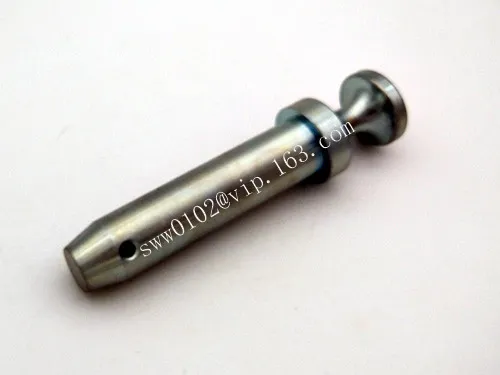
There are two main types of forging: hot forging and cold forging. Hot forging is carried out at high temperatures, typically above the recrystallization temperature of the metal. At these temperatures, the metal is more malleable, allowing for easier shaping. Cold forging, on the other hand, is done at room temperature or slightly elevated temperatures. It is often used for producing parts with high precision and good surface finish.
The Forging Process for Mold Parts
1. Material Selection
The first step in the forging process for mold parts is selecting the appropriate material. The choice of material depends on several factors, including the intended use of the mold, the required mechanical properties, and the cost. Common materials used for mold parts include carbon steel, stainless steel, and alloy steel.
High Quality Forging Stainless Steel is a popular choice for mold parts due to its excellent corrosion resistance and high strength. Stainless steel can withstand high temperatures and pressures, making it suitable for use in molds for injection molding, die - casting, and other processes.
2. Heating the Material
Once the material is selected, it is heated to the appropriate forging temperature. In hot forging, the metal is heated in a furnace to a temperature where it becomes soft and malleable. The heating process is crucial as it affects the microstructure of the metal and, consequently, its mechanical properties.
Overheating can lead to grain growth, which can reduce the strength and toughness of the metal. Underheating, on the other hand, can make the metal difficult to shape and may result in internal stresses and cracks.
3. Forging Operations
After the material is heated, it is transferred to the forging equipment for shaping. There are several forging operations that can be used to produce mold parts, including:
- Upsetting: This operation involves increasing the cross - sectional area of the metal by compressing it along its axis. Upsetting is often used to form the heads of bolts, rivets, and other similar parts.
- Drawing Out: Drawing out is the opposite of upsetting. It involves reducing the cross - sectional area of the metal while increasing its length. This operation is used to create long, slender parts such as shafts and rods.
- Heading: Heading is a form of upsetting that is used to form the heads of fasteners. It is typically done using a heading machine, which applies a high - speed impact to the end of the metal rod to form the head.
4. Machining
After the forging operations are completed, the mold part may require further machining to achieve the desired dimensions and surface finish. Machining operations can include turning, milling, drilling, and grinding.
Turning is used to create cylindrical shapes, while milling is used to create flat surfaces and complex shapes. Drilling is used to create holes, and grinding is used to achieve a smooth surface finish.
5. Heat Treatment
Heat treatment is an important step in the manufacturing process of mold parts. It is used to improve the mechanical properties of the metal, such as hardness, strength, and toughness. Common heat treatment processes for mold parts include annealing, quenching, and tempering.
Annealing is a heat treatment process that involves heating the metal to a specific temperature and then cooling it slowly. This process is used to relieve internal stresses, improve ductility, and refine the grain structure of the metal.
Quenching is a rapid cooling process that is used to increase the hardness of the metal. After quenching, the metal is often tempered to reduce its brittleness and improve its toughness.
Quality Control in Forging Mold Parts
Quality control is essential in the forging process for mold parts to ensure that the parts meet the required specifications. Quality control measures can include:
- Visual Inspection: Visual inspection is used to check for surface defects such as cracks, porosity, and inclusions.
- Dimensional Inspection: Dimensional inspection is used to ensure that the mold parts have the correct dimensions. This can be done using measuring tools such as calipers, micrometers, and coordinate measuring machines (CMMs).
- Non - Destructive Testing (NDT): NDT methods such as ultrasonic testing, magnetic particle testing, and radiographic testing are used to detect internal defects in the mold parts without destroying them.
Advantages of Forging in Mold Part Production
There are several advantages of using forging in the production of mold parts:
- Improved Mechanical Properties: Forging enhances the mechanical properties of the metal, such as strength, toughness, and ductility. This makes the mold parts more durable and able to withstand high pressures and temperatures.
- Enhanced Grain Structure: The forging process refines the grain structure of the metal, which improves its fatigue resistance and reduces the risk of cracking.
- Cost - Effectiveness: Forging can be a cost - effective manufacturing method for producing mold parts, especially for large - volume production. The initial tooling costs may be high, but the per - part cost can be relatively low.
Our Services as a Forging Parts Supplier
As a forging parts supplier, we offer a wide range of services to meet the needs of our customers. We have state - of the - art forging equipment and a team of experienced engineers and technicians who can ensure the high quality of our products.
OEM Professiona Supply Casting And Forging In Ningbo China is one of our key services. We can provide customized forging solutions based on our customers' specific requirements. Whether you need a small batch of prototype mold parts or a large - scale production run, we can meet your needs.
In addition, we also offer OEM Carbon Steel Stainless Steel Hot Forging services. Our hot forging process can produce high - quality mold parts with excellent mechanical properties.
Conclusion
The forging process for producing mold parts is a complex and precise manufacturing method that requires careful planning and execution. By understanding the basics of forging, selecting the appropriate materials, and using the right forging operations, it is possible to produce high - quality mold parts that meet the strictest requirements.
If you are in the market for high - quality forging parts for your mold production needs, we invite you to contact us for a consultation. Our team of experts can provide you with detailed information about our products and services and help you find the best solution for your specific requirements.
References
- ASM Handbook, Volume 14A: Metalworking - Forging, ASM International.
- Kalpakjian, S., & Schmid, S. R. (2010). Manufacturing Engineering and Technology. Pearson Prentice Hall.
- Dieter, G. E. (1986). Mechanical Metallurgy. McGraw - Hill.