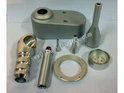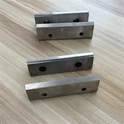

As a seasoned forging parts supplier, I've witnessed firsthand the transformative power of hot-isostatic pressing (HIP) in the manufacturing industry. This advanced technique not only enhances the quality and performance of forged parts but also opens up new possibilities for design and application. In this blog post, I'll take you through the process of hot-isostatic pressing for forging parts, from its basic principles to its practical applications.
Understanding the Basics of Hot-Isostatic Pressing
Hot-isostatic pressing is a manufacturing process that combines high temperature and high pressure to densify materials and eliminate internal defects. The process involves placing the forged parts in a sealed container, known as a HIP vessel, and subjecting them to a uniform pressure of up to 30,000 psi (207 MPa) at temperatures ranging from 1,000 to 2,500°F (538 to 1,371°C). The pressure is applied using an inert gas, such as argon, which ensures that the parts are uniformly compressed from all directions.
The high temperature and pressure combination in HIP helps to eliminate porosity, shrinkage cavities, and other internal defects in the forged parts. This results in a more homogeneous and dense material with improved mechanical properties, such as higher strength, toughness, and fatigue resistance. Additionally, HIP can also be used to bond dissimilar materials together, create complex shapes, and improve the surface finish of the parts.
The Process of Hot-Isostatic Pressing for Forging Parts
The process of hot-isostatic pressing for forging parts typically involves the following steps:
Step 1: Preparation of the Forged Parts
Before the HIP process can begin, the forged parts need to be properly prepared. This includes cleaning the parts to remove any dirt, oil, or other contaminants that could affect the quality of the HIP process. The parts may also need to be machined to the desired shape and size, and any surface imperfections or defects should be repaired.

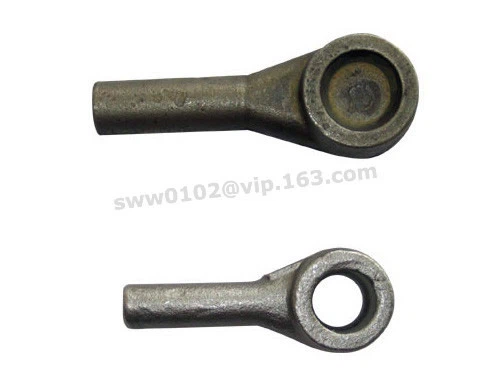
Step 2: Encapsulation of the Forged Parts
Once the parts are prepared, they are encapsulated in a sealed container, known as a canister. The canister is typically made of a high-temperature and pressure-resistant material, such as stainless steel or titanium, and is designed to withstand the high pressure and temperature conditions of the HIP process. The canister is then evacuated to remove any air or other gases that could cause oxidation or other problems during the HIP process.
Step 3: Loading the Canister into the HIP Vessel
The encapsulated parts are then loaded into the HIP vessel, which is a large, cylindrical chamber that can hold multiple canisters at once. The HIP vessel is designed to withstand the high pressure and temperature conditions of the HIP process, and it is equipped with a heating system and a pressure control system to ensure that the parts are subjected to the correct temperature and pressure.
Step 4: Application of High Temperature and Pressure
Once the canister is loaded into the HIP vessel, the vessel is sealed, and the heating and pressure systems are activated. The temperature and pressure are gradually increased to the desired levels, and the parts are held at these conditions for a specified period of time, typically ranging from a few hours to several days, depending on the size and complexity of the parts.
Step 5: Cooling and Unloading of the Parts
After the HIP process is complete, the heating and pressure systems are turned off, and the vessel is allowed to cool down to room temperature. Once the vessel is cool, the canister is removed from the vessel, and the parts are carefully removed from the canister. The parts are then inspected to ensure that they meet the required quality standards, and any necessary post-processing, such as machining or surface finishing, can be performed.
Benefits of Hot-Isostatic Pressing for Forging Parts
Hot-isostatic pressing offers several benefits for forging parts, including:
Improved Material Properties
HIP helps to eliminate internal defects in the forged parts, resulting in a more homogeneous and dense material with improved mechanical properties, such as higher strength, toughness, and fatigue resistance. This makes the parts more reliable and durable, and it can extend their service life.
Enhanced Dimensional Accuracy
The high pressure and temperature combination in HIP helps to ensure that the parts are uniformly compressed from all directions, resulting in improved dimensional accuracy and reduced distortion. This makes the parts easier to machine and assemble, and it can improve the overall quality of the final product.
Ability to Create Complex Shapes
HIP can be used to create complex shapes and geometries that are difficult or impossible to achieve using traditional forging methods. This allows for greater design flexibility and can help to reduce the weight and cost of the parts.
Bonding of Dissimilar Materials
HIP can also be used to bond dissimilar materials together, such as metals and ceramics, to create hybrid materials with unique properties. This opens up new possibilities for applications in a variety of industries, such as aerospace, automotive, and medical.
Applications of Hot-Isostatic Pressing for Forging Parts
Hot-isostatic pressing is widely used in a variety of industries for the production of high-quality forging parts. Some of the common applications of HIP include:
Aerospace Industry
In the aerospace industry, HIP is used to produce critical components, such as turbine blades, engine components, and structural parts, that require high strength, toughness, and fatigue resistance. The improved material properties and dimensional accuracy of HIP parts make them ideal for use in aerospace applications, where reliability and performance are of utmost importance.
Automotive Industry
In the automotive industry, HIP is used to produce engine components, such as pistons, connecting rods, and crankshafts, that require high strength and durability. The ability to create complex shapes and geometries using HIP also allows for the production of lightweight and fuel-efficient parts, which can help to reduce the environmental impact of vehicles.
Medical Industry
In the medical industry, HIP is used to produce medical implants, such as hip and knee replacements, that require high biocompatibility, strength, and corrosion resistance. The ability to bond dissimilar materials together using HIP also allows for the production of hybrid implants that combine the best properties of different materials.
Conclusion
Hot-isostatic pressing is a powerful manufacturing process that offers significant benefits for the production of high-quality forging parts. By combining high temperature and high pressure, HIP helps to eliminate internal defects, improve material properties, enhance dimensional accuracy, and create complex shapes and geometries. This makes HIP an ideal choice for a variety of industries, including aerospace, automotive, and medical, where reliability, performance, and design flexibility are of utmost importance.
If you're interested in learning more about hot-isostatic pressing for forging parts or if you're looking for a reliable forging parts supplier, please feel free to [contact us for procurement negotiation]. We offer a wide range of OEM Carbon Steel Q235 St37-2 C45 1010 Forged Steel, OEM Stainless Steel 304 Precise Custom Forgings, and OEM 6061-T6 Forged Aluminum With CNC Machining that are manufactured using the latest HIP technology. Our team of experts is dedicated to providing you with the highest quality products and services, and we look forward to working with you.
References
- German, R. M. (1990). Powder Metallurgy Science. Metal Powder Industries Federation.
- Schubert, H. (1996). Powder Metallurgy: Principles and Applications. Springer.
- Upadhyaya, G. S. (2009). Hot Isostatic Pressing: Technology and Applications. ASM International.