
In the realm of CNC machining parts manufacturing, Computer-Aided Design (CAD) has emerged as an indispensable tool, revolutionizing the way we approach part design. As a seasoned CNC machining parts supplier, I've witnessed firsthand the transformative power of CAD in our industry. In this blog, I'll delve into the multifaceted role of CAD in CNC machining parts design, exploring its impact on efficiency, precision, innovation, and cost-effectiveness.
Precision and Accuracy
One of the primary functions of CAD in CNC machining parts design is to ensure precision and accuracy. CAD software allows designers to create detailed 2D and 3D models of parts with extremely high levels of precision. These models serve as the blueprint for the CNC machining process, guiding the machines to cut, drill, and shape the raw materials with exacting accuracy.
With CAD, designers can specify dimensions, tolerances, and geometric features with a level of detail that was previously impossible. This precision is crucial in CNC machining, where even the slightest deviation from the design specifications can result in parts that do not fit or function as intended. By using CAD to create accurate models, we can minimize errors and ensure that the final parts meet the highest quality standards.
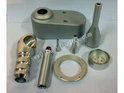
For example, in the design of China Competitive Price CNC Lathe Components, CAD allows us to precisely define the shape, size, and surface finish of each component. This ensures that the lathe components fit together perfectly, reducing friction and wear and improving the overall performance of the lathe.
Design Optimization
CAD also plays a crucial role in design optimization. With CAD software, designers can easily modify and refine their designs, testing different concepts and configurations to find the most efficient and effective solution. This iterative design process allows us to optimize the performance, strength, and weight of the parts, while also reducing material waste and manufacturing costs.
For instance, CAD can be used to perform finite element analysis (FEA) on a part design. FEA is a simulation technique that allows designers to analyze the structural integrity of a part under different loads and conditions. By using FEA, we can identify potential weak points in the design and make modifications to improve its strength and durability. This not only improves the quality of the final parts but also reduces the risk of failures and recalls.
In addition, CAD software can be used to optimize the manufacturing process itself. By simulating the CNC machining operations, designers can identify potential issues such as tool collisions, excessive tool wear, and inefficient cutting paths. They can then make adjustments to the design or the machining parameters to optimize the process and reduce production time and costs.
Visualization and Communication
Another important role of CAD in CNC machining parts design is visualization and communication. CAD software allows designers to create realistic 3D models of the parts, which can be viewed from different angles and perspectives. This makes it easier for designers, engineers, and clients to visualize the final product and understand how it will look and function.
In addition, CAD models can be used to create detailed technical drawings and specifications, which are essential for communicating the design requirements to the manufacturing team. These drawings and specifications provide clear instructions on the dimensions, tolerances, materials, and surface finishes of the parts, ensuring that everyone involved in the project is on the same page.
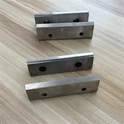
For example, when working on a project for an OEM CNC Machining SKD11 Mould Part, we can use CAD to create a 3D model of the mould part and share it with the client. This allows the client to provide feedback and make suggestions for improvements before the manufacturing process begins. By using CAD to facilitate communication and collaboration, we can ensure that the final product meets the client's expectations.
Compatibility and Integration
CAD software is designed to be compatible with a wide range of CNC machining equipment and manufacturing processes. This allows designers to seamlessly transfer their designs from the CAD software to the CNC machines, eliminating the need for manual programming and reducing the risk of errors.
In addition, CAD software can be integrated with other software tools such as computer-aided manufacturing (CAM) and product data management (PDM) systems. CAM software is used to generate the CNC machining programs based on the CAD models, while PDM systems are used to manage the design data and ensure that everyone has access to the latest version of the designs.


By integrating CAD with CAM and PDM systems, we can streamline the design and manufacturing process, reducing lead times and improving efficiency. For example, when designing OEM Stainless Steel 303 Knurled Machining Metal Parts, we can use CAD to create the design, CAM to generate the machining programs, and PDM to manage the design data. This allows us to quickly and accurately produce high-quality parts at a competitive price.
Innovation and Creativity
Finally, CAD has opened up new possibilities for innovation and creativity in CNC machining parts design. With CAD software, designers can create complex and intricate geometries that were previously impossible to manufacture. This has led to the development of new products and applications in a wide range of industries, from aerospace and automotive to medical and consumer electronics.
For example, CAD has enabled the design and manufacture of lightweight and high-strength components for the aerospace industry. By using advanced materials and innovative design techniques, designers can create parts that are not only stronger and lighter but also more fuel-efficient. This has helped to reduce the environmental impact of air travel and improve the performance of aircraft.
In addition, CAD has made it easier for small and medium-sized enterprises (SMEs) to enter the CNC machining market. With the availability of affordable CAD software and CNC machining equipment, SMEs can now design and manufacture high-quality parts in-house, without the need for expensive tooling and equipment. This has helped to level the playing field and promote competition in the industry.
Conclusion
In conclusion, CAD plays a vital role in CNC machining parts design. From ensuring precision and accuracy to optimizing the design and manufacturing process, CAD has transformed the way we approach part design and production. As a CNC machining parts supplier, we rely on CAD to create high-quality parts that meet the needs of our customers.
If you're in the market for CNC machining parts, I encourage you to contact us to discuss your requirements. Our team of experienced designers and engineers can use CAD to create custom solutions that are tailored to your specific needs. Whether you need a single prototype or a large production run, we have the expertise and resources to deliver high-quality parts on time and at a competitive price.
References
- Smith, J. (2020). Computer-Aided Design and Manufacturing. New York: McGraw-Hill.
- Jones, A. (2019). CNC Machining: Principles and Applications. London: Elsevier.
- Brown, B. (2018). The Role of CAD in Modern Manufacturing. Manufacturing Technology Journal, 25(3), 123-132.