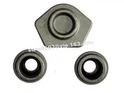

Surface waviness is a crucial aspect in the realm of CNC machining parts. As a dedicated supplier of CNC machining parts, I understand the significance of surface waviness and its impact on the quality, functionality, and performance of the final products. In this blog post, I will delve into what surface waviness is, why it matters in CNC machining, the requirements for surface waviness, and how we ensure these requirements are met in our production processes.
Understanding Surface Waviness
Surface waviness refers to the irregularities on a machined surface that are intermediate in spacing between roughness and form errors. Unlike roughness, which consists of fine, closely - spaced irregularities, and form errors, which are large - scale deviations from the desired geometric shape, waviness has a characteristic spacing that is greater than that of roughness but smaller than that of form errors.
Waviness can be caused by a variety of factors during the CNC machining process. These include machine tool vibrations, uneven cutting forces, improper fixture design, and even the material properties of the workpiece. For example, if the CNC machine has a worn - out spindle bearing, it can introduce vibrations during the machining operation, leading to wavy surfaces on the machined part.
Why Surface Waviness Matters in CNC Machining
The surface waviness of CNC machining parts can have a significant impact on their performance and functionality. Here are some key reasons why it is important:


Fit and Assembly
In applications where parts need to be assembled together, surface waviness can affect the fit between components. If the waviness is too high, it can prevent proper mating of parts, leading to loose or tight fits. This can cause issues such as leakage in fluid - handling components or excessive wear in mechanical assemblies. For instance, in a Custom CNC machining Stainless Steel Bushing Post, high surface waviness can result in improper alignment and premature failure of the bushing.
Fatigue Resistance
Surface waviness can also influence the fatigue resistance of a part. Wavy surfaces can act as stress concentrators, where stress levels are higher compared to smooth surfaces. Under cyclic loading, these stress concentrations can lead to the initiation and propagation of cracks, reducing the fatigue life of the part. This is particularly critical in applications such as aerospace and automotive components, where parts are subjected to repeated loading.
Aesthetic Appearance
In some cases, the aesthetic appearance of a CNC - machined part is important. High surface waviness can make the part look unprofessional and may not meet the visual requirements of the end - user. This is especially relevant in consumer products or architectural applications where the appearance of the part is a key selling point.
Surface Waviness Requirements for CNC Machining Parts
The surface waviness requirements for CNC machining parts vary depending on the application and the specific industry standards. Here are some common factors that determine these requirements:
Industry Standards
Different industries have their own standards for surface waviness. For example, the aerospace industry has very strict requirements for the surface finish of components to ensure safety and performance. In contrast, the consumer goods industry may have more relaxed requirements, especially if the part is not visible or does not have critical functional requirements.
Application - Specific Requirements
The intended application of the part also plays a crucial role in determining the surface waviness requirements. For a CNC Milling 7075 Aluminum Hinge, which requires smooth and precise movement, a lower surface waviness is necessary to ensure proper operation. On the other hand, a part that is used in a less critical application, such as a simple bracket, may have more lenient waviness requirements.
Material Properties
The material of the workpiece can also influence the surface waviness requirements. Some materials are more prone to waviness due to their mechanical properties. For example, soft materials may be more likely to deform during machining, leading to higher waviness. In such cases, more precise machining parameters and techniques may be required to achieve the desired surface waviness.
Measuring Surface Waviness
To ensure that the surface waviness of CNC machining parts meets the requirements, it is essential to measure it accurately. There are several methods available for measuring surface waviness:
Profilometry
Profilometry is a common method for measuring surface waviness. It involves using a stylus that traverses the surface of the part, measuring the vertical displacement of the surface as it moves. The data collected is then analyzed to determine the waviness parameters, such as the waviness height (Wt) and the waviness spacing (Wsm).
Optical Methods
Optical methods, such as laser scanning and interferometry, are also used to measure surface waviness. These methods offer non - contact measurement, which is beneficial for delicate or soft materials. They can provide high - resolution data and are suitable for measuring complex surfaces.
Ensuring Surface Waviness Requirements in CNC Machining
As a CNC machining parts supplier, we take several steps to ensure that the surface waviness of our products meets the required standards:
Machine Maintenance
Regular maintenance of our CNC machines is crucial to minimize vibrations and ensure stable machining operations. We conduct routine inspections of machine components such as spindles, bearings, and guideways, and replace any worn - out parts promptly. This helps to reduce the likelihood of introducing waviness during the machining process.
Cutting Parameter Optimization
We carefully select and optimize the cutting parameters, such as cutting speed, feed rate, and depth of cut, based on the material and geometry of the part. By using the appropriate cutting parameters, we can minimize the cutting forces and vibrations, resulting in a smoother surface finish with lower waviness.
Quality Control
We have a comprehensive quality control system in place to monitor the surface waviness of our CNC machining parts. After machining, each part is inspected using the appropriate measurement methods to ensure that it meets the specified requirements. If any part fails to meet the waviness standards, it is re - machined or rejected.
Conclusion
Surface waviness is an important aspect of CNC machining parts that can significantly impact their performance, functionality, and appearance. As a supplier of CNC machining parts, we understand the importance of meeting the surface waviness requirements for our customers. By implementing proper machine maintenance, optimizing cutting parameters, and conducting rigorous quality control, we ensure that our products meet the highest standards of quality.
If you are in need of high - quality CNC machining parts with precise surface waviness control, we are here to help. Whether you require Custom CNC machining Stainless Steel Bushing Post, CNC Milling 7075 Aluminum Hinge, or OEM Food Grade Stainless Steel 304 CNC Machining Companies services, please feel free to contact us for procurement and further discussions.
References
- ASME B46.1 - 2009, Surface Texture (Surface Roughness, Waviness, and Lay)
- ISO 4287:1997, Geometrical Product Specifications (GPS) - Surface texture: Profile method - Terms, definitions and surface texture parameters
- M. P. Groover, "Fundamentals of Modern Manufacturing: Materials, Processes, and Systems", 5th Edition, Wiley, 2017.